

Album Review: Mood 2 by Jacquees
On a sequel to his beloved 2016 mixtape, Jacquees’ latest is an unhurried, sexually explicit R&B record built around one collapsing relationship, supplying the tenderness he won’t.
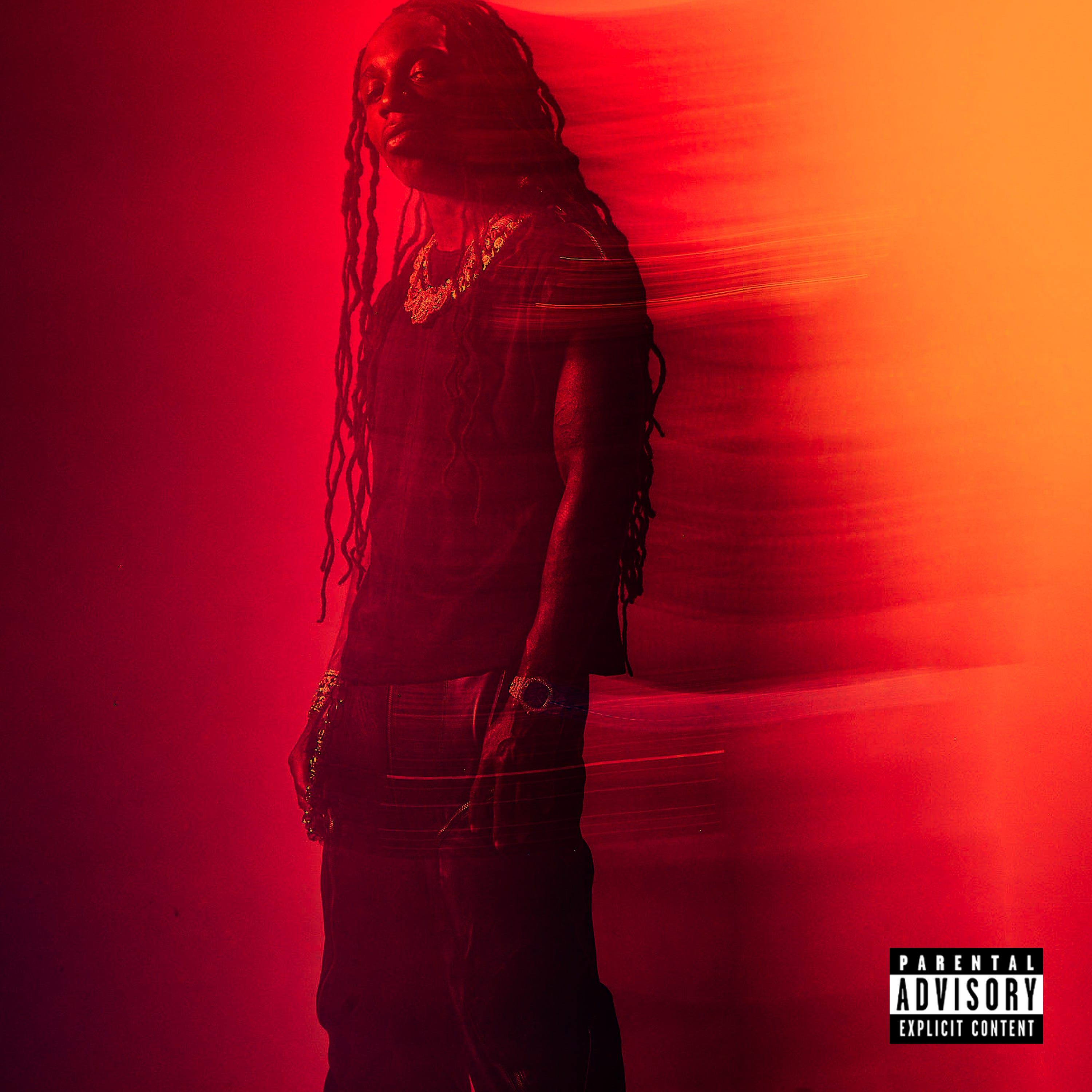
In 2013, Cash Money inked a young Jacquees from Decatur to its label, and he paid back the favor, one song about one woman at a time. The first hint of this was the January 2016 release of the mixtape Mood, which carried an early version of “B.E.D.,” a track that featured the bridge from the Avant classic “Read Your Mind,” and which became the song that introduced him to his fans. He has since made an album with Future executive producing, two with DeJ Loaf, and two more with Birdman.
In late 2018, Jacquees declared that he was the King of R&B of his generation, and dedicated the next year to naming an album after that phrase. A mediocre one at that. He is still promoting that claim today (even I still disagree), and the tracks that stand up to scrutiny on Mood 2 are the ones in which women are yelling at him in his home. On “Accuse Me,” her suspicion beats him out the door. No matter what he says about being loyal, she does not budge. She goes through his belongings, and it seems she would rather leave the house than explain to him why she has to go. COLEMAN and Don Mills underlay the track with a drum loop from the Usher’s beloved “Seduction,” a fact the song refuses to acknowledge, and it resolves the situation in a darker place than denial: “Girl, as much as you accuse me/I should’ve cheated.” He would be a man of his word like that, he reasons, and assumes that is what she wants.
The same thing takes place in “I Believe You,” a longer argument, also produced by Tricky Stewart. How many times is she going to curse him out? How many nights does he sleep on the couch? How many times is she going to pack his bags and ask him not to come back? Then, the second verse abandons the subject altogether. She puts her fingers against his forehead; she would rather not speak, but wants to scream. Her neighbors call the cops because it’s the third time that week. It becomes apparent that he has no power in these fights.
Getting into “Time Will Tell,” he’s a big dog now, leaving his messages on read and half of what he said unanswered. He tried to drink himself numb but ended up overthinking, wondering why he made such bad decisions. Weed, shrooms, shots, a gorgeous girl in his ear telling Jacquees to do what he should do. If he drops dead, who’s gonna post his bail, he asks, before saying that all weapons formed against him should never prosper. No backstage action, he insists. Not that he’s mad about not having her last name. He’s owed to her for 18 years and he still doesn’t understand why she hasn’t put his ring on her finger.
There’s no mercy on “No Love,” where the hook is his message to her: “Sorry, baby, hate to get your hopes up/You get no love, I can’t show none.” She’s going to Florida for the weekend to eat shrimp and lobster, and he’ll give her the advance while keeping the remainder. On the Hitmaka and Nash B-produced “Lick Back,” he raises the stakes with two lines: “You and me, it’s a mismatch/I can never be your man, I can admit that.” Juvenile serves additional ice, telling her to return to the first stanza, calling her his little ex, and listing the conditions as if he was scribbling them in a notebook. That’s when Jacquees is at his strongest. He starts to lose steam on ForteBowie’s “Chiropractor,” with the repeated line, “I don’t need to buy rings and engage you,” along with Roberto Cavalli, Mugler, a hand on her neck, and a chorus that rests on a pun about backs for its entirety.
Long before any of these songs were created, Faith Evans cut “Soon as I Get Home” and $K and LaCrisis gave that song’s foundation to Jacquees for “Spend the Night.” Jacquees tells her to take off her heels; he says his cook will whip up dinner, and he says he will make her a believer. The most poignant lyric belongs to the one he inherited: “Many nights I prayed/For someone like you to finally come my way.” Nash B, the producer behind “B.E.D.,” contributes eight, more than any other producer, and they’re present throughout. The samples offer the love; the original versions provide the push-and-pull. Jacquees is stronger without a bridge.
Who talks back to any of this? Tink answers once. Her part on “Physical” claims the story from her point of view, and she makes no apologies. “Get on your job like a 9-5,” she’s kept doing; call it what you will. Rob49 makes the second verse of “Come & Go” to bring out the cash. Thirty k for the jet, four grand for the night, a mansion since he ain’t no hoe, and he told her all along what it was. Jacquees got on that song already naming Stacy, Keyshantel, Dominique, Victoria and Lexi with her girls, saying he’s legit and she’s a distraction.
Kodak Black keeps his hook on “I Can Do Anything,” leaving Jacquees to do the last verse of a song with someone else’s name. The sweetest compliment goes to NOBY, who swallows the Perky, takes the pain, says he got the business done and distributed the dough, no cut needed. K CAMP got the best featured verse, telling her she’s a bad influence, seeing a hater turn to a headache.
Jagged Edge’s “He Can’t Love U” becomes Briss’s “He Kant,” with Jermaine Dupri bringing up the energy with his signature “Y’all know what this is?” Jacquees changes the beg of the original to a contest. His ex isn’t his bae, he says. The new kid snapping like D4L can’t replace him. He says a man’ll wreck a bag like that, says her face is real. Then comes the chorus with the criteria. Loyal, good sex, condoms, steppers on speed dial. He’s been peddling that forever. Only break for the tracks that get remembered.
Above Average (★★★☆☆)
Favorite Track(s): “Accuse Me,” “I Believe You,” “Guy Like This”