

Album Review: Movin’ by Selah Sue & The Gallands
A Belgian pop-soul singer handed her worst year to a jazz father-son duo, and they gave her back songs that know the difference between sadness and clinical depression.
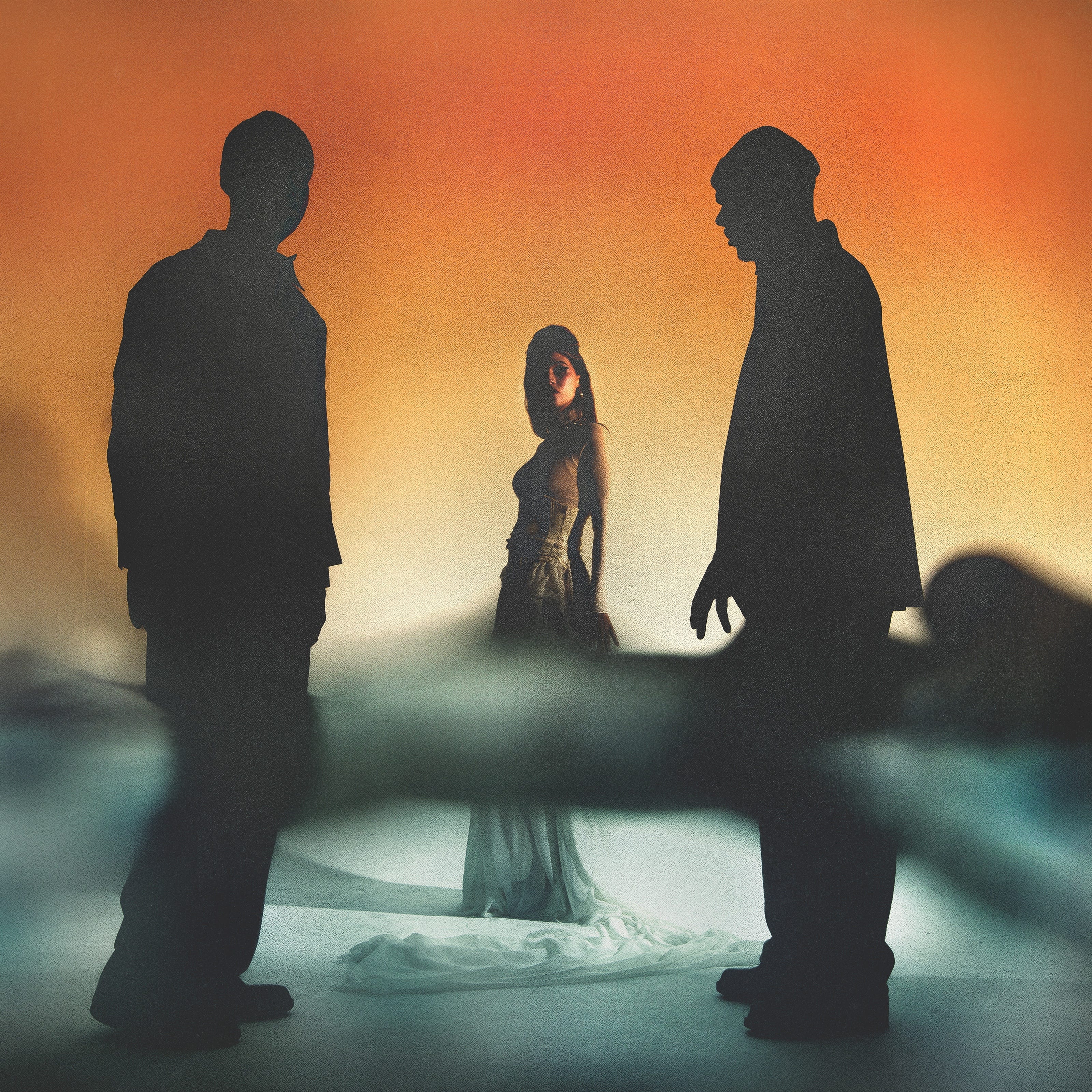
The invitation came sideways. Stéphane Galland, the Belgian jazz drummer who cofounded Aka Moon and spent six years backing Ibrahim Maalouf, was given carte blanche at the 2025 Jazz Middelheim festival in Antwerp. He brought along his son Elvin, a classically trained pianist turned producer who’d cut records for Damso and Manu Katché. The pair needed a vocalist. Selah Sue’s husband pushed her to go. She wasn’t well, hadn’t been well for months, and almost didn’t show. But she sat in Elvin’s living room, heard the instrumentals they’d stockpiled during lockdown, and something unlocked. The first demos stuck. A planned EP swelled into Movin’, recorded in a few months across Brussels studios and her home near Leuven, with every track mixed by Russell Elevado, the analog engineer behind D’Angelo’s Voodoo and Black Messiah, Erykah Badu’s Mama’s Gun, and Jon Batiste’s We Are. For a singer who’d built three albums with rotating producer rosters, this was a different kind of bet.
Stéphane’s kit doesn’t behave the way pop drums are supposed to. On “Another Way,” his kick and snare slip behind the beat just enough to let the bass guitar, Federico Pecoraro’s, carry the weight of the downbeat instead. Elvin’s Rhodes keyboard sits in the midrange like smoke, never sharp, always a half-step behind the vocal melody so the chords feel suggested rather than stated. Elevado mixes the whole thing warm and wide, leaving space between instruments where a more conventional session would cram in reverb or compression. The rooms these cuts were tracked in bleed through. On “Break Me Free,” the drums tighten into something closer to trip-hop, with the hi-hat clamped shut, and Selah Sue’s voice strains forward against a groove that keeps tugging her back. “Ready to Play” flips into a frenetic pocket, A-flat minor turned playful, and Stéphane switches to a ride cymbal pattern with jazz comping underneath, the kind of rhythmic surprise the Jazznu critic noticed when the trio debuted live.
Depression has a specific history on this album. Selah Sue started antidepressants at eighteen. Both sets of her grandparents were psychiatric patients. She stopped her medication in 2021, tried microdosing psilocybin, and by mid-2022 posted publicly that she was “going through hell.” The depression had returned after six months off the pills. She went back on. “Another Way” was written during one of those collapses, and the lines don’t soften anything: “You push me down when all I wanna do is erase you/You break my soul and leave me lost in what you created.” She’s talking to the illness itself, then begging someone, anyone: “I trust in you to find another way to make it easy/To make it right/to make a life good.” “Break Me Free” goes further inside: “Voices say I’m worthless, tearing at my brain/Lost inside this circus, feeling only shame.” This captures the specific disorientation of being trapped in your own head, when every thought is a funhouse mirror. “Into Forever” is the scariest song on the record:
“Finding a way to die, still alive
I wanna fall again into the wild
Take what is left of me, infinity
I wanna fade away.”
The LP’s second half changes temperature. “Ready to Play” asks “how you gonna win it when you hold on too tight?” and reevaluates the grind of surviving depression as a game you can stop competing in (“Step out of the race and flow into space ‘cause it’s all just a game.”). The nomenclature shifts from clinical to physical: “Free-dom, topless, diamonds on my dress/give me highs, but the joy is in the play.” “You & Me” is a love song built on the simplest possible skeleton: “I found a way to get lost in you/I found another day to make it through.” That “I found a way” phrasing returns across its verses, and it works because it’s the sound of someone relearning a sentence they’d stopped believing. “Guiding You” goes somewhere different again, directed at a child, almost certainly one of her sons Seth or Mingus: “What can I say? I only want the best for you/When you feel lost, I’ll be right in front of you/time’s spinning fast, no one loves you more than I do.” The string quartet appears here for the first time—Sofia Capraro’s alto violin, Micaela Ferrão’s cello—and the arrangement stays low, just underneath the vocal, adding body without competing. It’s the gentlest thing on the record.
The title track parks at the record’s center and says the whole thing plainly: “I’m moving with the pain until it’s over, over.” Not past it, not beyond it. With it. “I always walk the thin line between the lost and free,” she sings, and then later, “between the fake and real,” and the doubling of that line feels like someone testing the same sentence twice to see which version is truer. “In a Minute” runs the same argument faster: “I, I fall apart/in a minute, I’ll rise again/I, I’ll break your heart/in a minute, I’ll love again.” Both cuts admit the cycle will keep cycling. Neither promises a finish line. “Nothing to Fear,” the closer, brings the strings back and lets the album end on reassurance: “I’ll light you up/Oh, there’s nothing, no, there’s nothing to fear/I’ll guide you.” Even that is directed outward, at someone else. The person offering comfort and the person who needed it are the same woman on different days.
Movin’ could have been a small record. Thirty-six minutes, no features, no obvious singles, a Belgian singer and two jazz musicians most Americans have never heard of. The lyrics sometimes lean on the same handful of images—haze, waves, flames, darkness giving way to light—and a few numbers share enough harmonic DNA that they blur into each other on a first pass. Selah Sue’s writing is plainer here than on Persona, where the voice-dialogue concept gave her structural variety; on Movin’, the directness is the point, but it occasionally costs her a song that could have pushed somewhere unexpected. What holds the album together is the band. Stéphane Galland plays with an economy and a patience that most session drummers in pop wouldn’t tolerate. And Selah Sue, who said she “wasn’t doing very well” when this project started, sounds like someone who got better by the specific act of singing into a room where two other people were paying attention.
Great (★★★★☆)
Favorite Track(s): “Another Way,” “Guiding You,” “Into Forever”
I love Selah Sue, and this is how I learn she has a new project out! And just in time so I can listen to it through my own depressive episode. My weekend officially has its soundtrack now.