

Album Review: My Man & Me by Eloise
Eloise pins one half-bad love to burned sheets and chipping wallpaper, naming her own faults.
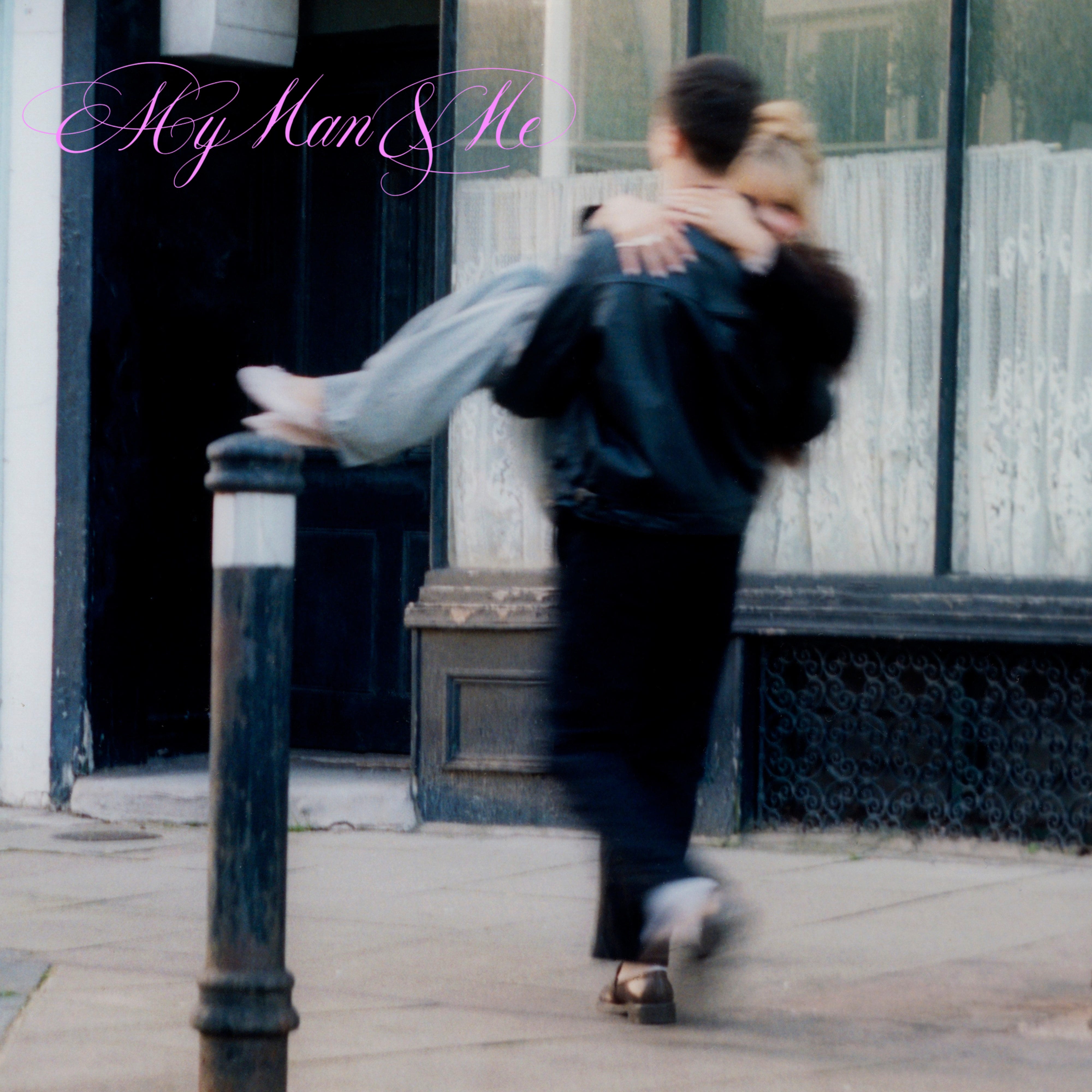
So many singers make a breakup album as if you can pull the ingredients out of the men, the rooms and the different heartbreaks. Not this one. This one takes one man, one love, one long argument, and turns it over and over from every angle with Eloise, a London songwriter who’s spent her few EPs refining her feelings smaller and smaller. Here she goes into the heart of a relationship that was already more than half wrong, tracing its arc from adoration to bitter contempt to whatever it is that makes two people stick together for an unnaturally long time. She names his problems for him early on, and she stays.
On “My Man & Me,” the charges against the man come long before the argument for him. He’ll take her hand, and then let go of it; she’s pretty sure that he makes her unhappy; he tells her he can never love her the way he loved a woman called Amy, and when she asks him why he can’t, he says, “Well, can you blame me?” She has good reasons to leave, but instead she calls him “the best man I know.” Eloise sings it all over the gentlest waltz-like sway-warm, easy, her voice dipping around the chords as much as landing on them. Her tone sounds more loving than bitter, and that makes it work. “I’m living off his nerves, ain’t no doll at first glance,” she admits, and then says, “but I think you’re more than I deserve.” “How Lucky” keeps the same sentiment from a slightly different perspective, the gratitude arising from the memories of men before him, of the “men who were boys/Who would sleep as I cried.” The small, unglamorous detail is key: he told her she looked pretty drinking wine and with her pink hair while drunk, and it was more believable.
Eloise keeps wanting to grasp the physical and the unglamorous. “Where We Lay” takes place in a room gone subtly wrong: wallpaper peeling, cards that “don’t quite read the same,” flowers that “ have seen better days.” “I am a mess,” Eloise just says. Slim Gabriel matches her with arrangements that are warm and close, and that does absolutely nothing to brighten the picture, instead putting the smaller strokes in sharp focus. “You Turn Me On” swings the other way just as directly, a brisk, flirtatious song based around freckles and stretch marks, “You show me/That you don’t let anyone else see” and around skin on skin. She’s in no way dressing up her body; her freckles and her stretch marks, the wet hair and the bitten lip stay exactly as she saw them.
Self-pity would be the obvious route to take, and Eloise pretty much bypasses it by turning herself in. “Dramaqueen” is a confession in question form, “I’m a drama queen, and I feel shit/Is that such a crime?” is sung in a half-shy, half-proud, teasing voice, over a taut, strutting beat. She fesses up to being “easily offended,” to starting the fights he finishes, then lays it back on him again, “take it or leave it, my love.” “You, He” takes it further into love; she runs two ways simultaneously, one lover in her arms, the other sitting, “on a pedestal/Acting out the daydreams I live through.” She refuses to claim the two are equals, one of them lights her soul on fire, the other, “just keeps it warm,” the true line that anchors “You, He” in honesty: “We both know I’m a liar when I say I’m torn.” She holds the man on the pedestal at arm’s length, tells herself she doesn’t love him, and knows nobody will believe it.
Worn to a bare whisper in “For You,” the woman still has the damage handled by herself. She was patient, she was docile, she let him lie to her, and then states the obvious: “You fucked me up, but I guess I let you.” The chorus tells of a woman whittled away and pushed underground, then she keeps coming back to the same ugly portrait of him as a “filthy habit” and herself hanging on “for one more hit.” A much lighter pop melody carries the song and makes the wounds that much colder. The stripped piano of “Before the ‘Why’” clears the air, and “Why Can’t You Love Me” asks directly, down “on my knees,” as she remembers “the night we smoked in my bed,” and “burned a hole in the sheets.” The waltz spins beneath her, same as the question underpins the whole tune, but it never resolves; By the time she sings “When you say it back, I know it’s not true,” she has already answered it herself.
“No more drinks on a Tuesday at our favorite bar,” begins “Horse to Water,” and the sentence itself builds towards the decision being voiced. She’s going to miss “the drinking and smoking ‘til two/And all of the sex and the fights that ensue,” and on the chorus, she draws the line: “You ain’t the boss of me,” she declares, and flips a well-worn saying to mean, I’m trying my best, but you won’t ever do what I want, leading a horse to water shrug of resignation over a song with a little extra snap to its beat. “Love Don’t Grow” doesn’t get wrapped up in theatrics about the end; she imagines a Saturday night when “we drink ‘til we fall back in love” and “fight the whole night” then trails through the town where it concluded, a “crime scene,” the park bench “where we first said it should end,” the alley where she first told him she loved him and he walked away.
And with a love you’ve decided not to pursue? “Resisting Your Love” is written into that resistance, piano, strings and a woman talking about her body, which continues to vote for it anyway, out of doing what it desires. She looks for “the best in somebody,” decides it’s him, and then ceases doing it because “I just don’t know how to stay away.” When he finally talks back, it only hands her a more pointed version of the same question: “You chose to show your cards at the end, telling me you felt it all too—now what do we do?” “You Will Remain” strains to move on, pulling on oceans, rivers, wind, lilacs, “a silver box,” where the closer writing leaves the peeling wallpaper behind, where “Where We Lay” would have seized upon the grime. The more potent goodbye is the one she can’t finish: As resisting, she remains at a distance, her body in full rebellion and sworn to not falter.
Great (★★★★☆)
Favorite Track(s): “For You,” “Why Can’t You Love Me,” “You, He”