

Album Review: Nasalifya (Thank You) by Hil St. Soul
Her sixth album turns down the radio dial and ends in a language her father spoke.
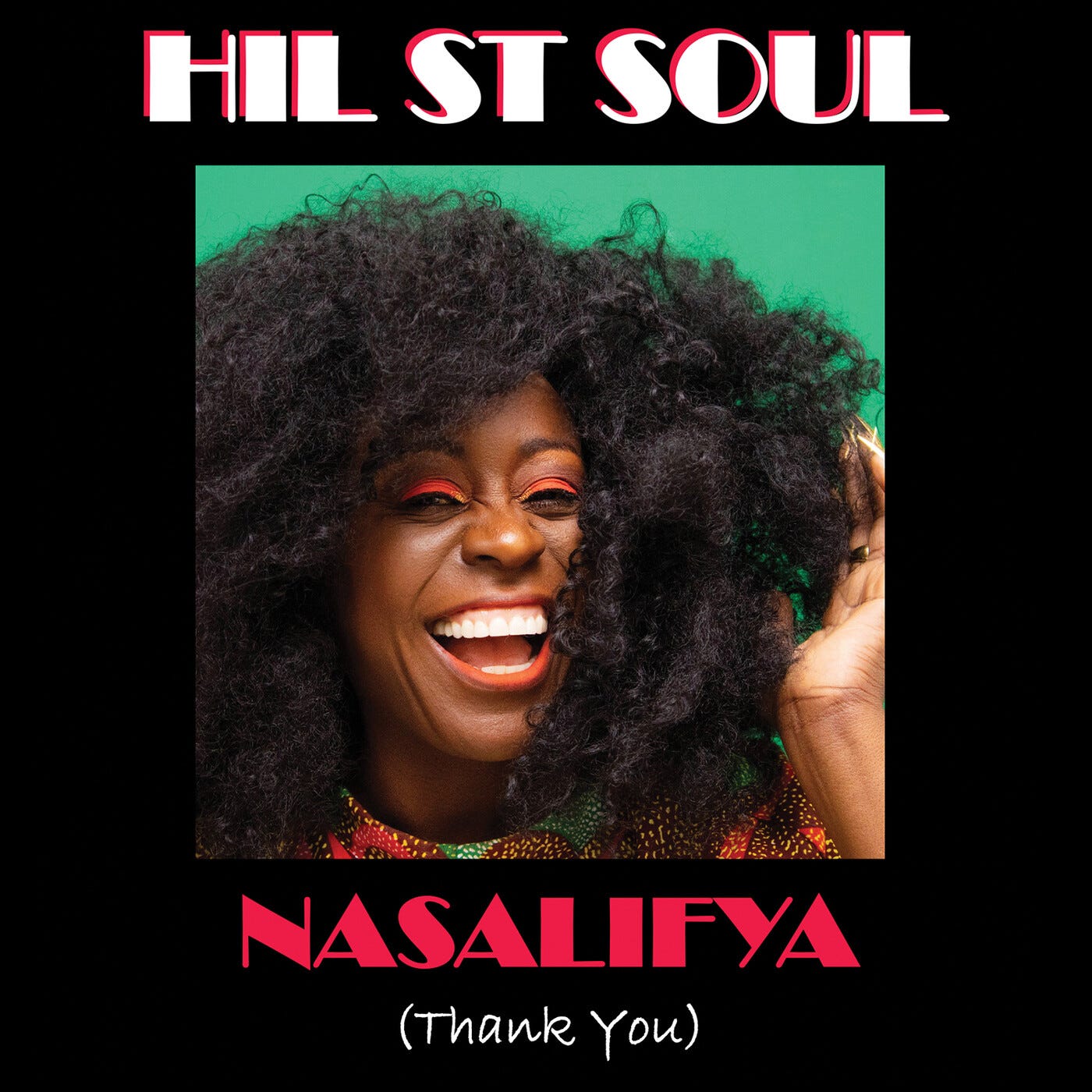
Hilary Mwelwa flew home to Zambia for her father’s funeral in 2024 and stayed there to finish “Nasalifya,” parked halfway done since the previous winter, a song she could not yet bring herself to call by the word that would eventually name the album. She had been a London singer for forty-three years and a Lusaka-born one for the five before that, and she had spent the better part of the decade between 2008 and 2017 not making albums at all, writing for other singers, cutting house features with Tom Glide and Brian Power, until a 2020 duet with Noel Gourdin pulled her back into the studio. In the family home where she closed the song out, it became the only one on her sixth album sung in her father’s first language, and the only one Regi Myrix would build at a pace slower than anything they had tried together before. The track that closes the album is more direct than anything she has had to record since the original Hil St. Soul partnership dissolved.
The music video for the title track ends on a black-and-white photograph of Mwelwa’s parents at their wedding, both of them young, both of them still. The picture is the room the song belongs in. Over a Rhodes piano that does not push back, Mwelwa sings “Sifting through the bones of my life,” thanks her day ones and her family and her tribe and the air she breathes, and names “those who came before/Who ran so we could walk” as the people the song was made for.
Standing in a kitchen at the end of a relationship, with the conversation already over and one partner still talking, Mwelwa sings “I’m Done.” Myrix gives her a heavy kick drum on the verses, a snare sharp enough to mark the door, and a Rhodes piano that keeps the temperature down. “The atmosphere is getting colder by the minute,” she sings, and what comes through the song is the kitchen and the relationship together. “I love myself enough to leave the table when respect’s no longer being served” comes later, hand-painted onto thousands of Etsy mugs since before she sang it. The mother’s voice quoted two lines before, “My mama always told me it’s okay to let go,” keeps the song more direct than its meme version. It is the best piece of writing on the album, and the only song nobody is going to share screenshots of. A meme of a line, sung by a singer too old for memes.
A bass line warm enough to hold a Saturday afternoon, clean guitar licks sliding under everything, and “Back In Tha Day” plays at the volume cookouts demand, even low enough to hear the speech under the music. The spoken bridge between choruses is where the song stops performing the nostalgia and starts hosting it. A friend is talking under the music: “Honestly, those were the days, man/Honestly, I really miss them.” Vocal locked to the bass line, still no runs and no reach for the high notes. Out at the song’s two-step coda, the speech turns into a dance instruction: “Put your snaps up... do the two-step.” It is the best dance song Mwelwa has ever recorded, and the only song on the album that announces it has nothing to prove.
Working from a Rhodes piano that sits a half-step under the vocal on “Better With Time,” Regi Myrix gives Hil St. Soul enough space to do nothing fast. The keys snug beneath her singing, every other instrument waiting at the door. Less is the move. The same hand shows up on the dembow-flecked house rhythm of “Vibrate High,” where Lina Loi’s voice still braids into Mwelwa’s and neither voice is asked to win. A heavy kick on “Trip” and “With You” but a sparse one on “Better With Time” hold the slow songs at one drum register. Yet across eleven tracks, one producer keeps the same instinct in charge, and that consistency is stronger than any single song he’s built for her.
Where does grief sit on a soul album made in your forties? Angie Stone’s Mahogany Soul (2001) puts it in “Soul Insurance” and “Bottles & Cans” and “More Than a Woman” and every track in between, twelve songs of grown-folk writing about love and loss with grief threaded through every chorus. Mwelwa’s album still shares the hymn-tempo arrangements and the subordinate-to-the-singer’s-grain instinct, but it makes a different theological wager about what a soul album owes the dead. One track of grief at the end, against a whole album of it. Two albums, one tradition. That is the strongest divergence between two albums that otherwise share their entire ancestry, and the architectural choice gives Mwelwa’s sixth the confidence of a singer who needed the tradition for cover and got it. One song does the work.
The album’s discipline songs, “Good Vibes” and “Trip” and “Vibrate High,” still lift their hooks from the same drawer as the self-help Instagram post. “Vibrate High,” with the strongest production on the album and the most damning lyric, still lifts Gandhi’s “be the change you wanna see” wholesale, uncredited. Mwelwa knows. When “Better With Time” draws the curtains, though, the slogans stop, and Mwelwa starts writing about adult appetite the way grown-folk soul wrote about it before Spotify. The discipline songs are daylight; the slow songs are what comes after, and that split is the album’s whole language problem turned into a design.
Eleven tracks sequenced from a cookout through several mid-tempo love songs to a Bemba hush, Nasalifya (Thank You) moves through the rooms, a singer over 40 should be welcome inside. Regi Myrix produces every cut with the consistent restraint that keeps his Rhodes and his heavy kick close to Hil St. Soul’s voice, making her always the loudest thing in any space. Mwelwa still writes about a particular blacked-out room on the ballads, but loses the detail when the daylight hooks take over, then finds it again in Bemba at the end. “I’m gonna ride this thing called life until my wheels fall off,” she sings on the title track, and the whole album fits inside eleven words. Once the final syllables release back into whatever space a listener brought to the album, what the album is named for becomes the only thing left in it. Grown-folk gratitude, from a singer who has stopped needing to prove she can be heard.
Standout (★★★★½)
Favorite Track(s): “Better With Time,” “I’m Done,” “Back In Tha Day,” “Nasalifya”