

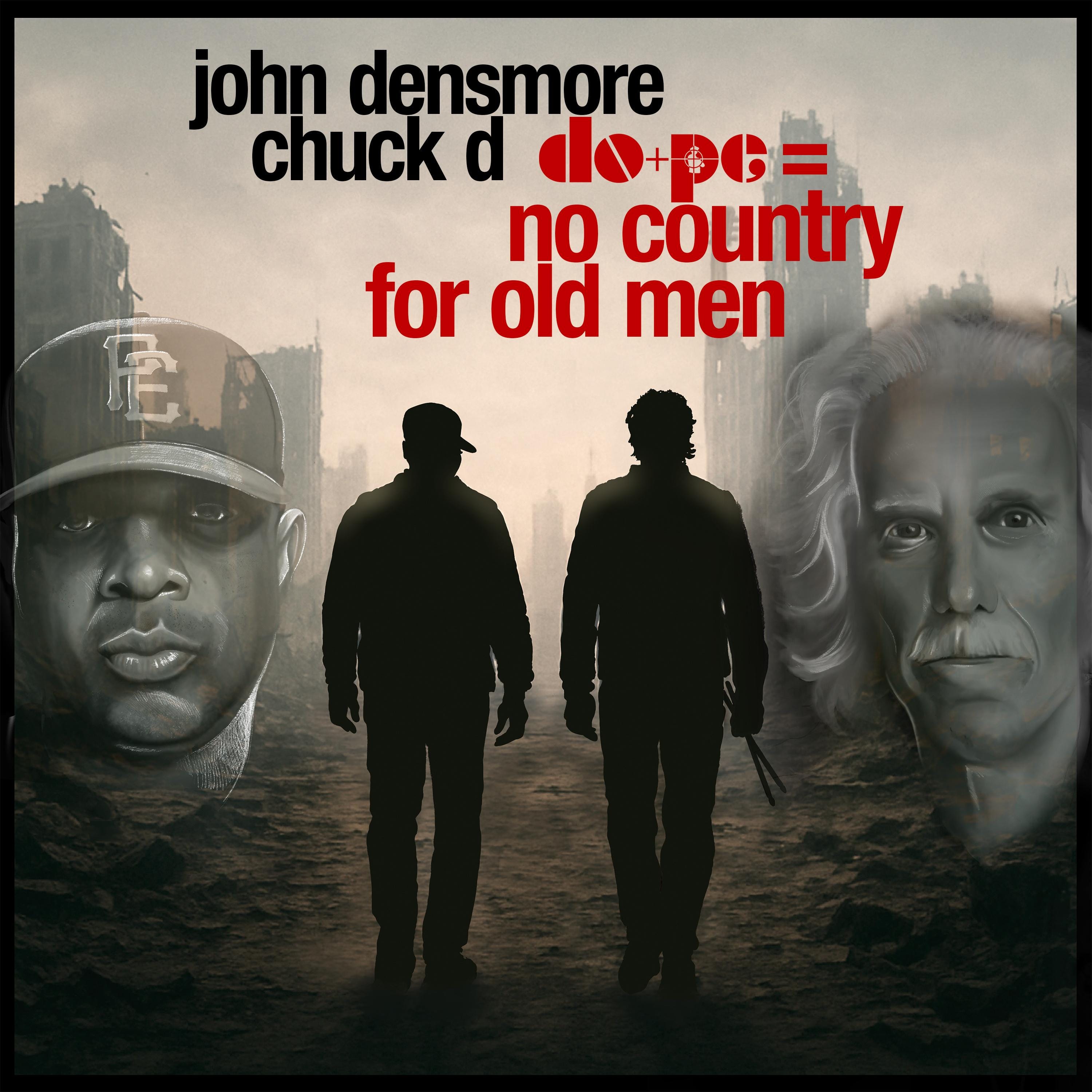
Any rap record by anyone over 60 either lives up to the dignified hush of glory, or descends into the get-off-my-lawn lecture. But the urge here was a third option, the cardigan-and-tea Rick Rubin oversaw from inside the gatefold-sanctified by his very signature. no country for old men resists this sweet lull within the first three minutes. “Past be memory, future imagination” rasps the rapper on opener “every tick tick tick” before swerving two bars later to “signed by Rick while drivin’ a Buick,” a studio detail of the industry-a backhanded signpost-written into a song ostensibly about aging. But the Buick clue seals the deal. A Rick signing inserted into a clock song situates the text within the 2026 world of music economics, not the philosophy seminar it promises in its title. By the end of that song “ageism, sexism, racism in the future’s way” has elevated the issue beyond one individual’s mortality to whose mortality it’s acceptable to broadcast. No 2026 cardigan-and-tea Rick signing gets anywhere near that on a lead single’s first three minutes.
Chuck D met Densmore for the first time at a Record Store Day panel in Los Angeles in April 2014. The rapper proposed a duo by e-mail in 2015 and Densmore filed it away. The quiet settled for the better part of a decade. “I try to live every second today” the rapper mutters towards the end of “every tick tick tick”; the studio version of that sentence was the eleven year wait he went through for the release of doPE. Public Enemy started in 1985, long after the drummer’s mid-60s band fell silent for fifteen years. This is not so much a meeting of equals, but a meeting of two men whose imprints long ago disappeared in ownership to the labels who controlled them. And the eleven year wait is to argue that they had something that was worthy of saying by the time that they sent out this record.
Etheridge Knight composed “The Bones of My Father” while a prisoner in a federal penitentiary in the late 1960’s, but Gwendolyn Brooks visited him frequently enough that they found ways for him to send the poems out into the world as proof he was alive, published as Broadside Press in Detroit. Here, the emcee delivers this poem instead of his own lyrics. “There are no dry bones here in this valley,” he says, voice dropped from rapper to lectern. Tallahatchie, where a fourteen-year-old’s body was pulled from a river in August 1955, arrives one line later, named plainly, the syllables hanging in the room before the poem moves uptown to stoops where young Black men “dream of my father’s bones.” A Black Arts inheritance gets lent to a hip-hop record, and the loan is repaid with deference instead of performance. “We glide sideways like crabs across the sand,” the rapper intones near the end, offering the line back instead of name-dropping it, which is the deference Knight’s work has rarely earned from rappers since.
The title cut keeps the boast and the warning on separate shelves. “I’ve been your age, y’all ain’t never been mine” claims the side that takes up space, while the harder bar surfaces a beat afterward, “not everybody gets elder,” and harder still is the one that follows, “don’t care less, know you can’t buy.” Such a slide from prerogative to plain warning, all inside the same verse, makes a point most discussions of rap-elder status tiptoe past. Aging itself is the privilege most of those conversations leave unstated. Spike Lee opens the third stanza by name, two more cultural figures bracketing him a bar afterward, as though the casting had been parked at the door since track one, and the gesture works harder than another sixteen bars would have. “They’re all elders,” the rapper adds, less a credit roster than a will, his own future already filed under the same heading. Belafonte gets named last.
That five-verb chant (“Open me up, close me up, shut me up, get me up, fuck me up”) runs “ops3ssion.” “Depressed, losing a pill at the wrong address” enters first; “United State of the pill” returns a minute later; “Big pharma pump up the volume” follows three lines after. Each pass through the chant rotates the rapper through a different posture, yet the outlook is the same throughout, the song hunting for a position the language will fail to also implicate. When “obsession” splits into “suicides and homicides,” however, the chant has rotated through enough meanings that it feels less a hook and more a private prayer this rapper should be too old to deliver without sentiment, though Chuck delivers it anyway, the only emcee his age you can name who would even try.
Whenever “doomsay” tries hard to do something, it still does not quite do it. Each grievance gets shelved at the same height as the last one. Putin, Vietnam napalm, the UN’s blown shot, two hundred sixteen nuclear nations, a climate gone hot. Is everything an emergency, or is nothing? “Send violence to every continent, malicious intent” arrives as a line the surrounding bars then prove a half-dozen ways, exposing the song’s central failure: equality among threats becomes equivalence, and equivalence flattens urgency into a sermon. “Saydoom (dub)” returns the chant later and whittles it down to “We on the floor/Got nothing on/You know what they say/Definitely,” ambient apocalypse where the original had been protest. By the closing minute, “the bomb” has been repeated enough that it goes soft in the mouth, thinning into a syllable. Six wasted minutes.
On “i love that i don’t love,” Chuck refuses the relevance tax that an older rapper either pays in public or refuses in public. “I dig what I dig and I like what I like/Fifty years of New Yorkers bein’ on the mic,” he says, then the very next bar is the line he will not be caught saying. “I’m not gonna be seen screamin’ next to no teen, sorry.” That posture has a precedent on the other side of the recording booth. Densmore turned down a fifteen-million-dollar luxury-car sync in 1968 over his late bandmate’s posthumous wishes. The drummer wrote a 2013 book about that fight. “I love dope,” Chuck mutters at song’s end, the duo’s pun running into its last syllable like an inside joke that knows it is being recorded.
Closing the album on “everybody dies,” the rapper rasps “Give dope being a sexagenarian,” already counting Densmore as septuagenarian and himself as soon-to-be octogenarian. From there the song builds a one-paragraph elegy doubling as a cosign of every rapper who outlived a decade. “Dust to dust, ash to ash/Rolling Stones to Grandmaster Flash” is the lineage compressed to a couplet, whereas the heaviest borrowing comes a minute later. “This is the end, beautiful friend” arrives in the closing minute, Morrison’s words recited back from the company that once tried to lease them out for a luxury car. “I’ll never look into your eyes again,” he finishes, eleven years after the handshake.
Solid (★★★½☆)
Favorite Track(s): “no country for old men,” “the bones of my father by etheridge knight,” “everybody dies”