

Album Review: NO ME ARREPIENTO DE SENTIR TANTO by Karol G
The urbano star’s bitter and unhurried new album is an account of the long middle of a breakup, where the wanting and the resentment share every song.
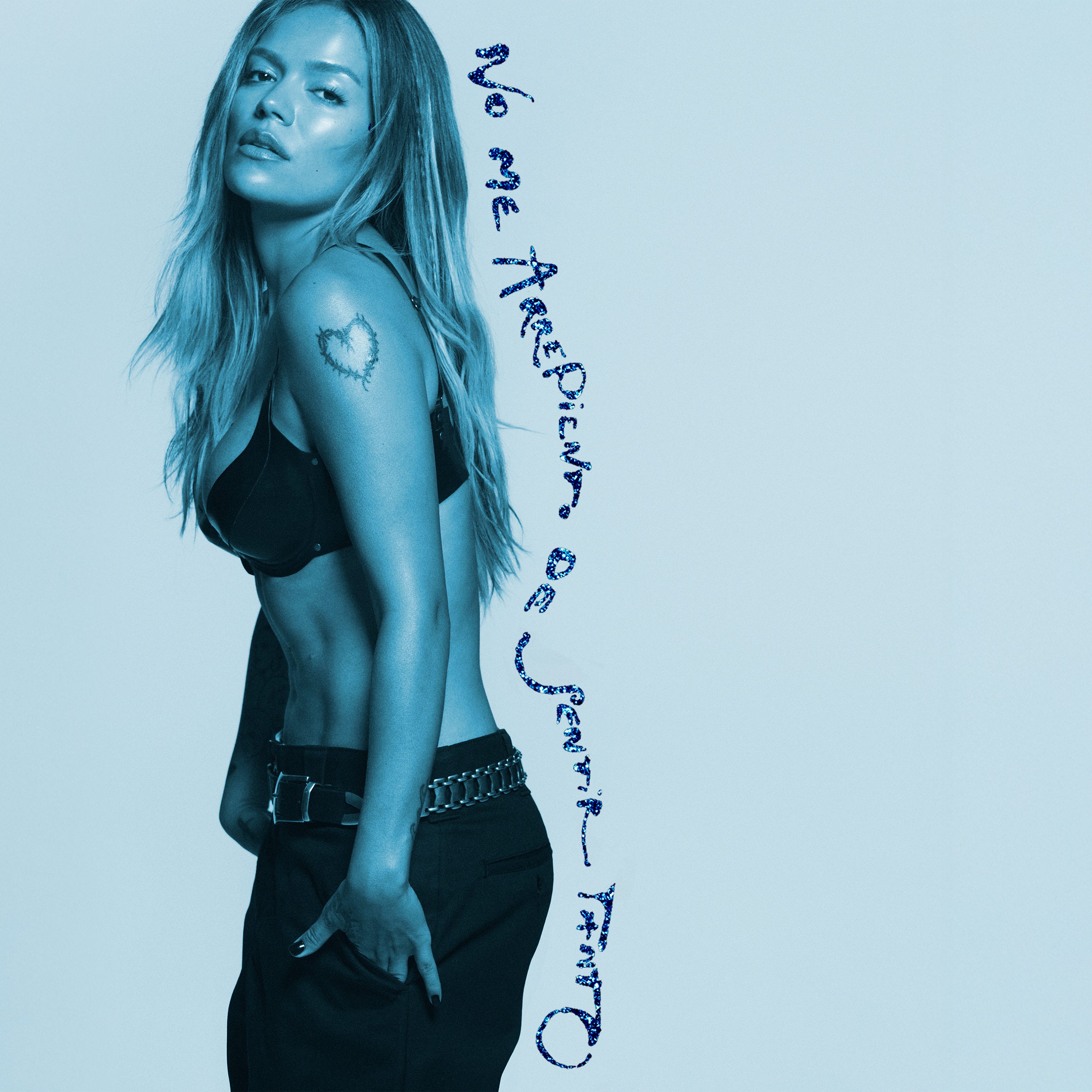
Karol G has been filling those tickets for her stadium tour that’s been ongoing for months now. Viajando Por El Mundo Tropitour had a Rogers Stadium appearance in Toronto this summer. NO ME ARREPIENTO DE SENTIR TANTO (translated as I Don’t Regret Feeling So Much) is the title of her new album, and its contents are confined to one breakup. She counted the letters she wrote him, the nights, the kisses, and regretted none of them. She was always running behind as he backed away from her. But then came five words in the middle of “Maybe”: “Fuimos futuro y somos final.” Sky Rompiendo produced the song, and she hands the arrangements in her second verse, towers she built and he knocked down. “Yo construyendo y tú tumbándome las torres.” There is nothing else she can tell him in the chorus—to say nothing and leave since flying together did not get them anywhere close to the sky.
Eleven out of fourteen production credits are hers. Four belong to Ovy On The Drums, four to Tainy, two to Edgar Barrera, one to Cashmere Cat, and Judeline and rusowsky produced “Con Quién Andará?,” the song all three sing. Ovy tagged his name in three of the tracks—at the beginning of “Bebiendo Lágrimas” and “Ahí” and at the end of “Con Quién Andará?” She is involved in the making of the album more than any of them.
Her friends warned her he was no good. All the red flags are there, and she blames her own shortsightedness: “Con red flag ya venías, pero parece que tengo miopía.” The joke comes one verse after she announces the beginning of her official retirement from love in “Bebiendo Lágrimas,” and she buries the version of herself she was there. Karol is already crying on a yacht and planning what to do to him if they ever get back together. She then rolls up his promises into a blunt. Then she puts a padlock on the door in case he tries to come back, and that is not how one typically does it.
Somewhere back there, they were celebrating on their way to Paris, and she said yes. There were all sorts of dreams she wanted to make happen. In “Te llevas To,” she leaves it all to him and takes with her one thing less: “Guardé de ti mis ganas de llorar/Te llevas to’, menos mi dignidad.” She wants to know where the sky went, since she loses it every time she gets hold of it. He had been playing blind whenever she started crying. The song is produced together with Tainy, and she tells him she won’t give him August again.
In 1974, José Luis Perales was working for other artists. The track he delivered that year was picked up by Jeanette. With “Porque te vas,” one is made to feel that the moment a person walks out the door, he takes every promise with him. Jeanette picks up the thread some fifty-two years on when she begins “Con Quién Andará?” and Bronco follows in her wake. There is Karol too, who has been behind the wheel of late and has had a drink or two, making her rounds in the hope of running into him for an extra perreo. She directs her inquiries at the windshield: does he fancy her more than before? Whose lips is he on? Will he have any thought of her in the act? Come the third verse, and she is done with it; let them flirt and text as they may, “Yo sigo escribiéndole aunque no me lea.” Judeline is down the same path on “Bby WOW,” cruising the city searching for some fortuitous encounter.
Karol G is at her best being horny. A man asks her to make it easy on him, and she tells him she is not a whore, but almost. “MATADORA” almost does more damage than a flat refusal would. Cashmere Cat and Tainy are the producers of the song. She is crying in a Hayabusa with nothing on under her blouse. Whenever he asks for la rusa, she reminds him she is not European. “For U My Lova” runs warm the other way around, and the mirror line is a good one—the love of her life is waiting for her in the reflection of his mirror. However, the refrain gives the song over to what everyone else says about the two of them, including la pareja del billón.
Wilted flowers and starless nights have done that job in Spanish love songs for a hundred years. Karol runs four of them through in the first chorus of “Alguien que te amaba,” produced by Edgar Barrera—flowers that wilt, nights without stars, clouds that disappear, a flame under the rain. The second verse is different. It was all over before she had a chance to say goodbye. Being alone with her had stopped having meaning for him, and he had time for everything except her: “Pa’ todo sí, pero pa’ mí ya no había tiempo.” She tells him not to worry. And won’t say anything at the end of the last chorus. “Final Feliz,” produced together with Oklou and Tyler Spry, delivers on its promise based on one detail—the last kiss at LAX she didn’t know was going to be their last. The verse after tells the story of the river and a piece of paper, and she offers to write it on his skin if she has a chance to go back.
If there is anything to file against this album, it is that the two biggest guests gave the two weakest tracks. Her half of “Ahí” contains an argument. Then Drake arrives with his verse, and it is a list: “I want a face just like Carolina/And I want a waist just like Carolina.” The spoken exchange at the end of the song asks what one would want in a woman and gets two answers: kind and Latina. The collaboration with Bruno Mars has the same problem. She keeps his sweater and letters on “Still,” and hopes he is happy about it, even though it would be difficult. Mars comes in with the second verse, telling her to lie down and not let her mind take her anywhere. It has one good line: “You know you’d be my favorite scar.” The rest of it is good in a way, aside from little else here.
Great (★★★★☆)
Favorite Track(s): “Maybe,” “Si lo ven,” “Con quién andará?”