

Album Review: No Sleep In Paradise by Naomi Sharon
Sharon’s second album follows one relationship from the first pull to the door she takes. Her writing about power and the unsaid turns a familiar breakup into something exact.
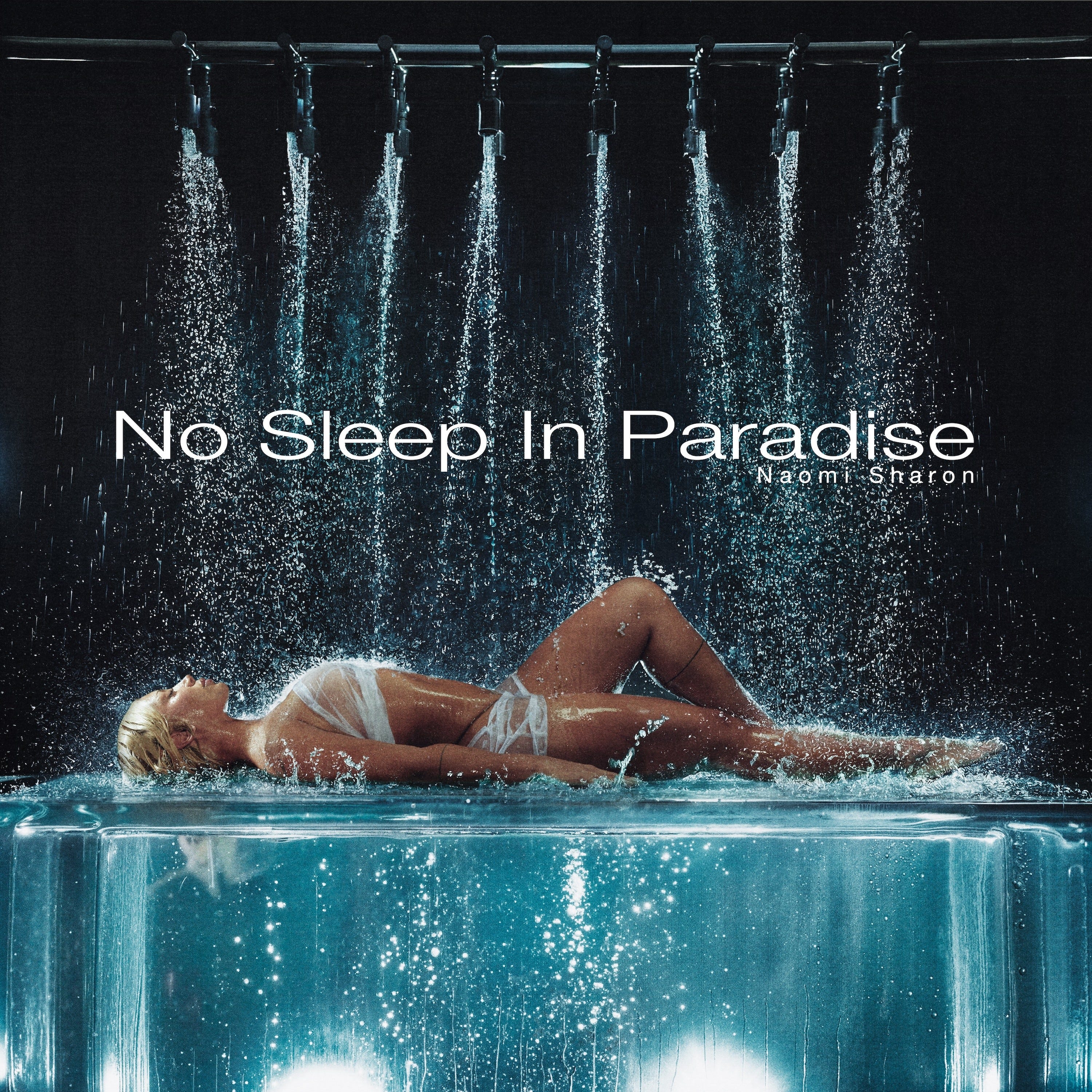
The musical theater background of any singer means learning to live inside somebody else’s words, before your own. Naomi Sharon spent years on Dutch stages, performing in casts of The Lion King and Dream Girls, as a deep-voiced alto perfectly engineered to fill an arena from the back row, and when OVO Sound picked her up as their first woman in 2023, that voice was the story. Her debut, Obsidian, ran on it. That has one purpose: to hold you captive with her voice. The second album, No Sleep In Paradise, uses a more understated, bass-driven R&B framework, drums out of the way, and the low-end taking the lead, and in this controlled room, she almost never needs the high notes to make her point.
Reaching for the notes is the writer’s job; that is what this story is, of a single relationship from first attraction to slam of the door. “I Know” places a couple just outside a conflict; the groove sways at an unhurried crawl, the relationship moves forward, but only with a clear understanding that nothing is guaranteed: “We were built from broken times, stitched with second tries.” The consequences of making peace are laid bare, the ways that one can tell a tiny fiction to another to keep the peace, to protect something that still holds love: “We told each other a different truth/It was dressed in little lies.” This certainty in the song is no romancer’s dream, but that of a couple past the breaking point: “We don’t beg the sun to rise/We just wait it out.” On “Bittersweet,” the bass opens up; a little warmth inflects the track, and it’s about being there despite the fractures, with acceptance: “Playin’ house in broken homes, all right in the furnace,”—nothing more needed than just that: “Can we just be?/Stay bittersweet.” What she seems to want, in the end, is to preserve that something broken, lights on: “This Ground Don’t Fit Me Every Night.”
Desire is a standoff: on “Weak,” a bassy, clubby rhythm is made commanding and cruel: She turns doubt into threat; “When I get you where I want, you’re gon’ be/Weak.” she’s got him begging, she’s got him in the palm of her hand and is threatening to disappear; “You gonna regret it if I’m gone.” “Try” is a bit of a more open confrontation; the drums are underneath her and become more active: the lovers are “guide each other on a tightrope,” and they’ve mastered the exchange: “Exchange control, what’s mine is yours.” The “Untitled” strips away virtually everything: the sub-bass is nearly pulled back to nothing and becomes an ocean swell: here, power becomes control by standing still; he doesn’t push: “You don’t chase, you don’t plead/You just wait, you let me bleed.” It is there that the threat comes to live and to exist; she never needs to offer anything more, he knows how much of yourself to give to a loving partner.
She draws her writing tighter in these moments: those she’s lost over love and the years. On “Better Days,” the arrangement expands out of the intimacy and leaves more room around the vocal: she sings gently, calmly. Her mind continues to reel over her words and what not to say: “Overthinking conversations that I’m having in my head.” Each one is an unsaid and unused expression; each unspoken thing is a reminder that we hold onto.
To speak seems impossible when this feels the most primal kind of harm: “Is it grace or is it silence?/Speaking up just feels like violence.” So instead she embraces a lesser harm, “So I smile to hide the dying.” Her writing becomes more figurative here, an attempt to express the experience of a life lived swallowing your words: This particular one is a simple confession that expresses its own exact cost, for her, anyway: “I don’t know what hurts more, what you say or what you did to me.” In contrast, she yearns with “Celebration”: “Time slows down telling you, ‘See me.’” But when we reach “Was It Ever Love,” the quiet had become her opponent. The held tongue now renders her inaccessible; “I tried to argue less/But even quiet moments feel like I’m screaming.” and the silence, held together to protect herself for so long, now prevents peace for her. She finally leaves, and the writing proceeds as a clear case made by a seasoned advocate.
On the title track, the production comes out again without abandoning its restraint, but under the melody’s smooth motion is an undercurrent of anxiety: “City’s sleeping, but I’m wide awake.” In a room full of onlookers, she’s not perceived for all she is: “They all see the fire, but nobody gets me.” She can’t get used to success: “This ground don’t fit me every night;” The closer to the peak of the ladder of life, the more her desire to love leaves her behind. This feeling also exists on “Miss That,” the collection’s lone cut designed for the dance floor: a sampled Chicago voice grinds against a familiar harmonic progression; her delivery is cool against the bright surface. She mourns the very attraction she continues to engage with, calling it a poisonous thing, and admits “We’ll never make it out alive,” even as her body lingers in the space she knew she’d have to depart.
The sound on “Light My Soul” offers a brighter feel for the final few tracks with a bit more energy. Her delivery hits all the right spots as the music do its work, but the writing is an uncharacteristic step towards familiarity and toward heat: “Two hearts on fire.” the production does what it’s going to do for an array of sweet-talking gestures: “Melt over me like gold,” and on the next track, “Starting Fires,” though the music picks up to ratchets tension after the wistfulness of “Bittersweet,” the lyric stays rote. “She was always magnified, even though she contributes to your lungs,” she sings, then gives over to “Pink City,” a smooth landing of a short sketch as atmospheric in preference to a thematic declaration. This section has a few moments when she sings about feelings rather than their cause, and the polish on them doesn’t quite cover how hollow they are, which could be seen as the music doing more work than it appears on its face.
“Half a Lie” contains some of her coldest and most precise lyrics. To love this man means accepting what he is able to give; “Giving just enough to make it feel real.” So “I dim myself just to match your shade” and, unable to accept what is happening and resentful of a fabricated calm, feels she embodies love. “I taste your past when I kiss your lips/Like I’m a loving ghost you still miss”—she knows the path forward: “We’re living in a half lie/Too close to leave, too far to fight.” She knows precisely what her compromises mean, and can’t escape that fact either.
Great (★★★★☆)
Favorite Track(s): “If You Wanted to You Would,” “Untitled,” “Half a Lie”