

Album Review: Now More Than Ever by Brian Jackson
Fifty-year-old protest songs handed to singers who weren’t born when they were written, set to Masters at Work’s well-composed grooves.
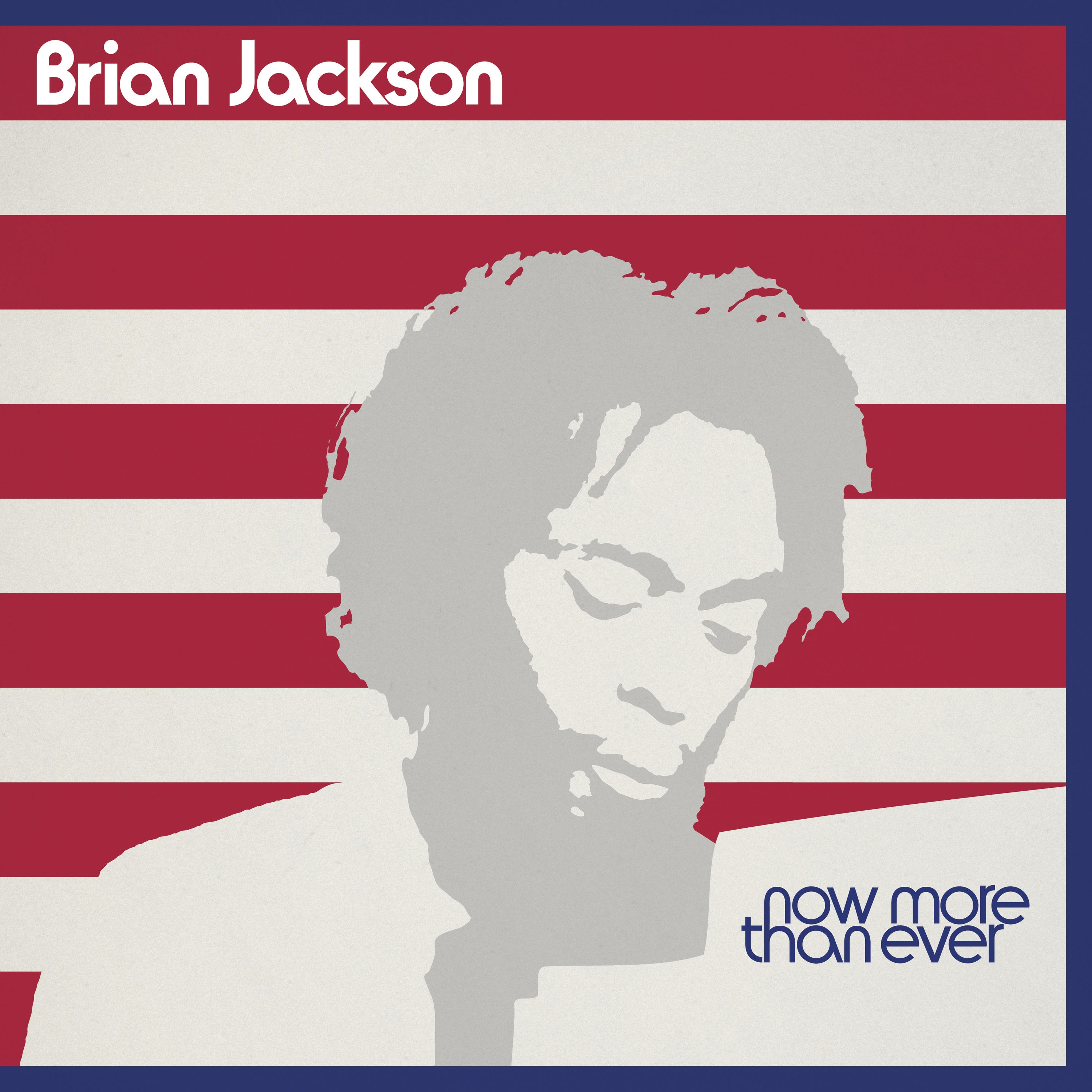
The worry going in is that a near-meltdown does not belong at a party. “We Almost Lost Detroit” remembers the Fermi 1 reactor ticking seconds from annihilation while a sleeping town had no idea, and Moodymann sets that horror to a heavy, swinging loop under smoky electric piano. Money wins every time, Moodymann allows, over a town nobody upstream bothered to warn. Halfway through, the question that wrecks the whole pretty groove arrives: how are we going to get over losing our motherfucking minds? No meaner line shows up anywhere here, yet it rides a rhythm built for hips. Omar finds a parallel nerve in “The Bottle,” voicing the scared Black boy whose father pawned a wedding ring and the wife drinking since her man went away, the closing thought about everybody needing something flipped back on the floor as its own confession.
Three days gone, the house empty, the absence unremarked. Lisa Fischer enters “Home Is Where the Hatred Is,” her voice low and even on “I left three days ago, but no one seems to know I’m gone,” then on the admission that her needle marks are trying to heal a broken heart, where most would beg. Brian Jackson built this melody under Gil Scott-Heron’s words half a century back, yet it now belongs to a vocalist who was never near the original. Calm against a wrecked-up plea. Rahsaan Patterson takes the reverse tack on “Lady Day & John Coltrane,” reaching up after the idea that you might summon Billie or Coltrane to wash your troubles away, until rescue almost sounds available. Whoever opens their mouth around the need ends up owning it.
Raquel Ra Brown’s father lies cold on the L train in “Beautiful Dame,” and she walks a man home down Philly streets carrying a saxophone. Garage house with jazzy piano is laid down beneath her while she names music itself as the woman the title is about, moves through Billie Holiday and God blessing the child that’s got his own, and stops on two words: “Just listen.” Here the floor stops moving. One person’s inheritance fills the quiet, the work of taking care of family pressed against what she calls the actual sound of life, and the saxophone she carried her father’s friend home with becomes the dame she’s been describing all along.
One sound holds almost the whole way through, and that steadiness does more for the record than any single performance on it. Deep house carries “Peace Go With You, Brother,” afro-house drives “The Bottle,” a garage groove pushes “Is That Jazz?,” and across all of them Jackson’s flute returns, pulling a 1981 composition toward a 2026 club. The cost shows up later. A vocal-free remix of “Home Is Where the Hatred Is” arrives once the definitive version has already played, and the title cut, written fresh during the sessions, leans on a chanted hook and a communal feeling where the older material had named people and their stories. Neither one sinks anything. What they do is thin out a back stretch that asks for a long time on the dancefloor, and the thinning gets noticed.
Scott-Heron co-wrote “The Revolution Will Not Be Televised” in 1970 against a wall of TV jingles. Black Thought rebuilds it for the feed without softening its argument. You will not be able to block, unfollow, mute or swipe left to disengage; the link is in the bio; there is no discount QR code in your junk email along with coupons for the President’s Day sale. Every laugh he sets up gets paid back as dread. Where the host of every other track sings, Black Thought talks, and the verse turns over when he drops the joke for his own mortality and battling human nature, ending posted at the station, patiently waiting for a thing he can almost taste. The original was a young man’s promise that something was coming. Black Thought has watched a lot of it arrive and not arrive since then, and his waiting carries a body that knows it might run out of time first.
The danger with a record built from protest songs is reverence, the trap where the singer makes scripture of the source and forgets to stay alive inside it. It almost never happens. Rich Medina speaks “Winter in America” as a late-night story instead of a recitation, and the conceit barely holds together yet keeps its grip, the seasons agreeing to rotate until one got mad and decided to stay, the constitution a noble piece of paper, democracy ragtime on the corners, nobody fighting and nobody knowing what to save. J. Ivy goes loud on “Racetrack in France,” narrating the Midnight Band’s 1976 flight to a French festival as living history (before Soul Plane this was the soul plane, city boys leaving the country to play a race track), and he rattles off everyone who was aboard, Eddie Palmieri and Ray Barretto and Larry Coryell.
Sung by Cindy Mizelle, Dawn Tallman, and Ramona Dunlap, “New York City” is built on a contradiction held in plain sight. A playground for the super wealthy where the middle class need not apply, old blocks turned into foundations for penthouses, and still the line about how as long as we’re living in it, it can never die. Over a bouncy bassline thick with an upbeat percussion, Jackson plays the keys out front. They grieve the place and will not stop dancing in it.
Great (★★★★☆)
Favorite Track(s): “The Revolution Will Not Be Televised,” “Home Is Where the Hatred Is,” “Racetrack in France”