

Album Review: Once Upon a Time: The Soundtrack by Jay Worthy
An underground all-star game hosted by the court’s least valuable player. Jay Worthy assembled the year’s best underground guest list and settled for rapping fourth-best on his own songs.
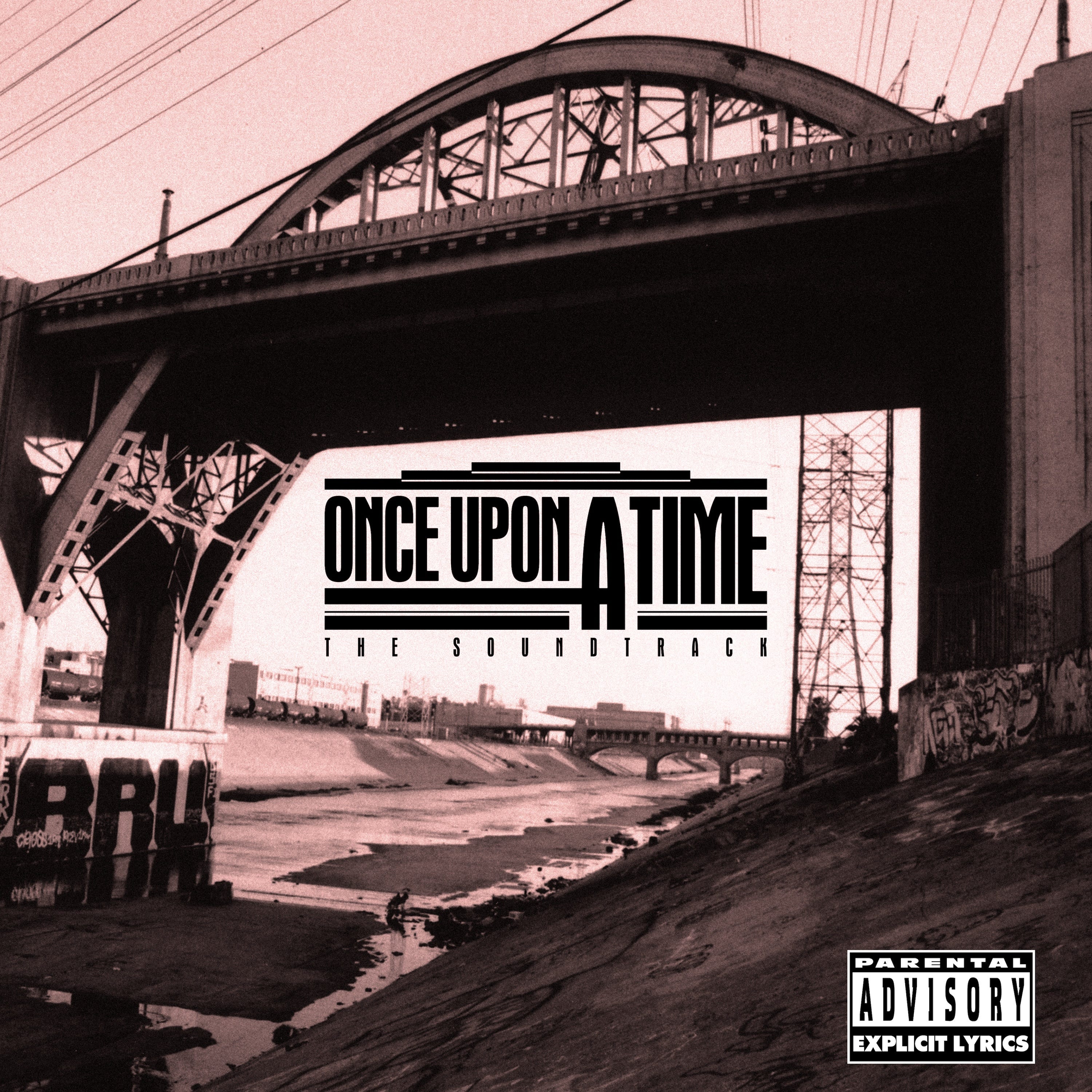
Between LNDN DRGS records with Sean House, full projects with the Alchemist, Harry Fraud, DJ Muggs, Roc Marciano, DāM-FunK, Curren$y, and Larry June, and then a sprawling double album last fall, the Compton rapper Jay Worthy has been releasing music at a pace that would embarrass most label rosters. Everything independently, everything through GDF Records. He turned down Warner, Universal, and Mass Appeal. Nobody wondered who’d be on the next one anymore. They wondered if it would say anything the last five didn’t.
The guest list answers that, partly. Seven months after a double album stacked with DJ Quik, Ty Dolla Sign, E-40, and Conway the Machine, Once Upon a Time: The Soundtrack swapped the marquee for the underground. Shyheim and Method Man rep Staten Island. Rome Streetz carries the Bronx. A$AP Twelvyy flew in from Harlem; Boldy James came from Detroit. Mozzy holds Sacramento down. And Novelist, of all people, showed up from London, a UK grime MC on a Compton rapper’s record who doesn’t sound like a novelty. Every guest says where they operate. Those cities bleed into the verses, and the record ends up covering more ground than most rap albums twice its length.
Shyheim shows up to a wake in a two-piece Gucci suit over a Teflon vest on “Same Song,” and you remember what he looked like before he raps a single bar. He promised he wouldn’t go to any more funerals, but this was a day one. He’d say names but there are too many to count. Then Worthy does the counting. “Gangsters don’t live that long, it’s still the same song.” It was written by somebody who had been standing at those gravesites. 9th Wonder handed Worthy a beat warm enough to pull something personal out of him on “I Can’t Relate.” He went from Greyhound buses to first class, from Dorchester Hotels to Beverly Hills. The house was bought cash. DJ Quik rode shotgun in his car. He names the labels that wanted to sign him, one by one, like he’s been saving them. “2night” opens with a spoken comparison to Max Julian’s first scene out of prison in *The Mack* and Rudy Ray Moore trying on linens in a limousine. Then Worthy gives his actual coordinates: West Roy, Central, and Rosecrans. A South Asian kid from Vancouver who showed up in Compton at seventeen, joined a Piru set, and ended up buying condos in the Palisades. The Blaxploitation references aren’t someone else’s memories for him; they’re closer to autobiography.
Method Man opens “Visions” fighting his inner demons, his inner circle pushing for an intervention. He slept in his car but he never slept on his repertoire, and his closing “Wu-Tang forever, y’all” feels earned, not contractual. On “IF I,” Rome Streetz compares himself to Damian Lillard: “Shoot it from the logo then spit in your face.” That bar outpaces anything Worthy spits on the entire record. Boldy James on “Rosie Perez” says the only time he ran was from the hooks. And A$AP Twelvyy’s verse on “Mail Order Bride” goes somewhere nobody expected: his uncle could’ve been a star, his auntie won a beauty pageant. “Cinderella turned tragic, it’s like half my homies bastard.” He tells you to handle the projects like Buckingham Palace.
So what does Worthy himself do without the guests carrying? He catalogues: “Checkmate” had Payroll Giovanni yelling “independent bosses, we don’t trip about the fame.” “The Big 3” has Le$ saying “the mackin’ is back.” “I Wish” has Worthy shopping in the Palisades and eating thousand-dollar plates. “Kalifornication” has him courtside with Baron Davis. Watches, foreign cars, women, independence, shuffled in different order each time. “No Price” goes somewhere darker. Worthy raps about a woman he pimped in Portland, calls her Snow White, says she brought back seven thousand dollars her first night. Two bars later he says the best things in life cost no price. He doesn’t hear the contradiction, or he doesn’t care.
Yellowdawg (born and raised on Compton’s Westside, grandparents bought the house in 1959) calls Worthy “a genius” and “a one of one.” A full album with George Clinton gets brought up as proof. The testimony is real, and it fits a man whose greatest skill might be getting the right people in the room. Worthy can do that better than almost anyone working independently in rap, especially since the guests keep outrapping him.
Solid (★★★½☆)
Favorite Track(s): “I Can’t Relate,” “Visions,” “Same Song”