

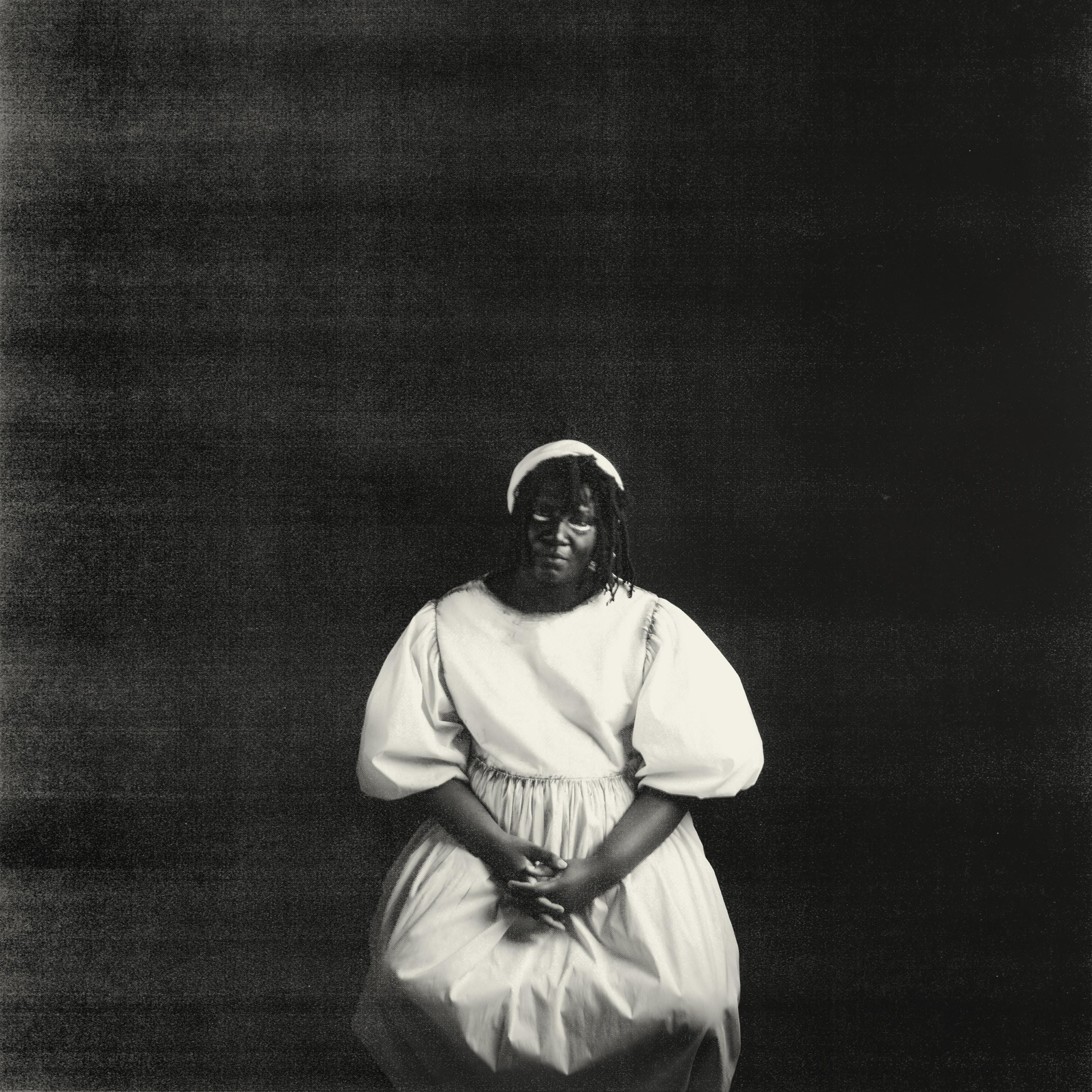
On the track “Wake Up,” Backxwash mutters these lyrics amid her suicidal ideation: “I might do it but not today, see/There’s a game coming out that I really wanna fucking play.” It’s funny, in a way. It’s also the realest thing anyone’s said about surviving life this year. It works because it subverts all the weight laid out on the song, a seven-minute plod through dissociation and suicidal thoughts which culminates in screamed refrains about salvation, and offers instead something deflated, dumb, and honest. Not a reason to live; a reason to delay.
Only Dust Remains is riddled with these kinds of interruptions. The Montreal rapper and producer spent her first four albums building walls of sound: Black Sabbath samples weaponized, industrial screeching, vocals so heavily distorted and buried as to feel like armor. This record, conversely, is pared down: Synths puddle where once guitars sawed. Drums still pound, but there is, instead, space: strings, and, on the title track, a choir singing “away from me” until it has the cadence of prayer. The aggression hasn’t dissipated. “Wake Up” could still strip paint, but it shares real estate now with moments that are simply allowed to exist. Not gentler; vulnerable.
Mutinta was born in Lusaka, Zambia, raised evangelical, immigrated to Canada at seventeen, transitioned in her mid-twenties, and has been making music in Montreal’s DIY scene since the late 2010s. None of this is news to anyone who’s followed her, but it matters here because Only Dust Remains resembles as an autobiography without the lasergrid security system. “I don’t think I’m an addict, I’m just really unhappy,” she confesses on “Dissociation,” a sentiment so monotone it hurts more than any demon simile could. “Everything on the planet is just speeding right past me.” Chloe Hotline comes in rapping about watching herself from outside her body. A comedian cuts in mid-track, making jokes about (straight) male flight attendants. The mood swings ought to break the track; they don’t. The album trusts you to keep up.
The knowledge of death permeates everything, but not as a dare. “Ain’t nothing sweeter than the last breath,” goes “9th Heaven,” and it doesn’t sound like edginess but like tiredness. Backxwash has been close to death enough times to have a preferred way to go. “The only death I fear is painlessly,” she repeats on “Black Lazarus.” She wants to suffer so her exit will have an impact. But she hasn’t gone yet, and the tension between longing to leave and not doing so drives every song.
On “History of Violence,” she describes returning home to Vancouver, riding a bus while hearing voices, hiding away in a room for a week with “a pillowcase full of boogers” and a “dinner date with my doom.” The image is gross and concrete, and the most relatable thing in the world. In the next verse: candles, shadows, a wave of emotion on the floor. In the third: Gaza, dangling feet, kids dead in the street. She turns on a dime, without any justification. But the juxtaposition doesn’t feel unearned; it’s the point of the album. Individual and collective pain are intertwined here, and to shy away from either would be cowardice.
Religion keeps coming up without finding resolution. She asks God for deliverance, then criticizes herself for asking: “How come thy kingdom left me here?/How come thy kingdom sent me here?” Religious sentiments mix with self-hate and remain confused. She excoriates herself for not being grateful, calls herself hypocritical and disgusting. “Put me on a cross, parade the corpus,” she raps in a series of tracks. The activist references are not subtle. “How the fuck am I complaining here/When there’s kids in Gaza with a missing father?” It isn’t possible to dismiss either one. “History of Violence” culminates with this refrain: “Never mention the fascists/Never mention the bad shit/Never mention the tactics or you’re in league.” The word “tactics” itself is used twelve times. And that’s just in the current global context, specifically.
Where the record stumbles, it’s into vagueness that her stronger writing doesn’t warrant: “Life is only fragile as your battles.” “Do not fear the void/It is not your enemy.” “Stairway to Heaven” relies on suicidal imagery without taking it to a place she hasn’t taken it on the album in a more compelling way, and the bell hooks sample on “Love After Death,” while beautiful, lies just outside the album’s world.
The collaborators here are judicious, from Chloe Hotline’s dissociated chorus, pet wife’s ethereal bridge on the title track, session vocalists Fernie, MAGELLA, and Morgan-Paige turning “away from me” into a chant. The sampled voices play witnesses, where bell hooks on love, Nina Simone on confrontation, and that unnamed comedian levelling the mood. Will Owen Bennett’s mix focuses attention on the vocals. No one is overly technical or clever. Everything revolves around Mutinta’s voice, which is higher and thinner than you might expect from someone who used to shield herself with din, and which is all the more powerful for no longer being concealed.
“Undesirable” is introspective in a different vein, an address to herself as a public figure about her mom’s experience of hearing these lyrics: “Mama’s in the kitchen listening to you bawling along/‘Cause her baby’s written vicious things in all of her songs.” The shame isn’t about feeling like a burden in general, but imagining her mother having to listen to this in particular: “Don’t use me as ammunition, nigga/Grow the fuck up.” It’s not clear whom she’s addressing; likely herself.
On “9th Heaven,” about halfway through the album, the drums evaporate and she enumerates what she’ll miss: “I’ll miss my baby if they take me,” she almost whispers, “so I gotta speak up.” It’s the softest moment on a screaming album. She never quite makes a case for being alive, just names one loved one she doesn’t want to abandon.
Great (★★★★☆)
Favorite Track(s): “Wake Up,” “History of Violence,” “9th Heaven”