

Everyone in Los Angeles right now is trying to bring the West back to the center of hip-hop. Ever since Kendrick Lamar hosted the Pop Out and got different sections moving each other at the Kia Forum Center almost two years ago, all of a sudden, L.A. has a real stake in the conversation again. Now, every rapper from Inglewood to Long Beach is obsessed with living up to Kendrick’s legacy and following in his footsteps. Mark Lux watched the Pop Out from the crowd, which he says, point-blank, on his song “Only Child Syndrome.” You can hear in his voice the impatience of a once-promising college athlete, who walked away from that career to focus full-time on rapping, and now needs this venture to pan out. There are fifteen tracks on his debut mixtape (which sounds like an album) that clock in at forty-three minutes total, and almost every one of them orbits around this one basic principle: I am, and have always been, him; and the gates that separate me from the biggest stages in the country are going to swing wide open, ready or not.
The Bellflower kid does not claim any gang set in his music, and he makes this clear by saying, “never banged, never wanted to be them.” This models the archetype that he is reaching for. In turn, he offers being a workhorse as destiny, frames faith as motivation, and shares this deep desire not to settle for second best often. This is, in truth, his wound. He incorporates faith language into many of his songs, like calling himself a religious man on “M O M M,” then pivoting to riding in silence with murder on his mind. “Heavy on the self-respect/Niggas doing anything I find this shit a mess/I stand a man of God/And on his word I now attest.” Suddenly, two bars later, he immediately says he sees the devil in phonies out in the industry, pharmaceutical companies that profit off of users’ fiending and coping with withdrawal symptoms, and even his own father, who continues “the same party tricks” with alcohol. This is to say, the anger that wishes to stay righteous often gets in the way of moral clarity.
One of the most profound songs on the project is “200$.” The internal struggle Mark Lux presents to listeners throughout the album finally becomes close to home and intimate, a space the album struggles to operate within. He’s a grown man with so little to his name; he finds himself and his thoughts in a parking lot, sitting in a Lincoln car, considering the possibility of scamming. He references his friend, who encourages the idea of scamming, “Told me if I hit this lick and start to scam, then I’d be rich,” but then a voice of reason from one of his true friends brings him back to his senses, “You walk a man of God, and now you want to follow Satan rules?” It’s a scene that is specific, unglamorous, and above all real. There isn’t any bravado, and there are no declarations for world domination, only a parking lot and a bad decision he nearly made. He flips the chorus on its head, exclaiming, “Brokie, brokie, brokie, so what?” It’s not the condition he feels ashamed of; it’s the audience that can’t let it go.
It then leads into “Rush,” which now outlines the meetings and dinners with record label executives as a form of seduction, minimizing the asking price of his soul, the food on his table, as now being worth more than the actual opportunity being presented or the compensation offered. This theme prevails over the entirety of the album. “Fades” is a song, just shy of six minutes, unique in that it includes features Lil Deuce, Dudadamthang, and KB Devaughn. The soundscape of the song is world-building, allowing dialogue between the rappers, thus opening the track in a unique way.
“Since second grade, I swung back with the heavy weights that life has thrown
My knuckles calluses could probably hit right through a stone
That probably break the hardest nigga you know, thuggish, rugged bone
Alondra baby, I was right there on that ave
Me and mama going through drama that no one had knew we had
She stepped up in the ring, took punches that was for dad
So now I′m taking on her burdens and walking down with my jab.” — Mark Lux on “Fades”
The punch metaphor goes on both literally, with specific examples of situations, such as school shootings, and funerals outnumbering graduations, from birthday candle aspirations to another one gone courtesy of drive-by shootings, “I went to more funerals as a kid than graduations/More candlelights than birthdays, these car washes ain’t fundraiser cuts.” When the features take over, they meet Mark’s energy, and instead of falling behind, he jumps back in with even more, for lack of a better word, ‘fearless faith.’ “Fades” is the moment that Mark reaches his full potential for self-expression, when the need for bravado fades into the backdrop.
In the song “Crutch,” Mark name-drops his bloodline without a second thought: “Death Row to TDE to pgLang then down to us.” His inspiration, perhaps his competitive nature, comes from Kendrick’s Pop Out, which he admits made him “somewhat envious,” before course correcting his mood. This is the quality that touches deeper than his other songs, “Only Child Syndrome.” Whether Mark realizes his goal or not, he acknowledges Kendrick’s effort in giving the West Coast something to walk to. But also watch out, because he plans to cut the fat, he shares that meditation doesn’t work for his generation, that he’s sick and he’s apologetic for exactly none of it, “I’m competitive as fuck and I can’t hide it/That meditation shit a dub for me I tried it/I’m going crazy till my talent loose its silence.” He’s not tried to come off as a Zen follower. He wants what he wants, and he will let you know it.
Hot on the topic of West Coast identity, “Circus in Town” drags all the rappers, like YG, who claim to be the face of the West but have never faced a sinister soul pull up on them:
“Why everybody sayin’ they the face of the West
But when I look around, I’m never facing a threat
They hop inside that booth and say the worst it could get
Then they feed that shit to y’all cause y’all be easy impressed.” — Mark Lux on “Circus in Town”
The hatred is powerful, for the “4lifer crew,” for cliques that form last week and act like friends for years, and for clowns that seem to be your friend but really are all fake and all for show. AZ Chike and Cuzzos’ “The Yapper” doubles down on the negative energy directed at people who act like girls, wear do-rags and bonnets on their heads like they are in their “hoe phase,” gambling addiction, men who get with women because of how they ride a tempo; Simply put, when the features are brought in, rather than relax, Mark tightens up to leave a harder impression.
The album shifts between club anthems and personal introspection. “Best” features Kalan.FrFr and Cuzzos, once more, marking a rare occasion for local talent to shine, with choruses written for the function, “ come reside on the best side.” On the other hand, “GO MARK!,” the opener, goes for the chant-and-repeat that one would find themselves performing at College sports week. His name is in the hook, and the drums are catchy, using West Coast fever and style to push the audience into the palm of Mark’s hands. “Muse” reduces the machismo and fearlessness that abounds in the album in exchange for a love song to compliment a gorgeous face God saw fit for Mark. The song shows off the ability to switch gears sonically, but the failure of the album is that it never does this enough. At forty-three minutes, the album feels longer than it actually is, seeing that the tone of the album rarely moves out of a compressed zone, into a normal zone, or only into a relaxed or competitive zone.
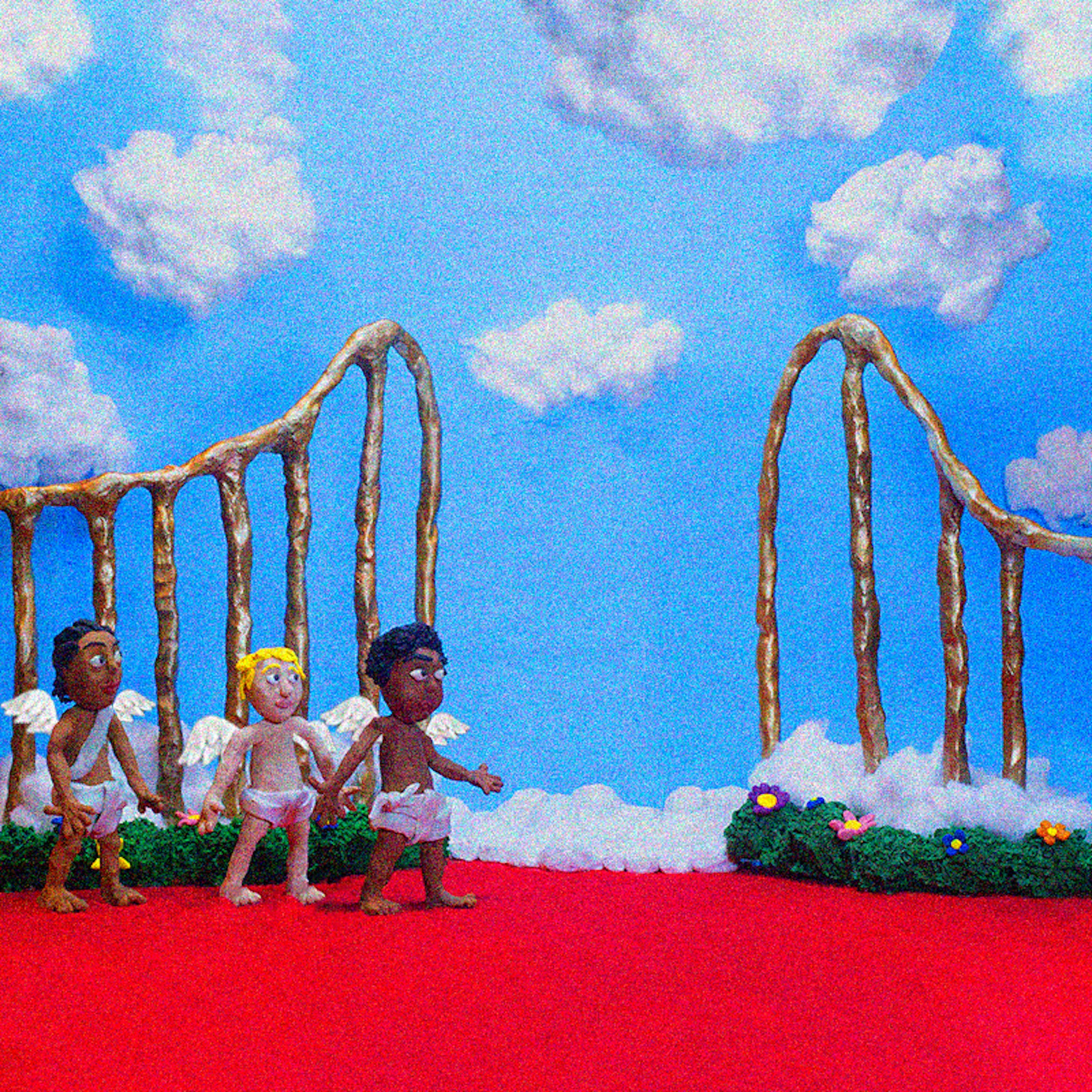
Everything comes full circle when “Until Heaven, Keep Mashin” arrives just in time to preach on about what to believe in. Own your L’s, value your time, never extradite yourself in the face of an attractive partner, discipline is not what you want but what you have to do, and being honest is the only power he will ever allow himself to know. They are honest raps, frankly, almost too chintzy, and they don’t enter the audience with a power punch, but rather, “I’ll die for the shit” is the only thing believable at this point in the project, simply because “he gives too much of a fuck” to do otherwise. “I drive myself crazy cause of how much that I give a fuck” is repeated three times and the song closes the album at the same place it started: in an obsessive tone. Mark Lux made a record about wanting it so badly that it hurts and at this point in his career, wanting is more powerful than the actual prize.
Back to “200$,” right after the scam opportunity dissolves. He mentions the answer: “So now I’ve made up with two friends, the name of Benjamin/Although our friendship awkward, I no longer can resentment them.” A full-grown man admits he has an embarrassing, necessary relationship to money. The hunger is still there, sitting right next to the faith, and neither one seems to be able to relinquish the other.
Great (★★★★☆)
Favorite Track(s): “Fades,” “200$,” “Crutch”
I absolutely love this break down! 🥹👏🏽 this EP is phenomenal and I’m happy to read about it as I continue to sit with and digest it.