

Album Review: Outdated by Chenayder
The Orlando singer and producer turns a rough three years into forthright songs about unanswered letters, overdue apologies, and loving her own solitude.
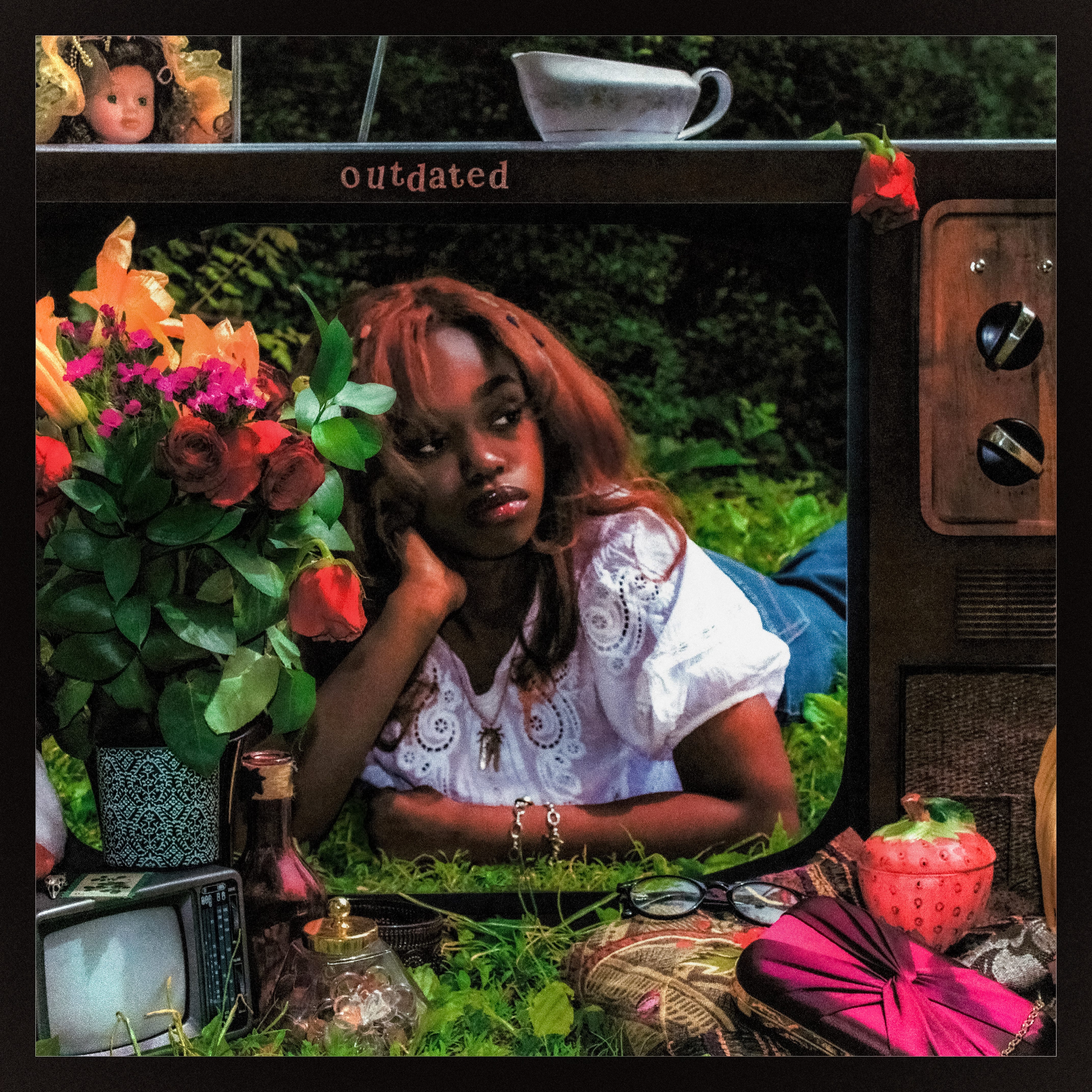
The three years between writing and listening to these songs were difficult in Orlando, where most of them were composed during the author’s sixteenth birthday, when the world was only accessible to her via pen on paper, and in the meantime, she grew up. Chenayder, the Haitian-American singer and producer famous for the single “Fall,” and the EPs Blue Oblivion and Maybe In Another Life, claimed that she wished that the time would fade these songs, that she “wanted to progress without everyone seeing [every part of] the progression,” and that now “these are old emotions now.” That’s why she named the album Outdated.
No matter what she may have hoped for the time to do, the girl in “Wonder” keeps writing letters to somebody who doesn’t even bother to read them. She wonders if her presence makes his heart beat faster, and considers herself a fool for even thinking that, and then admits that the whole correspondence goes just one way: “You never seem to wonder where these letters are coming from.” She is several years ahead of her correspondent. On “One Day” she has already decided on marriage, because she knows that “But I know a yes will cause you less stress/You’ll get to see me in a pretty white dress,” and when she asks him where he sees himself in five years, she has her own answer on her mind. “I Know You” pushes the same longing further, towards somebody she can’t even recognize anymore, although she swears in love, admitting at the same time that her memory is vague. These are crushes conducted exclusively alone, and Chenayder knows that; that’s why on “One Day” she reminds him that “Your mother taught you better than this.”
There is someone to answer on “The Beginning,” where she asks for emotional fitness, proof that he is strong enough, that he won’t take the first thing that comes his way: “If I can’t get it, then it’s all mine, it’s all fine.” detahjae, the Bay Area rapper answering her call, takes the interview very seriously. He won’t bribe her with spinach, but she loves the idea of a dinner; he would run a marathon to cover the long distance, and he wants to know why they shouldn’t tie their emotional bridges together. In the end, he even bets that if she could choose the partner for her life, it would be him. The chorus they perform together is hardly anything else but the sounds “Shooby-doop, shooby-doo-wa” and the title phrase, courtship syllables older than either of them. But she checks how deep he is anyway, and decides that she won’t wade in if all he has to offer is the surface, and bids him farewell on her way out.
With such disappointing company, “Solitude” is her way to express in the clearest possible terms by preferring being alone. Loving when the only thing that speaks to her ears is the wind, loving that her loneliness frightens even her own mother. She is not selling self-care; she knows what this loneliness costs those who watch her, but she can’t help herself. Vayda writes from some point much farther away, deep in the woods with a backpack and no coat on, spinning out of control and even passing the desire to have a hug, the worst days of her played on a Jumbotron while she stands ten toes. Norah’s World is slightly more down-to-earth, a girl on a tight schedule who warns him that he shouldn’t expect any response from her when he contacts her, and keeps going in circles alone until it almost makes her cry. Chenayder writes out the title letter by letter and translates it: “S-O-L-I-T-U-D-E, means leave me be,” and then asks the listener to do the same.
Being alone is also how she separates her faults from his, and the case keeps changing its positions. “Salt” is her defense that everything she says should be taken with a grain and salt; she might have broken his heart, but that’s not her fault, she is doing her best, and whenever she happens to say something wrong she covers herself with “You’re my everything.” However, she reverses this plea on “If You Could Give an Apology This Is What It Would Sound Like,” and confesses outright: “I know, I know, I know/I was the problem,” her apology overdue, her hope that she hadn’t meant her words when he rested his head. Both defenses fail on “Blue World.” She asks anybody to convince her that she is not that bad, that she is good enough so she won’t be so misunderstood, and answers herself: “It’s a torture feeling, like I did the best I could/But I’m no good.”
On “BANG” she reveals too little. By her own admission, she is kinder than it’s good for her; she said what she said, and somebody’s mama goes with the “bang bang,” and every “do-you-remember” points to some incident she refuses to describe. The grievance is definitely true; whatever caused it, she keeps its name secret. She makes more progress with fewer words on “The Game,” with just one verse about how it feels to lose in the game you didn’t even know you were playing, directed to him who wanted the prize without the fight, and with an offer underneath it: anything he wants, as long as he plays by her rules.
The way out is described on “DOOM.” “Got a taste of freedom, and it tastes like Chick-fil-A,” she reports, with her mother screaming at her as if she had committed a crime, and no way to return to how it used to be; she has noticed that people only follow when she doesn’t follow the rules. The other goodbye is “Gone,” which she claims to write in the third person about her younger self. Her baby is gone; you’ll never see her again, almost like she has gone with the wind; the past is far behind, and the future is what she adores. She talks about herself as if she were a neighbor talking about a girl who had moved away.
If any of the feelings described in songs like “Blue World” are close to your own right now, support is available; in the U.S. you can call or text 988 to reach the Suicide & Crisis Lifeline.
Solid (★★★½☆)
Favorite Track(s): “Wonder,” “Solitude,” “DOOM”