

Album Review: O.Y.N by Maxo Kream
Handing every track to JPEGMAFIA, Maxo Kream writes from an older man’s vantage, and his bravado and his grief finally pull in the same direction.
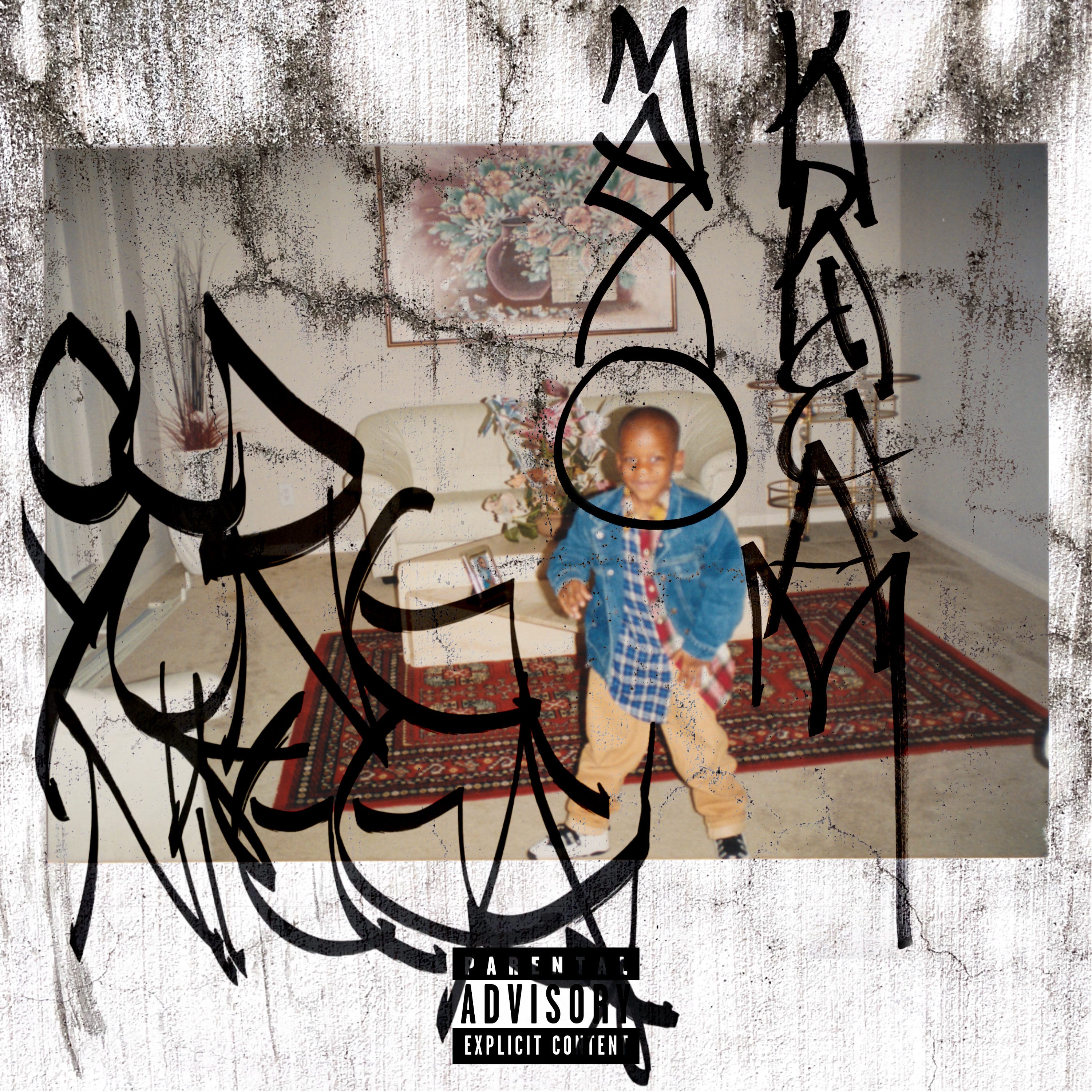
There is very little space for men in street rap to age within it. It’s about the young hustler, the kid who has everything to prove and limited time to do so, and it’s easy for the long-term guys to become elder-statesman speeches or cosplay twenty-two. Maxo Kream, whose childhood was spent in Alief in Southwest Houston, has, through his latest studio effort, found a third way. O.Y.N, or Old Yung Nigga to be exact, is a nickname that denotes a younger guy at the core—keeping one’s twenty-two-year-old urges intact. He teamed up with only one producer, JPEGMAFIA, and directed the record at both his younger peers on their way up and at friends who never made it.
Bravado is the first indication of his posture. “Old enough to be yo Unc,” Maxo states, claiming status more as a weapons instructor to children rather than as a father, as one who can initiate them to the street with an open-handed gun rather than his own affections. The focus of “30 N Dirty” falls on a contemporary, the thirty-something whose grinding has gotten him nowhere—Maxo clowns him with a comedian’s timing: “I’m a grown man, I ain’t kiddin with children” before delivering a threatening dentist reference: “Keep running yo mouth like yo teeth got some tennis/Make me run in yo mouth send you back to the dentist,” capping it all with telling the man he should just get off the corner, get a job. He’s similarly taunting towards similar types of peers throughout “Fake Jeezy,” a nod to mid-2000s Jeezy, with his partner on it, Denzel Curry, acting like one of the few others ready to cement their legacy as eternal.
The persona is difficult to pinpoint more on the title track, when the flex has to compromise, if for the nearest thing to caring. Maxo tangles with a woman his same age, whose son is his ninth-grade son’s, heading towards the street, as they caught with a piece at home and nearly blown to death by gun-play running for their lives from the opps; while mama is working at the clock. Maxo offers to provide guidance without the surrogate parent dynamic, to provide the 42-year-old’s insight that gives him first-hand knowledge of the circumstances that can make for an outcome so obvious and one that is caught under pressure and against everything in his life. He raises the only practical query: “If I'm fuckin' on his mom, how this shit gone work?” And this is something the song provides him with an, all insufficient answer to. He tells the kid to put the shit that makes us sell back because the plug is gonna pull up and repossess the house for not meeting. Warns that his image on the evening’s report would compound the negative effects of what makes his situation complicated and his assistance of little value. “It takes a man to raise a man, it’s hard as a single mother,” he raps. The next second, he is instructing the kid on how to place a switch on a Glock.
These insights are even more resonant when the performance dies down and leaves space for raw emotions to arise. “Time Out” exemplifies this more fully; Maxo deals with the death of his father, travels to his place of ancestral origins in Naija and Ghana, and addresses the combination of adderall and Vyvanse in his day-to-day routine, name-dropping Amy Winehouse as well as he can. He sets a firm boundary on interpretations of his words: “Low vibrations in my thoughts, but never suicidal.” It is here where Maxo makes perhaps his clearest and most vulnerable statement with the line: “This street shit was inherited, can’t share it with no therapist.”
Half of this track is taken up by an interaction with his friend lil Jordan, whose words from his 50-year-sentence murder trial prove to be surprisingly pragmatic and motivating. As Maxo reiterates his conviction on how this earned him motivation, Maxo leaves him and the friend’s voice, with its now more grown timbre, as he discusses the appeals process behind visitation glass, his hand-drawn tear indicating more than they’re able to communicate. “6 Months Clean” similarly carries the weight of sober-day counting and the accompanying lapse with each tally of, for example, a partner choking to death on his own .45 or a parent rendered profoundly melancholic due to the lingering anguish from loss.
Maxo’s work doesn’t always hit that high note; the designer name drops and brag raps about having sex with numerous famous women on “This Shit Going On” and “How I’m Coming” grow monotonous. Even so, ‘How I’m Coming’ shows flashes of witty humor when he boasts about being the “last man to get it popped, then they took a L/Heard they wanted me caught, then they wanna make some dough.” Some fans might feel alienated by “Cum Over,” a late-night sex track with Isaiah Falls that may not resonate, but even then, he slides in a mention of turning thirty-five and just being happy he’s alive.
An acquaintance once told Maxo he was “lucky,” a declaration that infuriated him. The response is delivered throughout “How TF I’m Lucky”: the record is composed of a catalog of sacrifices made in order to achieve everything he’s managed to attain, starting from opening for K-Dot to dodging bullets outside a show, from endorsement by legendary rappers to the deaths of his childhood friends, including cousin Woodrow and Lil Kaime. These sacrifices go as far back as him turning down a recording deal to remain independent, then getting arrested and later being acquitted of charges eight years later. On “How TF I’m Lucky,” he adds, “My first time on a TV was a murder, not no music shit.”
Great (★★★★☆)
Favorite Track(s): “6 Months Clean,” “Time Out,” “How TF I’m Lucky”