

Album Review: Picture Day: A PawPaw Rod Album by PawPaw Rod
Indie-funk that admits, on its second song, that danceable rhythm cannot bring a dead brother back. Most albums this warm refuse to say so.
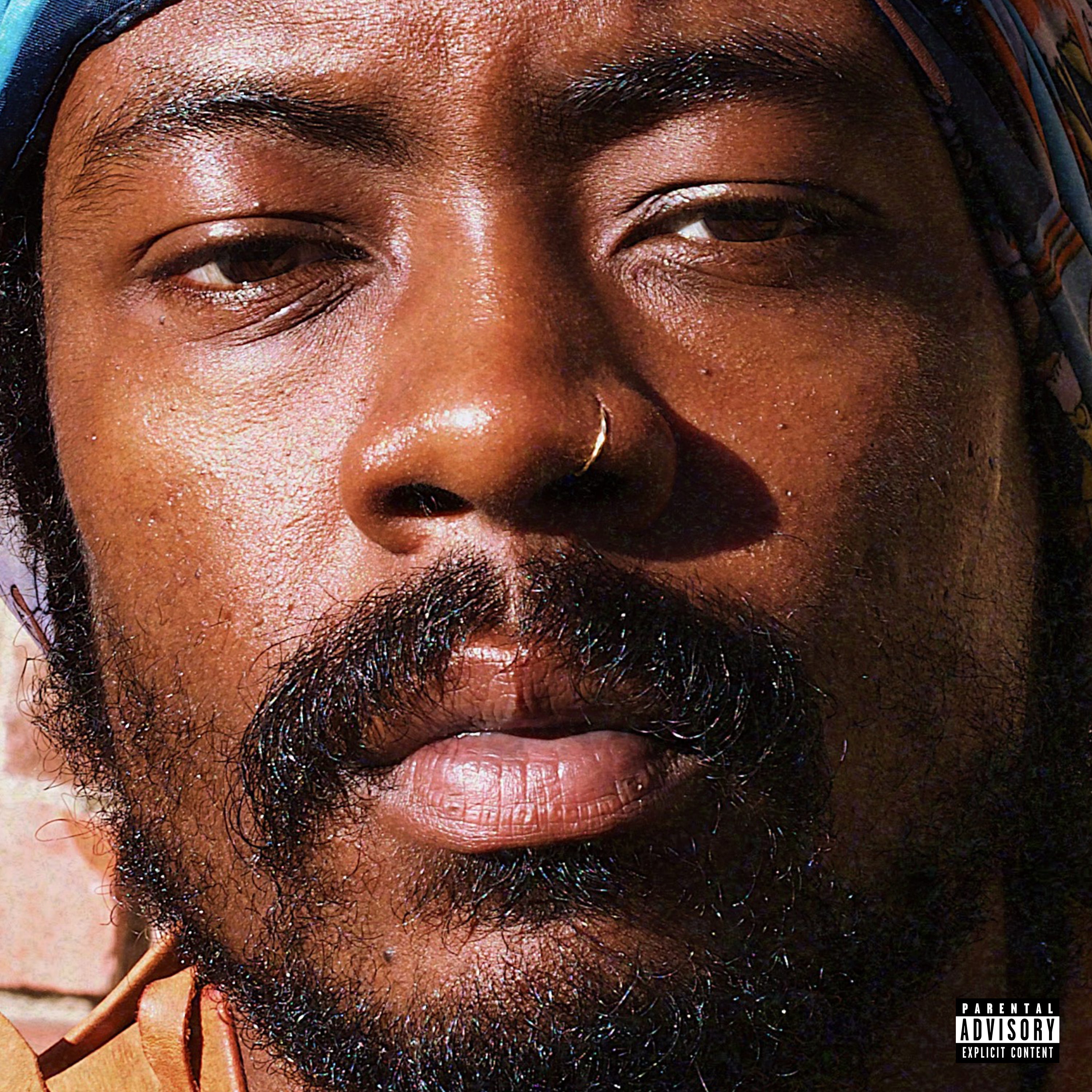
Presenting itself as background music with a hook is something polished funk-soul singers are good at, and PawPaw Rod is no exception. A brunch playlist track. A dozen songs of soul guitar over funk bass with vocals split between rapping and singing and talk-singing, the sort of debut you put on at Sunday brunch and forget by Monday. That reading already falls apart by “I Wish,” whose propulsive bopping bassline gets put to work hauling a sentence nobody wants hauled: “I wish I could bring back my bro.” On a bass figure this clean, at a tempo this fast, Rodney Hulsey, who records under his late grandfather’s nickname, was supposed to be selling that a snap of the fingers makes everything okay. His hook says so. His next breath retracts it: “But I can’t, but I can’t, but I can’t.” Three refusals on a beat that wants you up, then doubled later: “I wish I could bring back my bro/I wish I could cut back on smoke/I wish I could care less bout what you thought.” No other indie-funk debut this year refuses the dance-floor escape route as fully as PawPaw does on his very first proper song. No opening quite like it exists on any other 2026 debut, the bass groove earned by a single line instead of by craft, danceability used against itself before any later track on the album gets the chance to try the same trick.
“Granny on the porch/Like ain’t nothin wrong/Sometimes I thought/She controlled the weather,” PawPaw sings at the top of “Tornado Alley,” watching from the Oklahoma porch where his grandmother stayed put as the sky turned toward the 405 area code, an acoustic strum from Nick Sylvester and Two Fresh held against a steady drum line. Bluesy soul-rap arrives in pieces: the corner store leveled, newsmen promising rebuild “come September,” a kid with a bad temper learning that “Life could end quicker.” When PawPaw sings “Still a 405 nigga/No matter where I go,” a military kid born in Honolulu who picked a state at last stops apologizing for the pick. “Tornado Alley” carries this album, a porch shrug from a Black artist who chose Oklahoma over anywhere else he could have settled, the only cut that earns its blues without performing them. Held together by the strumming guitar.
On “The Get Back,” singing gets thinned into a grounded conversational rap cadence and PawPaw declares, “This for the nigga on the Eastside/This for the ones can’t get right/This for the people bein’ low-balled,” a dedication aimed at the Oklahoma City blocks he has been touring away from for two years. Sylvester and Two Fresh switch the production into boom-bap with chopped soul that breaks plainly from the funk-disco around it. From here on, PawPaw’s record stops being indie-funk and admits that it grew up on rap. Cousins who “hug the block” turn out to be the same cousins who “Told me, ROD YOU BETTER NOT,” inheritance and warning braided too tightly into one bar by the only people who ever knew the corner well enough to steer him around it. “Use my mind as a weapon” answers them. By the close, “Big up sister/Big up papa/Big up mama” is being chanted by an Eastside kid keeping a promise that had been made years before.
A heated argument gets wired straight into the arrangement of “Give It to Me Straight” by producers Billy Lemos and Nick Sylvester. Thick rhythmic bass thuds against handclaps stacked up front; synth stabs slice in where breath would normally go. PawPaw opens on a melodic stack (“Your rage/My pain/Transformed into/Something”) then snaps mid-song into staccato rap on “You’re no princess, I’m no P/Fairytales don’t work for me.” Refusing to soften either mode is the smartest production decision on the record. Bass and spit volley in tempo with the lyric. Sylvester’s Godmode bottom end thuds underneath PawPaw’s “Thoughts crammed in a two-door/Need more legroom.”
Most critics will flatten this record at the safe-pocket cuts. “Bettin on Me” runs a self-belief script over funk bass borrowed from every indie-soul record shipped this year. “No Questions Asked” sells unconditional loyalty over warm soul chords sweet enough to ask nothing of the listener. Bouncy “Chandelier” stomps over its claps with rhythm only too aware of how chipper it sounds. Pull “Bettin on Me” out of the sequence and PawPaw’s “Stop runnin’” reminder goes with it; the boom-bap pivot into “The Get Back” now plays closer to a stunt than a homecoming. Without “No Questions Asked” smoothing the path between “Lights Down Low” and “Tunnel Vision,” the dance-pop turn never quite finds its setup. Safe pockets here do work the peaks cannot do alone.
His dead grandfather’s leather coats came out of the closet and got claimed by Rod, who had been moved through enough military zip codes to qualify as from nowhere, and he has worn them ever since. Norman, Oklahoma is the only place that ever took. “HIT EM WHERE IT HURTS” went viral on Godmode in 2020, ended up in an Apple ad, gave him four EPs of runway before this debut full-length appeared. “I Wish” got cut in Toronto with Jeff Hazin and Nick Ferraro on the January 2025 morning the Los Angeles fires broke out, smoke watched on a phone between takes. PawPaw had earlier mailed Sylvester two hundred of his favorite songs as a primer on what raised him. The resulting album is more autobiographical than most debuts let themselves get, the dead grandfather’s coat on the cover and “I Wish” cut while LA burned.
On “Hot Streak,” Tommy Newport guests with a falsetto that climbs into the upper register, his voice catching the psychedelic guitar where it had been left waiting. Newport was born in Manchester and raised in Wichita, his career built on indie-pop falsetto, and his lines on the song, “It tastes sweet/Hot streak/Everybody watch me,” are sung as melody first and meaning second. Newport sings where PawPaw talks. The host returns with a conversational baritone planted on the downbeat, asking “Who gon bust a move?/Who gon make a play?/What’s yo role?” Two Midwest transplants comparing notes on momentum, and the feature earns its slot more than any other on the record. KingJet and Sylvester’s off-kilter beat gives Newport room to climb and PawPaw room to settle into his own pocket. Newport’s bridge (“Maybe/I need someone here to stop me”) sounds, more than anything else on the record, like the worry PawPaw has been outrunning track after track from the opening song forward.
Over an elastic bass loosening on the downbeat of “White Chocolate Chips,” a smooth synth opens a room wide enough for a guitar line to walk in without bumping anything; the disco-funk is warm enough that you could forget how recently a tornado was on the porch. Played like the last song you will hear. Inside, one refusal holds the whole room: “I’m not ready to change clothes/I’m not ready to wash this night off.” PawPaw’s disco-funk picks the good only after the rest of his record has been honest about what cannot be fixed.
Solid (★★★½☆)
Favorite Track(s): “I Wish,” “Tornado Alley,” “The Get Back”