

Album Review: PINE by James Savage
A debut R&B album that argues with itself end to end and turns its second-guessing into the title. The hesitation is the engine.
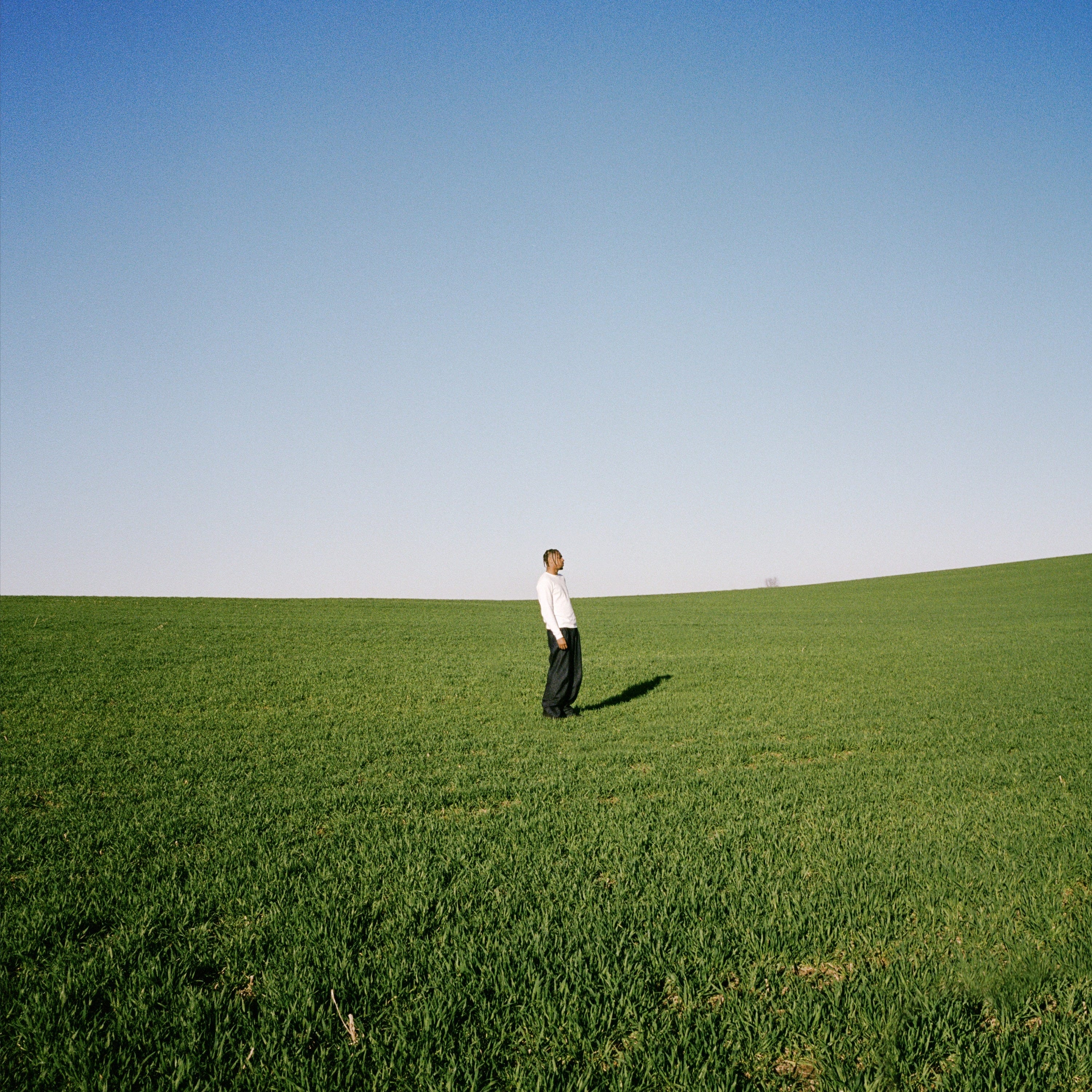
A 24-year-old confesses across his whole debut, the verdict gets reached for and dropped and reached for again, the album never settles on what it wants to declare, and the skeptic who hears that as filler has heard half of what is actually going on here. Skeptic, take a beat: the better half of what is going on here lives inside “The Pine,” a piano song with the felt of the hammers audible at the verse ends and an outro that turns the phrase “This must be the pine” over and over until each return of the line stretches by a beat. James Savage’s vibrato gets bolder with every return. Around him, the room grows quieter. A figure he has just named begins, very slowly, to feel inevitable. Savage believes that figure and sings it twice over the piano without losing nerve, and the move turns out to be among the album’s strongest. The standing tree in the song is the figure on this debut Savage commits to with both feet. On a record otherwise determined to keep every door cracked open behind him, the commitment turns into a small radical act of staying still.
Franklin Rankin, Jermaine Paul and Savage himself co-produced “Good Enough.” Savage tracked the vocal at quiet volume, consonants forward, breath audible at every line end, autotune absent. And now, money: the dollars Savage sang into the lyric, “I need a couple hundred for your attention,” had nowhere to go on a track this small except onto the snare, and the financial talk that R&B usually keeps offstage moved up to the front of the song. The take is one of the album’s best.
Two R&B records share PINE’s temperature. Daniel Caesar’s Freudian arrived in 2017 as a quiet acoustic hymn record where romantic devotion took on the shape of a small spiritual practice; Brent Faiyaz’s Wasteland arrived in 2022 as a slowed-down player diary about Faiyaz trying to settle down and not quite managing it. On “Get You” back in 2017, Caesar wrote romantic devotion as something close to a small spiritual practice, giving the genre most of its current acoustic gospel feel. Pointing the opposite direction in 2022, Faiyaz took playboy reluctance about settling down and turned the move on “wrong faces” into something close to a small subgenre of its own. Walking past both options, Savage instead picked up the dirty clavinet hook on Bill Withers’s 1972 “Use Me.” Plus the gospel-piano vocal on Donny Hathaway’s 1971 “Tryin’ Times” alongside it. (The company is strong.) Two records that knew financial speech is emotional speech once a poor household runs the talk. A 24-year-old in 2026 choosing those grandparents over the available parents is the most surprising move on this debut, though the best decision Savage made in the whole album’s writing.
On a summer afternoon, Sandy Lee Watkins Park sits along the Ohio River in Henderson, Kentucky, an hour east of Evansville. The studio room where Savage tracked “100 Years” is somewhere in Louisville, two hours away. (Local trivia: the town’s most famous resident before Savage was W.C. Handy, who lived there in the 1890s before moving to Memphis and inventing recorded blues.) The town has roughly twenty-eight thousand people. Savage’s father took him fishing there. Under the verse of “100 Years,” a close-miked acoustic guitar holds inside one small interval for the entire verse. Savage has been singing inside that kind of arrangement since his teenage years in a church choir down the road. His pitch holds steady against the chord throughout the whole verse. The “hundred years to grow for you” line was rhyming against that river. Once it knows the place, however, the proof-you-grow-you rhyme starts to sound like a Henderson address, and the partner Savage was promising is also the town he grew up in, and “100 Years” is the better of those two overlapping commitment tracks.
Singing the second-verse refrain of “Crash” softly over Math Times Joy’s distorted bass, Savage delivers the album’s most exact line of writing. “And in the fall we used to climb the trees all day/’Til they all fell down but the branches stayed,” he sings. A childhood memory of running until the streetlights came on gets scrubbed of nostalgia within one stanza by an image of trees collapsing while their branches stay airborne, separated from the trunks that grew them. Hard inversion. The album’s title figure, met one song earlier, was a pine standing tall while its leaves came down; “Crash” gives the photograph negative, a tree falling while its branches stay airborne. A doubled metaphor that pushes “Crash” past pretty into a much harder kind of beauty, and Savage delivers the inversion better than most R&B leads working in the same key.
Across the middle of the album, tremolo electric guitar on “Unavoidable” gave way to panned vocal harmonies on “Painful Company,” and Savage held his vocal pitch across the pair in matching keys, back to back, with one partner he could not put down. Savage described a loop on the earlier of the pair: sex, fight, makeup, repeat. By “Painful Company,” Savage was calling that loop “the only available form of being alive” and recasting his obsession as a vow. The second-song production had little in common with the first-song production. An addiction was being dressed as a commitment, and the dishonesty of the dress-up ran loud enough on “Painful Company” that whether Savage himself heard it became the most uncomfortable question on PINE, better than any wallow could have managed. A reading where Savage was brave fits the lyric. A reading where he was careless fits the lyric just as well. PINE refuses to pick, and the refusal itself is a strong piece of writing.
Savage’s pen runs sharper than most R&B singers his age across the conflict songs (the Rhodes-and-bass midtempo of “Good Enough,” the distorted-bass chorus of “Crash,” the snapping-percussion verse of “Qtr Life Crisis”); his pen runs duller on the commitment songs, where one lyric describes a partner’s fingertips as “like I talk to God,” another describes her touch as “speaking my language,” and a third has “Trust or lust or comfortable is an understatement” carrying the sound of a writer reaching for a feeling and grabbing a thesaurus entry. The substitute lyrics, generic enough for Caesar to have caught in a second draft, came in once Savage stopped naming objects. The devotional writing Savage proved he can do well on the conflict half of PINE is the writing he does worst on the sure half, and the gap there shows up as the record’s only serious weakness. Is the weakness fixable? Sure, though not on this album. Savage already proved across the conflict tracks that he can name an object instead of a feeling. Pulling that move off when love is the subject is its own trick.
Remember the title song from the first paragraph above? “Qtr Life Crisis” arrives on the other side of the album with Savage’s vocal sitting a little harder against the snapping percussion than anywhere else on PINE. “Maybe it’s the pine/Maybe it was me the whole goddamn time,” he sings. Savage has dedicated his whole debut to naming the things he cannot decide, stacking those hedges until the hedges turn into the only certain thing the album leaves with. Whether the maybes stay this productive, though, is the open question the next record will have to answer one way or the other.
Solid (★★★½☆)
Favorite Track(s): “Crash,” “The Pine,” “Qtr Life Crisis”