

Album Review: PROJECT X by Key Glock
Twenty tracks of money, codeine, and motion in the same dry deadpan, and Key Glock is good enough at it that even the cuts riding one word go down easy.
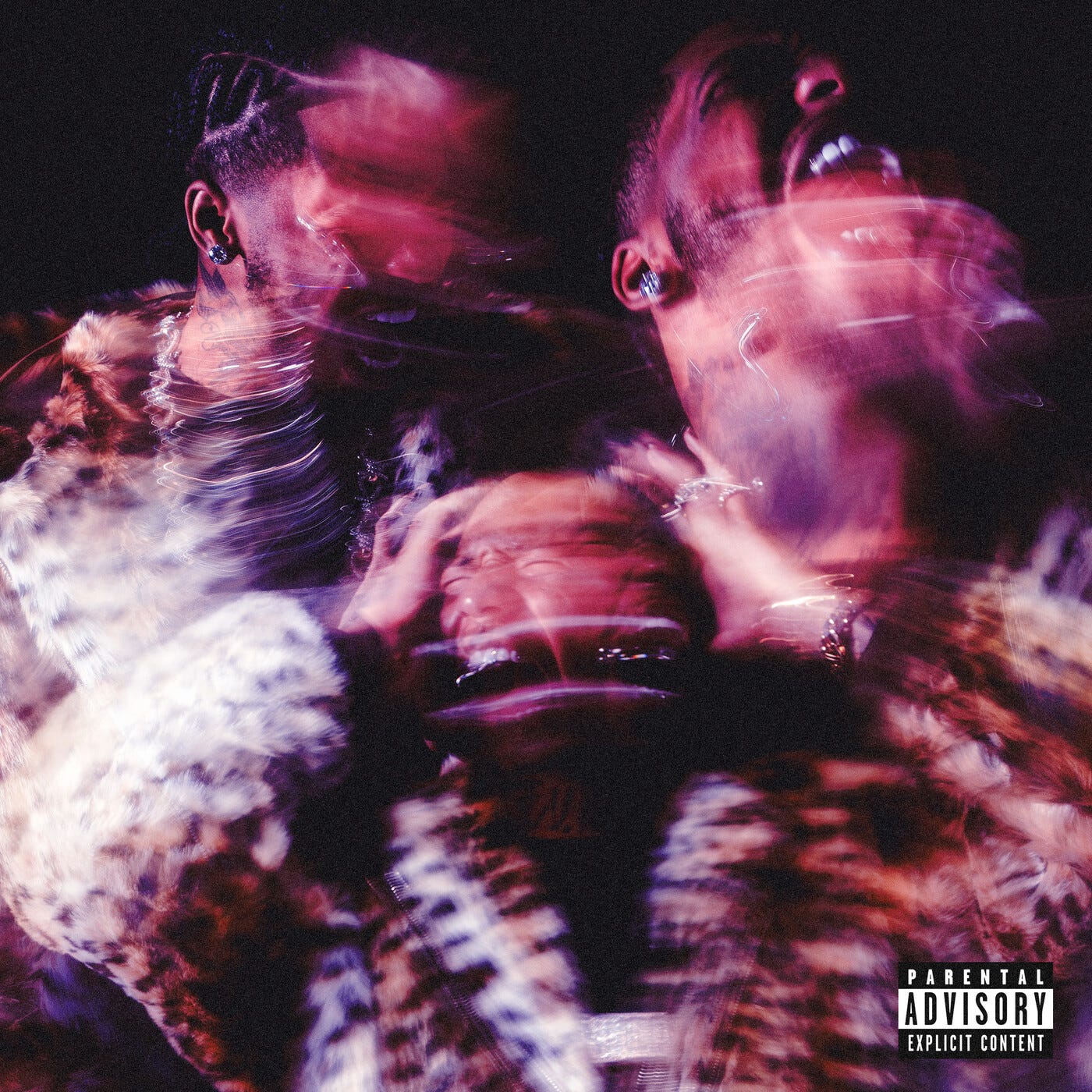
Editor’s note: Tay Keith (Brytavious Lakeith Chambers), who produced or co-produced five songs on this album, was found dead in his Nashville apartment on June 18, 2026, the day before its release. He was 29. As of now, police said no foul play was suspected and that a cause had not been determined. Our thoughts are with his family, friends, and collaborators.
Money, motion, codeine, and a few aliases Key Glock’s invented. That has pretty much constituted this Memphis rapper’s output for a long while, and he’s pared away until he’s reduced life to its pure, unadorned flex, delivered in a detached, almost matter-of-fact clipped tone. He is a master at precisely this, and his first full-length effort since last year’s Glockaveli, PROJECT X, spans twenty songs with an astonishing consistency. He maintains this tightly framed aesthetic so meticulously that it is left solely to the rapping to carry it. It holds up a little more than half of the time.
The progression is still revealed in the minute. He can reference food stamps he relied on and the YouTube money that afforded their end. On “Mannish,” he states he’s grown, flaunts the jewelry, mentions the codeine stocked away, and incorporates a Nelly reference without deviating from his flat delivery. He preserves a placid demeanor on “Hardknock,” against a more percussive backdrop, declaring that he was born for greatness, that Kush is his fragrance, that he’s stopped at a late-night Taco Bell and currently leads what he characterizes as “the hard knock life.” The meticulous details prevent the boast from becoming generic. On “Sick,” he momentarily reminisces about being young, observing The Young and the Restless with his grandmother, then resumes describing the chain as “Niagara Falls.” He proclaims his supremacy on “Big 5,” bonded to currency and uncompromised by any woman, with a heart as frigid as a Dairy Queen Blizzard.
On “6AM,” he enumerates firearms, intoxicants, and female companions within the domicile, nonchalantly listing Carti as another entity in attendance. The party is far from over. Glock seems comfortable during those quiet hours following club closures. On “Drug Luv,” he seamlessly blends high-end indulgence with intimate physical encounters, ingesting what he refers to as “mud” that sends him to Mars with a single dosage. The atmosphere becomes dense, never giving way to a crash. On “Loco,” his little brother is experiencing a pill-induced stupor adjacent to him; he’s procured a temporary female companion, and Cutthroat La Familia is making threats of a life-altering nature, a clear statement of priorities with money reigning supreme.
He’ll pull up a title in command on “Face Down” and have us all eating well with the brothers like they should have had a group last name of Jonas, then make some joke of the whole ordeal on a bent Glock. Twenty cars and no lease. The flex tracks heap it on like that—lifestyle as pile up—and the good ones have a punch line tucked away. A chick in every zip, two-month rent, some designer duds on “50 Hoes,” then throw in the most concise creed on the album: “I ain’t changed, I’m still me.” The cold on the creep gets more aggressive on “Cherry on Top,” the cup goes round the car and back again, Gen 5s out and a diamond-plated machete hangs on the wall and his brother’s body counts come up in the conversation like nothing.
When the tempo comes down a little, a little warmer, less of a stomping of the feet and let’s the song ride. He’s at his best on “Mannie Fresh”—a Cash Money feel by name and bounce, and tells everyone to have a Roll. Drugs that look like jelly beans when they’re made from ecstasy, and we get one nice southern Memphis line, and then a little detail on how hard it is to keep from bringing drugs into the area. Bass is rounded out for cruising on “Houston Flow,” and then it’s back to dough numbers with a San Andreas drop, and then you got figures that go up to eight now, and we wanted more where that came from. He pulls up in the Benzo that is the song of the same title and does a Steve Urkel and Carl Winslow bit for the chuckles, chrome Hearts out and a .45 rides shotgun.
He takes up most of “SRT Muzik,” naming it after a different make, Demon, Maybach and then throws in a line of charging a girl for his time, then breaks his brag. He stops dead cold and puts up a big M and calls his girl his world, then turns the menace up a gear and spits: “Daddy’ll kill the whole world.” The love is sitting right beside the hate, inch for inch, in the same vein, and it has not the hint of a pause. The lines right before this were “Will leave brains on the curb” with it spoken in the exact same even tone and cadences, and that statement, followed by the thought for his kid, now the song ends in a blaze of hyperbole, as profound as it is ridiculous.
Occasionally, the flex is busted. Those are the moments you hold onto. He’s still high as hell on “Faded,” codeine thicker than the plot, before he states: “I lied, I said I’ll stop.” It was a sad thing to admit when he hadn’t; the pain stored up in his bones and eyes while he was still trying to get the most. He’s not waking up with any sunshine on “Seeing Red,” grabbing for pills first thing before turning the red into money and sex. The closer, “Reminiscing,” is the cathartic outpouring-the pill-Pooh is thinking about his brother, the late Young Dolph (who was killed in 2021), who said get the money and the bread. While it recounts coming up from the mud, the plea to God for a thug’s love, seeing his own burial, and imagining his daughter listening to his car go “vroom,” the overall vibe is one of payment for the losses and dues.
Stack enough of these together, and a couple will start to run on a single word. The most blatant is “Dummy,” where he remains flat and monotonous throughout, looping the title while describing counting money as a form of meditation. He operates similarly on “Work It,” the type of strip-club chant that a DJ can flip into a go-go Glock for the masses. And then there’s “Go,” the most obvious hit to those outside the base, where one spoken sound anchors the entire track. He blends the necessary rags-to-riches narrative, but the word itself is hook, verse, and rhythm section, and the power comes from its forceful delivery. When other tracks apply the same tactic without a substance to support it, it lands with a thud. The force of that one sound doesn’t.
Above Average (★★★☆☆)
Favorite Track(s): “Mannish,” “Faded,” “Reminiscing”