

Album Review: Psychological Cheat Sheet 6 by Vic Spencer & August Fanon
A Chicago rapper returns to the group home that raised him, counting money and gray hairs while the memories stay loud with the help of August Fanon for their sixth collaboration.
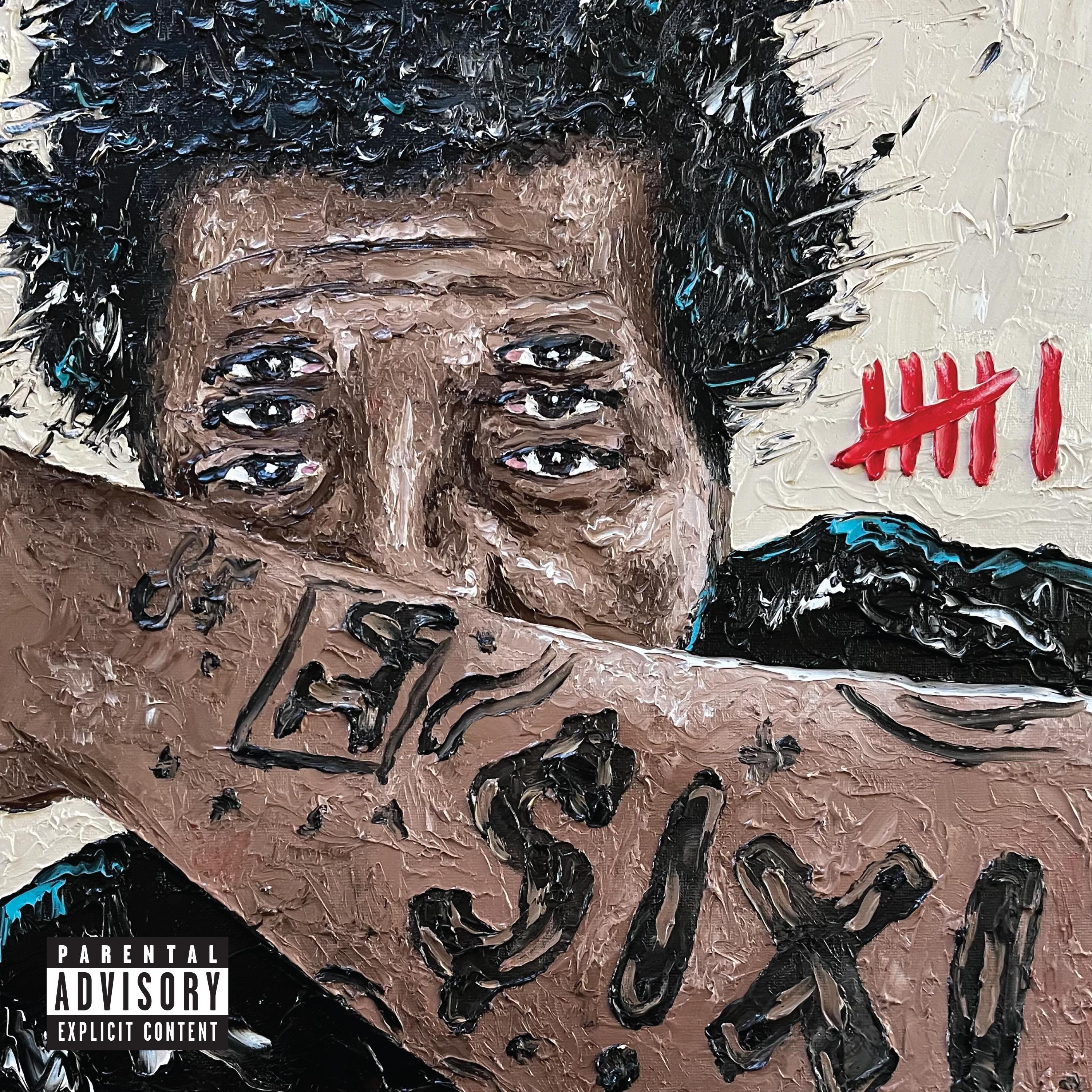
The group home sits at the center of Psychological Cheat Sheet 6. Vic Spencer keeps circling back because the place shaped how he moves, how he eats, how he talks shit, and how he watches people who claim they forgot what happened. On “Point System,” he puts the contradiction plainly: “We had a curfew, it felt like we was going to prison/My niggas was jugging rocks, but we was on the point system.” That’s the album’s whole logic in two bars. The structure was institutional, the survival was street, and you learned to work both, or you got eaten. And the details he stacks around that idea are the kind you can’t invent. The vending machine with a membership, the basketball nobody passed you, the hamburger where Dean hid the green stash when staff searched the bags. Vic has been mining this material for years, but he doesn’t run dry because he keeps finding new angles. On “Store Pass (Live),” he pins the loneliness of the library: “Nobody wanted to go by themselves, but I was in there/All I needed was a chair.” It’s just what happened.
What keeps the record from tipping into memoir is how casually Vic lets the present bleed into the past. He’s old now, and he says so constantly. “I’m the youngest out my mama four kids and got the most gray hair.” He owns a house. He’s managing his daughter’s account. But the reflexes haven’t softened. He still flags who owes him, still tallies grudges against people who pretend conversations never happened. “I don’t be liking when people act like they don’t even remember what was said,” he logs on “A Cruise to My Past.” That line could be about money, could be about disrespect, could be about both. Vic carries the group home forward because the group home taught him to watch his back forever. The CEO of his facility once told him he was the dopest. Sean Price told him the same thing. He’s still trying to prove both of them right while owning a Benz and buying salads with extra kale.
Fanon’s production stays tight enough to let the stories stay loud. The drums rely on loops, but he lets the samples do the talking with a pressure that keeps Vic moving forward without turning the record into a sprint. Most of the beats stay loop-driven, which gives Vic room to stretch his thoughts without competing against too many moving parts. On “Plan It,” Fanon opens up the low end just enough to let Vic land his heaviest memory: “I was on the third floor with the Knoc-turn’al CD, had The Source Magazine with Dr. Dre on the front/This is when I used to let my niggas roll up my blunts.” That’s a kid in a facility, finding rap music, learning who he wanted to be. The beat doesn’t sell it harder than it needs to. It just holds the moment.
Vic grew up around violence, still talks in its language, and doesn’t pretend it was noble or educational. “Blood shed lookin’ like the Red Sea, literally,” he reports on “The Stupid Target.” That’s just a description. Subsequently, the threats move in ways that feel more like habit than heat. “I come through just to squeeze toast” and “flamethrower leave your team fried” sit next to detailed scenes like ornaments that don’t match the tree. When Vic gets specific about what the environment actually looked like—“Old TV looking like brown maple/We was watching porn on that motherfucker/When the staff came, we played N64 on that motherfucker”—he’s sharper than when he’s just posturing. The comedy and the menace work best when they sit in the same sentence, like on “Mirrah”: “Studio session was like timeout/Every time I pull a rhyme out/It was designed to ring the clowns out.” He’s clowning and confessing at once.
The record flags its weakest stretches when Vic stacks references faster than thoughts can form. Lines about Klay Thompson headbands, LeBron versus MJ, and “old wounds in a new spot” scan as generic even when they rhyme well. A handful of brag runs could swap into any underground rapper’s verse without changing the meaning. The writing tightens back up whenever Vic returns to the facility or to his own reflection. He just needs to keep the receipts visible without the need to win every bar, and that’s what Vic and August accomplished here.
Great (★★★★☆)
Favorite Track(s): “Plan It,” “Store Pass (Live),” “Point System”