

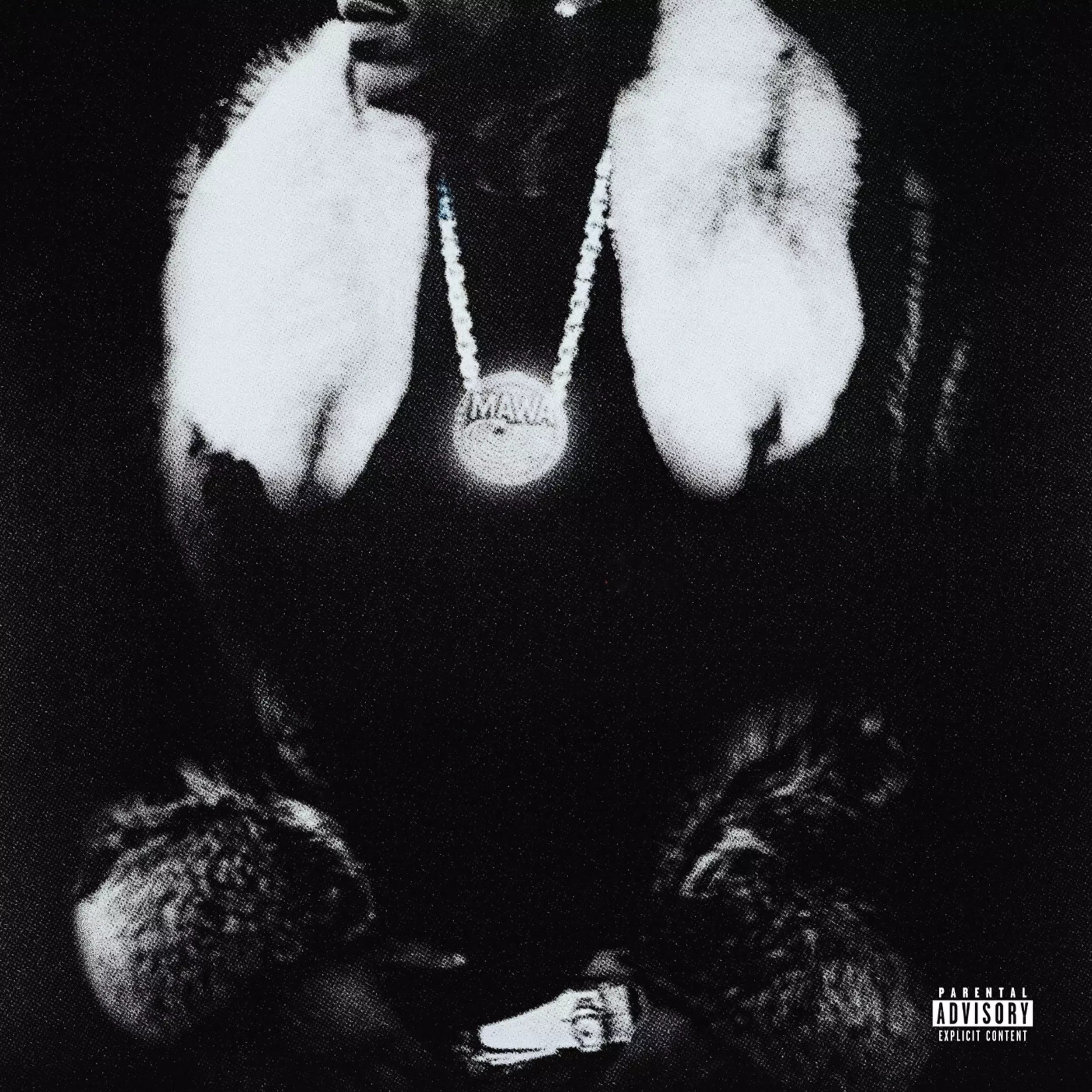
Somewhere between 2006 and now, “wavy” stopped being Max B’s word and became everybody’s word. French Montana kept saying it. Kanye put it on a song title. A whole generation of melodic street rappers, from A Boogie to Gunna to anybody who ever half-sung a hook over 808s, owes something to what Max was doing in Harlem before the feds took him. The irony is brutal, though. The man who started the wave couldn’t ride it. He was sitting in Northern State Prison while his influence spread through hip-hop like a contact high, collecting no royalties on the style he invented, watching from a cell as imitators got rich off his blueprint. Sixteen years of that. Sixteen years of “Free Max B” as a slogan, a hashtag, a prayer that French Montana kept alive long past the point where most people would’ve moved on. And then, on November 9, 2025, Max walked out. Forty-seven years old, five years of parole ahead of him, and a tape already in the chamber.
The circumstances of his imprisonment matter, not because they should follow him forever, but because they set the stakes for what Public Domain 7: The Purge could have been. In 2009, Max received 75 years for his role in a 2006 New Jersey armed robbery that ended with a man dead. He wasn’t in the state when it happened, but he was convicted of orchestrating it. His original conviction was vacated in 2016 when his trial lawyer was found to have a conflict of interest. He took a plea deal for aggravated manslaughter and got the sentence reduced to 20 years. He served 16. That’s real time. That’s watching your mother age through glass, missing your children’s whole childhoods, burying friends you can’t attend funerals for. That kind of experience either breaks you or deepens you, and the question every comeback record has to answer is which one happened.
The Purge answers that question in the first ten minutes, and the answer is disappointing. Max borrowed the concept from that horror franchise where all crime becomes temporarily legal, and he uses it as a permission slip. The emergency broadcast inserts announce that “all crime except murder will be legal for twelve continuous hours,” and Max treats that fictional premise as license to run through the same routines he was doing before prison—threats without stakes, luxury consumption without texture, women reduced to body parts and access points. The concept should’ve been a metaphor for something. Instead it’s just a gimmick, a way of saying “don’t blame me for what I’m about to say” before saying exactly what he’s always said.
The problem isn’t that Max is still doing Max. The problem is that he’s doing it on autopilot. Across 25 tracks, you hear the same brag cycles spinning: I’m the king, I started this, they copied me, I got money, I got women, I’ll hurt you if you test me. On “Finish Ya Breakfast,” he’s bragging about taking women to McDonald’s despite his lottery money. On “Pink Cookies,” he’s ordering P2 champagne and lobster while name-dropping Pavarotti and Andrea Bocelli. On “I Want Smoke,” he’s the GOAT who’s never been broke but will still leave your body on the pavement. These aren’t bad songs, exactly. The wavy melodic flow is still there, that half-sung Harlem croon that made Max distinctive in the first place. But the writing underneath it feels exhausted, like he’s filling out a form rather than crafting something.
The uglier tendencies get worse when you look closely. On “MK Ultra,” Max drops homophobic language that would’ve been lazy in 2008 and reads as inexcusable now—telling somebody to sit down to piss as an insult, using slurs as punchlines. On “Jealousy,” he shouts out “Free Diddy” alongside other locked-up associates, which tells you everything about where his loyalties sit. Max’s moral compass throughout this tape points toward his circle, period. Anybody outside that circle gets threatened, dismissed, or conquered. That worldview is coherent, but it’s also small, the perspective of somebody who spent 16 years in an institution built on tribal loyalty and carried it home unchanged.
The sex talk is relentless and almost entirely degrading. On “Porno Music 4,” Max announces he’s “searching for a prostitute” and spends three verses conceptualizing women as interchangeable receptacles. On “Lap Dance,” childhood sexual abuse gets mentioned in passing—a girl hiding in a closet from her drunk stepfather—and then the song just keeps moving, as if that detail was set dressing rather than devastation. The carelessness tells you everything. Max has no interest in the women he’s rapping about. They’re props in a display of dominance. When he talks about making women “disappear” his dick or brags about his measurements, the insecurity underneath the conquest talk becomes obvious. The humor that used to make his raunchiness tolerable—that winking Harlem player energy—barely shows up. What’s left is just crude volume, track after track.
The features expose these weaknesses by contrast. On “Chase a Check,” A$AP Rocky drops a verse with actual discipline, tight lines about being a “diplomat and showed-off politician, I ain’t into that” that know what to include and what to leave out. Rocky sounds like he edited his bars; Max sounds like he freestyled his and kept the first take. On “Nigga Like Me,” the posthumous Chinx verse carries genuine weight—“Me and Max Chinx, triangle offense/Two decades droppin’ hits, man, them boys never lost ‘em”—and reminds you what Max lost during those 16 years. Collaborators who won’t come back. Time that can’t be recovered. French Montana’s verse on the same track is workmanlike, but Chinx sounds like he’s reaching through from somewhere else, and Max doesn’t rise to meet that energy. On “Turn Up for Me,” A Boogie wit da Hoodie brings vulnerability and romantic longing, actually trying to access something emotional, and Max’s portions keep circling back to suspicion and entitlement. He can’t stay in the feeling A Boogie opens up.
When Max does access something real, the tape briefly becomes what it should’ve been. “All I Do Is Cry” is the best song here by a significant margin, the one moment where the purge concept disappears and Max just writes from his life. He talks about his mother’s crack addiction—singing like Lena Horne, thinking she’s an actress, wooden stems and glass pipes—and about generational pain, about promising not to sell drugs while knowing the streets don’t offer alternatives. “Momma promised it won’t be this hard for long” comes from somewhere real, because you can hear the child still waiting in it. On “Bootsy,” there’s a stretch about prison routine—“Eighteen years, every single day in GP/Gotta ask permission just to shit, even pee-pee”—that captures institutional humiliation in a way nothing else on the tape approaches. These moments prove Max has the material for something important. He just buried most of it under other tracks of recycled flexing.
The production sits in a familiar New York mixtape pocket throughout—drums that knock without surprising you, synth washes that create mood without demanding attention, space for Max’s voice to glide. What carries the tape, when it works, is that voice itself, that unmistakable Harlem grain. On “Cheesecake,” when Max runs through cake metaphors with evident pleasure—Patti LaBelle, waffle batter, Little Debbie—you hear the joy that used to define wave music, the sense that he’s having fun and inviting you along. On “You Are My Stars,” there’s genuine tenderness in the way he addresses his children: “No matter how big the figures get, you’ll always be my baby.” These flashes remind you what made Max worth waiting for. Lola Brooke on “Fiyah” brings energy but gets swallowed by a track that doesn’t give her room to work. Red Café on “Finish Ya Breakfast” matches Max’s wavelength without pushing anywhere new. The instinct to reach for crossover R&B by freestyling over Kehlani’s hit song “Folded” says something about where Max thinks his lane sits—somewhere between street credibility and mainstream palatability (knowing he has bodied Bobby V.’s “Tell Me” in the past), which is exactly where the whole tape gets stuck.
Public Domain 7: The Purge doesn’t reckon with anything. Max spent 16 years in a cell, watching his genre evolve without him, mourning friends from a distance, missing his children’s lives, living with the knowledge that a man died as a result of something he set in motion. That’s material for a serious record, the kind of lived experience that could’ve made this genuinely important. Instead, Max gives us a concept album about permission—permission to brag, to threaten, to objectify, to drop slurs and shout out accused rapists and treat his return as pure triumph rather than complicated second chance. He knows the tape needed some kind of framing, which is why he borrowed the purge gimmick. He just didn’t use that framing to examine anything.
Max B matters to hip-hop history. The wave he started changed how a generation approached melody over street production, and the “Free Max B” era turned him into a martyr for a sound he couldn’t participate in. His return should feel like an event. And it does, kind of—just not the event it could’ve been. The Purge is the sound of a man resuming exactly where he left off, as if 16 years of incarceration were a pause button rather than a crucible. For fans who just want to hear that voice again over some Harlem production, this tape delivers that much. For anybody hoping prison might’ve given him something new to say, the wait continues.
Slightly Below Average (★★½☆☆)
Favorite Track(s): “Chase a Check,” “Bootsy,” “All I Do Is Cry”