

Album Review: Rapping Paper (Gift Raps 2) by Chip Tha Rapper
The Cleveland rapper reunites with Chuck Inglish for a sequel to his 2011 mixtape. It moves between strip-club talk, deep autobiography, conspiracy rants, and Christmas fantasy that holds together.
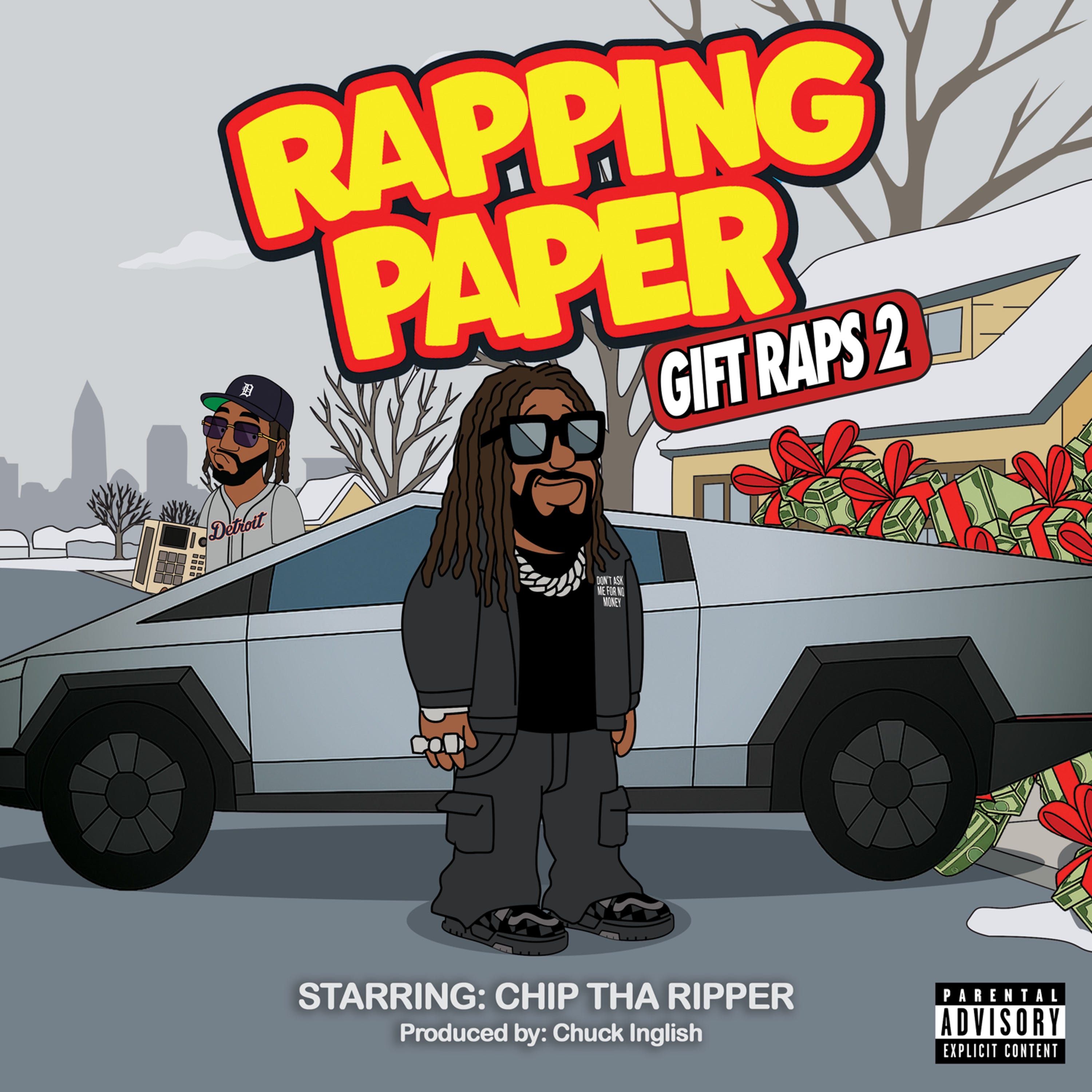
Cleveland is all over this tape, but it sounds lived-in. He calls himself “up there by the lake” on “Jake,” uses “216” as a location stamp on “I’m Like,” and builds the interlude “Cleveland Bih” around loyalty to the women who came up tough in that city. The word “jake” itself does double duty throughout—Chip turns it into a local insult for anything corny, wack, or fake. Your gear, your jewelry, your foot-stance: all jake. It’s a word that does work, sorting real from phony without needing explanation. When he says “These niggas super wack, but in Cleveland we say jake,” he’s trusting you to catch the slang or stay lost. He’s not translating for outsiders. The city comes through in small textures too. St. Clair Ave. as a real street where Santa pulls up smoking spliffs, the east side as a place where “we don’t fuck with the police,” Thornhill Drive as the family’s home base across generations. None of it feels promotional. It reads like someone writing from memory instead of marketing.
That same local rootedness feeds the distrust that runs through nearly every song. Chip’s paranoia goes wide. On “Take Your Turn,” he runs through the news lying, the school lying, NASA lying, the pastor lying. He rejects the Africa narrative and claims indigenous ancestry through the Gullah Wars and Montezuma. Whether you agree with his history or not, the function of the conspiracy talk is clear—it builds a wall. Institutions are suspect. Officials are suspect. Even the food is suspect. “Poison Around Me” takes the distrust into diet, with Chip refusing to eat at restaurants because he sees toxins everywhere. He cites Dr. Sebi, talks about juice cleanses, and calls sugar an enemy attack. The track gets paranoid enough to sound like self-sabotage, but there’s something honest in it too—he’s describing a worldview where control over what enters your body becomes the last defense against systems you don’t trust. The distrust bleeds into relationships on “Don’t Ask Me for No Money,” where even a woman he’s clearly into has to pass a test: don’t ask for cash, don’t make it awkward, don’t shake him down. He wants to give, but he’s watching.
The tape keeps pulling between flex mode and confession. Chip talks about swiping credit cards until they melt, hopping in trucks nobody else has, landing back in Cleveland and sliding to the Hilton. But then “The Bio, Pt. 2” drops, and the posture falls away. He names his first address—145th and Woolworth Road—then Willow Arms, Sydney, Building E. He talks about his bike getting stolen off the porch, his parents teaching in Cleveland Public, the divorce when he was eleven. His mother took him and his sister to Georgia without telling him they were moving. He heard his father “in hurt mode” for the first time on the phone. The song keeps going: OutKast’s Aquemini playing in his cousin Chubb Rock’s bedroom, lunchroom rap battles, his mother’s death on May 16th, 2022. The writing gets plain and specific in a way that makes the earlier boasting feel like a shield. “I was taught empathy/I wasn’t taught to treat people like they was expendables” lands harder because he’s already told you where he learned it.
“Ice Cold Night (Santa Save Me)” tests whether Chip’s humor helps or hurts. The song plays a surreal Christmas fantasy where Santa rolls up in an Amazon truck with elves heel-toeing and packages wrapped in real money. Chip starts freestyling over Santa’s beat, then chases him to St. Clair Ave. to return his dropped keys and gets tossed a hundred bands. It’s absurd, funny, and strangely grounded—the North Pole stuff happens on Cleveland streets, the fantasy stays local. But it also stalls the album’s momentum. The joke runs long, and by the second hook you’re waiting for something sharper to arrive. When Chip leans into comedy, the writing loosens, and the tape drifts.
The weaker stretches come when Chip leans into generic sex talk. “Toss It” has energy, but lines like “backstroking through the apartment” don’t tell you anything about the man. “Serial Vibe Killer” describes a difficult woman with BBL surgery and a Rolodex of men doing favors, but the portrait stays surface-level and owes more to type than observation. The guest verses on “Fat Raps 4” fill space without adding information—Denzel Curry, Larry June, and MGK all show up, but none of them push Chip into a new register. The posse cut exists because the series demands it, not because this tape needed four more voices.
Chuck Inglish keeps the production consistent. Mid-tempo drums, synth pads that sit warm under Chip’s voice, enough bounce to move but nothing so flashy that the raps get crowded. When Chip needs to slow down and tell a story, the track stays out of his way. When he wants to flex, the groove nudges him toward punchlines without forcing them. It’s functional, professional, and occasionally funky enough to make the hooks stick.
Solid (★★★½☆)
Favorite Track(s): “Take Your Turn,” “Jake,” “The Bio, Pt. 2”