

Album Review: Ratchet & Blues by Phabo
The LA singer’s studio debut makes jealousy sound like devotion and generosity look like a loan. When he says “love,” listen closer.
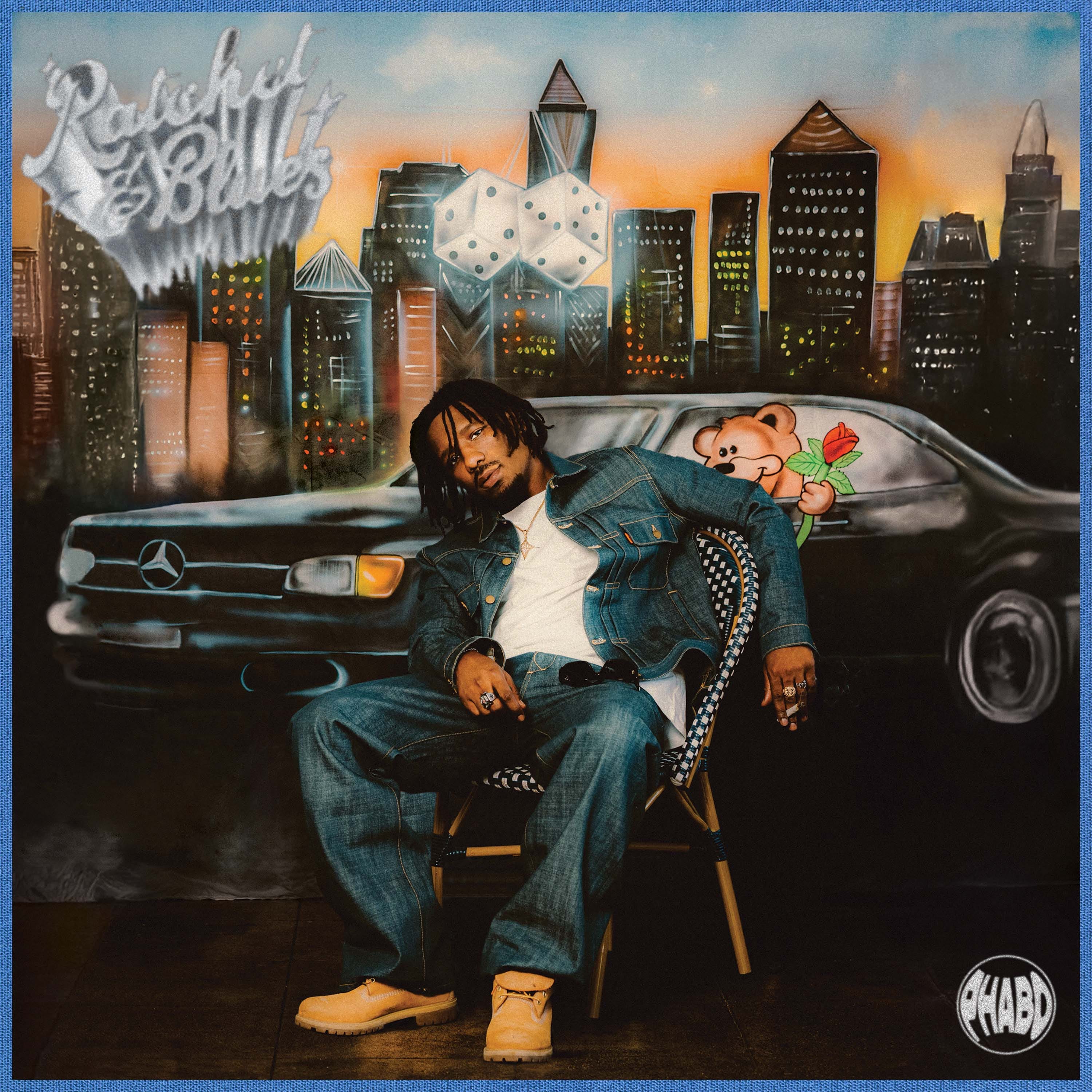
There’s a particular kind of man who believes that paying for things is the same as caring about someone. He calls jealousy “protection.” He calls surveillance “concern.” He keeps an ongoing balance of every favor, every meal, every outfit he’s bought—not because he expects repayment, exactly, but because the ledger itself is the relationship. When he says “I love you,” what he means is “look what I’ve done for you.” When he says “you’re mine,” he means it literally. This is the artist who lives inside Ratchet & Blues, and Phabo has spent a decade learning how to make him sing.
The title isn’t new. The LA singer-songwriter has been releasing Ratchet & Blues installments since 2014, four mixtape volumes that established his blend of church-trained vocals and street-corner frankness. That this album shares the name reads as a formal claim—the definitive statement of a sound he’s been workshopping for years, now presented as a cohesive body of work. Fifteen tracks is a lot of real estate for any album to fill, and Phabo tries to hold multitudes as the provider, the player, the wounded romantic, the jealous boyfriend, the generous friend who definitely wants to be more than friends.
What holds these personas together is a transactional logic that runs through nearly every song. On “Acts of Service,” he cleans the house, orders lunch, lights incense—and then pivots to threatening anyone who might slide into her DMs. “They see a real demon,” he warns, right after promising to be her “humble servant.” Domesticity is real, and so is the territorial menace lurking underneath it. On “One of None,” forgiveness comes with an itemized bill: “All your rent, so I’m collectin’ all the things I bought you.” Hollywood changed her, he claims, and he remembers who she was before she got ideas about herself. The past is leverage, and the gifts were loans.
The narrator’s generosity always has exit clauses. “Something Different” finds him meeting a woman at LAX, learning she’s in town for an audition that didn’t pan out, and immediately offering to make some calls—he can make her famous, he insists, while in the same breath promising he’s not after sex and then casually mentioning he might spend “a couple bands on a gift.” The savior routine and the come-on blur until they’re indistinguishable. “Who gon’ do something if it get outlandish?” he asks, positioning himself as the solution to problems she hasn’t asked him to solve. He sounds so sweet doing it, but that’s the trick.
When the relationships actually materialize, they curdle fast. “Win or Lose” pairs Phabo with Kiana Ledé for a duet about a couple stuck in mutual dishonesty—it should feel like the movies, they agree, though “nowadays, it’s looking more like something off a Tubi.” His verse admits he’s got “other hoes, but don’t let them stay,” while hers calls out the emptiness she feels when they’re intimate. The back-and-forth captures something real about dysfunction, the way two people can know they’re lying to each other and keep going anyway. Mario Winans’ production gives it the gravity of a confession. The song never quite decides whether it’s diagnosing the problem or romanticizing it.
That ambiguity runs through the whole record. “Safest Place” opens with him acknowledging he needs to fix his attitude, that his circumstances make him rude, that he takes his problems out on her—and then the next line sticks: “You like it rough, I like it too.” The admission of fault becomes foreplay. His blues, his damage, his rough edges—they’re not obstacles to intimacy. They’re the intimacy. On “Calm & Collected,” featuring Nate Curry, the latter is dating a woman who works at a strip club and the jealousy is eating him alive. “I get jealous ‘cause nightly your customers get to caress and see your body naked,” he sings. “You said there’s no touching you, I see them touching you, grabbing you.” He builds it as vulnerability. The interrogation that follows—did someone take you to a BnB? did you roll over for them?—sounds like something else entirely.
The album opens with “Luv On da Floor” and its skit about forgetting to bring condoms—being “reckless in these streets” established as the vibe before the first melody even hits. The record’s relationship to consequence stays loose throughout. Sex is urgent, jealousy is proof of love, spending money is generosity, keeping score is devotion. The narrator apologizes late, threatens quickly, and talks about women with a casualness that keeps slipping into something colder. “Rubberband Man” promises to take her out the hood, pour a couple bands, do a little dance—the money flex and the rescue fantasy combined into one gesture. For the time “Fur Coat” arrives, with its mink-in-summer swagger and its woman who “don’t do love,” the album has made its argument on how he thinks relationships work: currency and claim.
Phabo can sing. The voice moves from falsetto tenderness to conversational cool with the fluency of someone who grew up in the church and sharpened his rhythmic instincts battling freestylers. When “Lights Get Low” builds to its hook (“The rules don’t apply when the lights get low”), you feel the seduction in the phrasing even as you recognize the permission to pretend that nothing that happens in the dark will follow you into the morning.
Moments rise above the pattern. “Before We Get in Here!” works as a leave-your-problems-at-the-door, stay a while, and the party is the point. “Anything 4 U” catches something real about the friend-to-lover pivot, the weirdness of professing desire to someone you’ve been dropping off platonically for years. “Now you my homie, lover, and passenger princess,” he sings, and for once the transactional language tips into something like humor, a self-aware acknowledgment that relationships are, in fact, built on accumulated small gestures.
Those moments stay moments. Across the album, Phabo keeps revealing the jealousy he calls protection, the surveillance he calls care, the gifts he’s always ready to reclaim. “Blues” here means moody, damaged, entitled to your patience. “Ratchet” means raw, unfiltered, forgiven in advance for whatever he’s about to do. Put them together and you get a permission structure for behaving badly while still sounding romantic about it.
Above Average (★★★☆☆)
Favorite Track(s): “Win or Lose,” “Lights Get Low,” “Something Different”
What an incisive analysis of how Phabo frames jealousy as devotion throughout the album. The observation about gifts being loans really stuck with me - it's such a sharp lens for understandng these dynamics. I've always been fasinated by artists who can make toxic patterns sound so seductive through pure vocal talent. This review articulates something I couldn't quite put into words about the record.