

Album Review: Retrospect by Mýa
Mýa spent a decade building a funk album that sounds like 1985 and talks like tonight. The old-school production is meticulous, the lyrics never look backward, and the tension is the whole argument.
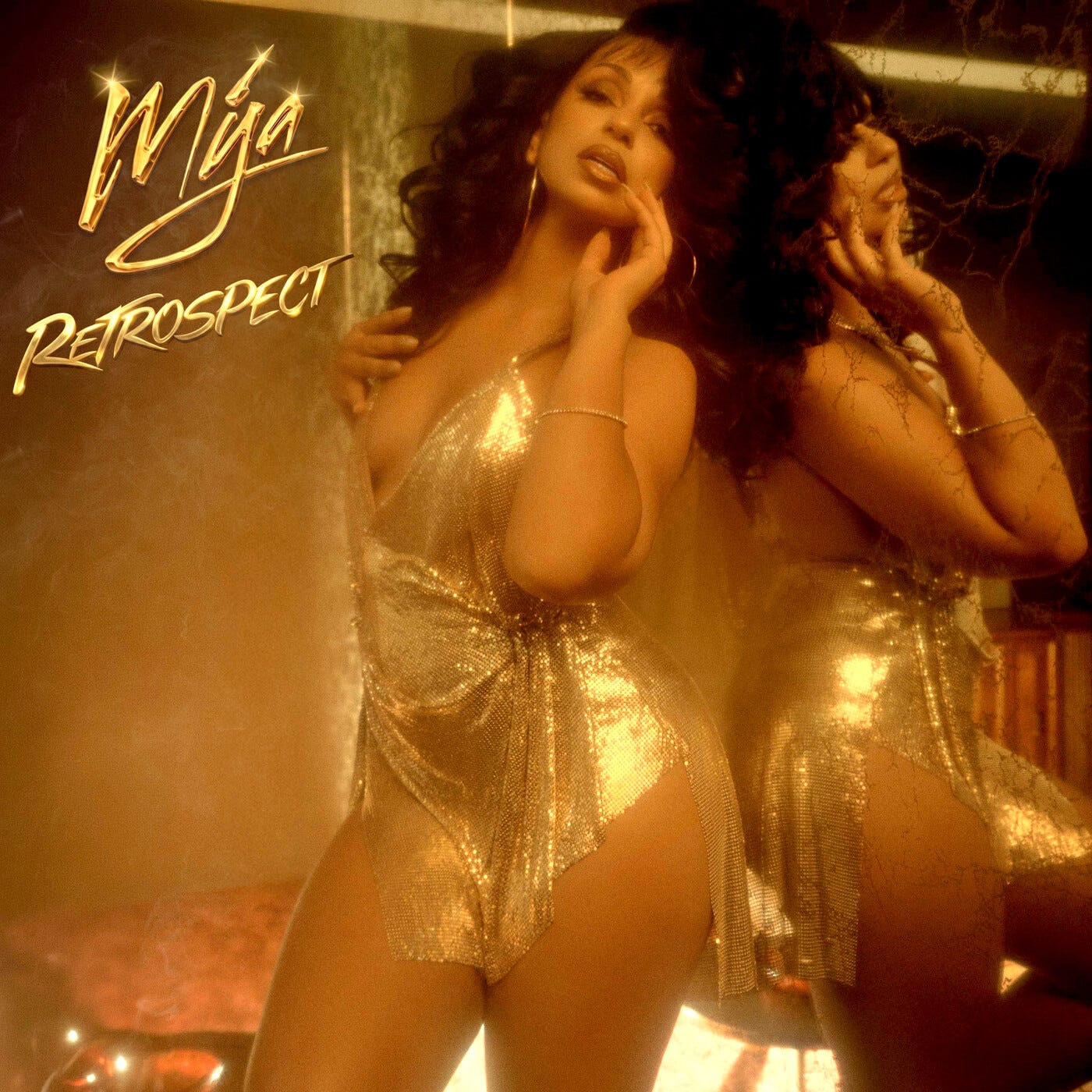
Mýa Marie Harrison started ballet lessons when she was two years old. Later she studied with Savion Glover and was chosen for a solo performance at Kennedy Center. She learned music through dance rather than voice. Her father, Sherman, played in a band called Jump Street in the D.C. area. By 1998 her own voice would make “Ghetto Supastar” a hit on the radio. But her foundation was always physical: bodies moving to a drum beat rather than a singer waiting for catchy tunes. As a teenager she taught hip hop and jazz dance at a community program in Camp Springs Maryland and later appeared on BET’s Teen Summit as a dancer. This was Prince George County long before she was making platinum records and funk music.
Details for a D.C. area code and phone number, 202-8464 sung in chorus on Retrospect belong to most singers as a secret joke. Voice of D-Nice opens the track setting atmosphere of 1985 roller skating party. Synth bass kicks and Funk whistles so sharp they date the air. No samples on the album at all. Producer LaMar “My Guy Mars” Edwards worked with Mýa and composed all sixteen tracks from original compositions using old sounding gear. This was the rule she learned from Prince who told her never to let other recording produce her work. Commitment to this shows in the track list: go-go drumming from DMV on “Face to Face” and West Coast bounce on “No Pressure” and Bay Area slap on “Just a Little Bit.”
After “Lady Marmalade” and a string of singles that placed nine into Billboard Hot 100 before she was 22, Mýa was what major labels wanted for R&B singers around the turn of the century: she went from Universal Motown to Planet 9 in 2007 and J. Prince mentored her. Songs kept coming: Sugar and Spice for Japan alone, another album the following year and Smoove Jones in 2016 for a Grammy nomination for Best R&B Album. By then most of her audience had stopped coming back. Hooks were no longer for radio; they were for cars with windows up. She spent a decade finishing Retrospect, which had no label clock or notes. This patience is clear in every relaxed arrangement, sometimes a bit too clear.
Warm Rhodes chords and breathy voice on a slow back beat define “Good to You.” It promises devotion and mutual pleasure at a slow pace as a candle burns. Mýa sings, “Let me show you Tonight I’ll be the freak you need” low enough to keep the bedroom door closed. Four minutes on devotion without going for the hook. “Anytime” and “Just Call My Name” share a similar vibe: electric piano, soft percussion, and voice that emphasizes tone over range.
On “Saturday Night,” horn stabs still crack over a four-on-the-floor kick drum while Edwards chops a muted rhythmic guitar through sixteenth notes borrowed from Nile Rodgers’ Chic sessions. The bass, a walking line Edwards runs faster and louder than anything on the slow songs, pins the stacked brass to a disco-funk groove from 1979 with enough force to push Mýa into a different range. A shout she pitches above the horns, Mýa’s voice on “Saturday Night” jumps from the quiet low end she used on “Good to You” into a sound that fills a bigger room. Same singer. Different room.
Touring with Brandy and Monica on The Boy Is Mine Tour, Mýa still sings “Case of the Ex” and “Ghetto Supastar” for crowds that bought tickets on the memory of 1998. While that tour runs on catalog, Mýa released T.K.O. in commemoration of the twentieth-anniversary edition in 2020, tracked new vocals over Edwards’ vintage-gear production, and finished Retrospect across the same years she spent singing the old hits onstage. Brandy and Monica came back for the tour, but Mýa came back and brought an album. On a bill named for someone else’s duet, she is the act with new music, playing it for a room that did not ask.
Edwards matched every song to one production style. The funk holds. “ASAP,” “Face to Face,” and “Just a Little Bit” each appear twice, once as solo tracks and once with featured rappers, and thirteen songs stretch across sixteen. Dizzy Wright raps an inspirational verse on “Games With My Love” that repeats what Mýa sang alone, and Too $hort and Phil Adé guest on songs she had already finished as solo recordings. The remix to “ASAP” features 21 Savage, who continues to add nothing. Snoop Dogg, who rapped his verse in casual style without knowing a decade change, but covered different territory compared to him, has less impact. Filler by another name, the three featured remixes pad Retrospect with guests but not with new ideas.
In the plosives of “elated,” Mýa still stretches the vowels with the same wide-mouthed joy Rick James sang with on records from 1981. Teena Marie’s ad-lib, a “whoo!” planted in a track’s first bar before the guest verse drops, is a borrowed vocal tic from 1984 that Mýa sings as if she invented it. Prince-style guitars on “Just Call My Name,” a clean tone through wet reverb, turn the ballad heavier than the Rhodes arrangement underneath, but Mýa takes a “Remember the Time” ad-lib on “Masterpiece” and runs it through her own phrasing until the reference disappears. Absorbed, not quoted.
What does an album called Retrospect look backward at when every one of its thirteen songs faces tonight? “Saturday Night,” a disco-funk track about tonight’s plans, and “Masterpiece,” a love song for someone in the room right now, are addressed to the present on a record titled for looking backward. When Mýa sings about tonight over instruments Edwards built to sound forty years old, she faces one direction while the production faces the other, and the title names the gap. Mýa spent ten years making an album about right now, and she called it Retrospect.
Great (★★★★☆)
Favorite Tracks: “Give It to You,” “Saturday Night,” “Face to Face (DMV Remix)”
 | A guest post by
|
I can’t wait to listen to this album!
Do you all need any more contributing writers?