

Album Review: Rise Against My Broken Odds by BabyChiefDoit
BabyChiefDoit is a self-producing 16-year-old who renamed himself Rambo. He turns a kid’s action-hero fantasy into distinctive, self-made Chicago drill.
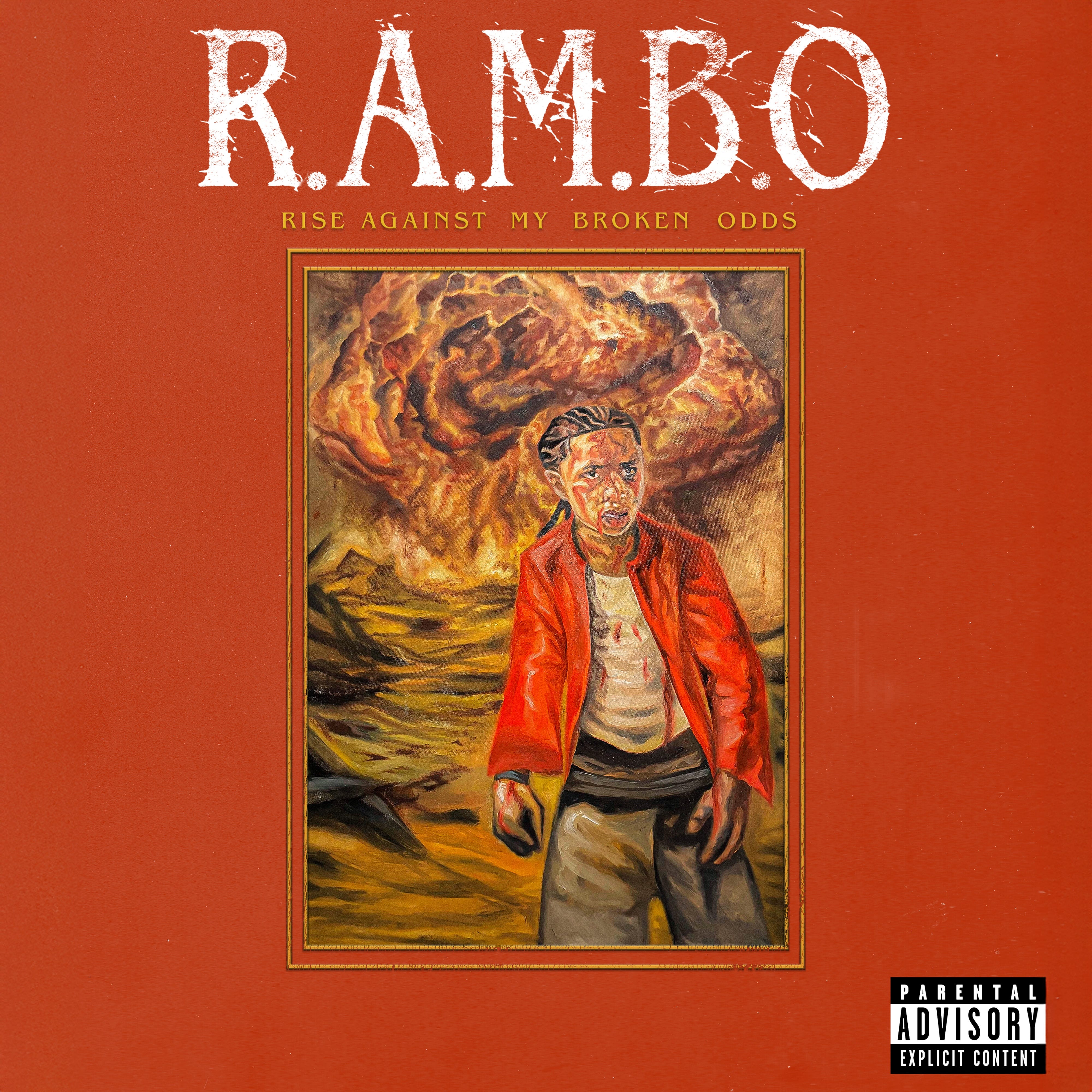
A 16-year-old kid from Chicago’s South Side decided that he was a superhero, and kept finding different ways to say that he was. For BabyChiefDoit, he adopted the name of a Sylvester Stallone action hero, turned it into an acronym for everything he claimed to have overcome, and then refused to respond to any other name. He produced or co-produced the majority of his own beats, so the superhero he’s describing and the kid building the sound underneath are the same person. The cape never quite fits him. Every time he calls himself Lieutenant Rambo or Big Zoo or more than a man, some part of what it means to be a teenager starts spilling out around the edges.
Playing make-believe with all the names he’s been called, he shapes the lyrics of “Y’all Can’t Kill Me” into a sort of self-playmate. Lieutenant Rambo, Big Zoo, Batman, a young rich Black man, and a survival tally marked beneath the surface—thirty bullets when he was 15, of age-typical dreams at 16, of high rolls at 17, plus the testimony that he’s cheated death a hundred times and swears no one else can murder him. It’d be straight invincible if another part of the same song didn’t fess up to having never spent a day laboring, a whiny little kid who’s accustomed to getting what he asks for. He rents a groupie-filled tour bus and demands a single Rubik’s Cube (in case he feels like playing with himself). Most succinctly of all, “Laugh Now, Cry Later”: “See, I’m a hero, but I looked up to the villains.” That’s almost all he’s ever had to say for himself, a 14-year-old who picked up a gun, obsessed over the wrong images, then made a career out of it all on purpose.
He’s incapable of hopping on a track without letting you know he’s responsible for the production, such as on “WENT WEST,” where he asserts he’s the architect and locks down the blueprint before going full Kanye West. “They gon’ be surprised when they see I made this beat,” he boasts, and by the third verse, he’s threatening to fire his producers and instead asking whoever witnessed what happened to tell the man he’s looking to hire a new one. The boasting somehow works when it doesn’t seem like it should, catchy enough for the jokes to snugly slide in, a stretch of kitchen-themed bars that tell a nearby adversary to vacate the premises if he can’t stand the temperature and is subsequently converted to a rich broth, a non sequitur about pork chops that’s immediately spun into a pig bar, a hook that simply wonders how the 2612 crew came out on top and quickly responds that nobody knows. He’s 16 and quick to remind you that he built the floor he’s dancing on.
With the clock ticking down to the last second, a successful shot in the basket becomes a buzzer-beater hit in “Game Six,” a chorus that distracts from a verse that’s mainly a hater criticizing him for being soft and coming from the suburbs, and a girl he dismisses with “Who the fuck is we?” The playful melodies achieve the same result in “Get High,” a chorus about getting high on melodies where the superior verse is hidden between the lines of boasting, with a subtle reminder that he is not the same guy anyone remembers from 2023, and the reference to staying drug-free while still being the highest in the room. “Live by the Gun” encapsulates all of this in a tougher tune, with so many threats packed in the extended bars that the lyrics become muffled and the threat overwhelms the message.
Smells like cinnamon and cocoa butter, the center of “Ghetto Love Story” and the ghetto lover himself, two kids with one of their boyfriend’s always trying to talk her out of it, “I’ll shut up if you’ll just dance with me,” and it never gets innocent; she stumbles and hands over the phone to the boyfriend, leaving her beaten and out with the guy at the end of the song wanting the kid who instigated it gone. The same outline again from a more saccharine angle with “The Story of Jane”: he’s meeting a Jane out in Tennessee and the first words he hits her with are only-ten-I-see, the mask slips; five foot three, with a six-foot heart, with writing skills none too bright, but with a knack for scrawling on an instrumental, and the long ugly stretch that they put him in after he was jumped, watched all his friends get shot, make hits, and turn on drugs for the drug. Forever is the only thing that will ever be on our agenda until her phone buzzes; Snow on the line. Says he saw her go down on him; that Snow and his brother already have her; he saw the setup coming at the same last bars, called it in the room, and he still went inside.
The cockiness thins by the back half of “On the Run,” where the nah-nah-nah drops out in favor of random, rhetorical questions about whatever anyone listening knows about hurt, about being locked in a cell, about love some made a point of extinguishing, about that twenty-five thou put into a video, the statue of myself he’d want on the water fountain when he’s finally done, and more quietly, about that drowning he remembers. The questions are reduced to much smaller ones, more unbearable in “Dear Jonathan”—a letter to a nonpresent father asking about his favorite song, meal, game, the thought process of deciding on his name with his mother, a letter of forgiveness (“I’ll never resent you, think you had a golden heart and were battling demons yourself’), a query about the origin of his own rage, setting this absence next to the fact that he pulled the trigger on a gun and the fact that it rained too young, ending on the one unanswerable question the letter doesn’t allow itself to escape: “If you been watching over me, is you proud or is you ashamed?”
In “Apple of My Eye,” the wedding fantasy finally becomes actualization of being married, but not until it passes through teenage thought processes—burger to French fry, dark to sun—eventually landing on coke, and then, mid-serenade, a promise that if she wrongs him, he’ll trash the whole house. “Party Girl” asks for the girlfriend to be home from the club and confesses he “hate that she a party girl,” before veering into the same threat, firing shots up into the walls the minute his insecurity takes hold. Tenderness and aggression get one song here and one verse together; it’s a thinner roster mode, in “NY” with first-ho, second-ho roll calls, and “DTM,” where the collaborators get the best bars, and the women turn the tables and ask what a man who doesn’t cover hair or nails is good for.
If you remove the tough Rambo image, you will realize that it is not a child pretending to be someone else. He simply compares his age to the dangers he faced: thirty shots at 15, and riches at 17. He was supposed to die a hundred times in his lifetime, and this is the most accurate comparison. A teenager who can count how many years he was supposed to die thinks he can’t be killed. Lieutenant Rambo (and Big Zoo) and a superhero who defied death are the same boy who wanted a Rubik’s Cube on the trip because he would be bored. Under it all is the body that is still alive and well.
Great (★★★★☆)
Favorite Track(s): “On the Run,” “Dear Jonathan,” “Y’all Can’t Kill Me”