

Album Review: SAKURA by Devin Morrison
A bouquet that ends at knifepoint and a duet about wanting to eat someone. SAKURA turns Devin Morrison’s romantic panic into his richest, strangest R&B.
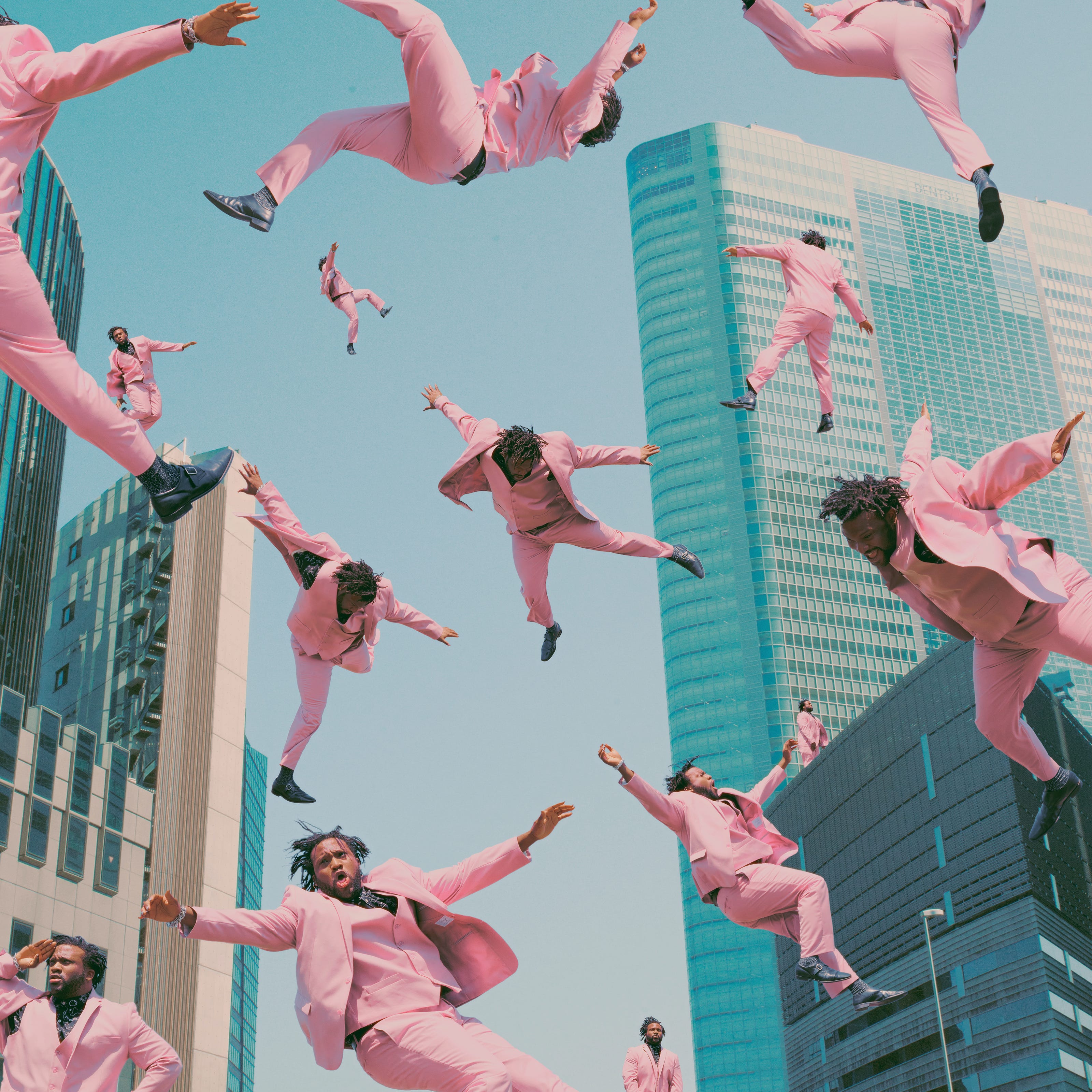
About a decade ago, Devin Morrison was splicing nostalgia-warped R&B in Tokyo, swapping ideas with Fitz Ambro$e and Budamunk and labeling it Dreamsoul before anybody had thought to ask him for an explanation. The name and the method stuck, four albums of surreal love songs taking grammar from anime and fighting games as easily as they do Stevie Wonder and the Japanese pop that defined Morrison’s early years. SAKURA is the album where the romance finally got the space to expand; the sweetness on the surface is funnier and darker than it first appears, as Morrison plays out a man who loves wanting nothing for fear of himself wanting anything and spins that fear into pure comedy.
The first move Morrison makes is the fall. A woman tries to warn him off “FEAR OF HEIGHTS,” but he shrugs that he’s not cut out for gravity; he’s a man who cannot fly and has no grasp of another person’s inner world. His chorus is nothing but facts about what’s waiting at the bottom, that two people dying together should suffice as a deterrent. The outro at least spills the underlying wish that he and the woman will finally acquire super-powers, become immune to death, and love each other forever. They never get the powers. “MY LOVE” represents a landing where, though the fall still continues, it’s survivable (“Am I flying? Am I falling?”). Paris Strother is on backing vocals here and sings the part of Morrison’s ideal woman, the woman who was unaware of her own ability to love someone.
Love hits Morrison like a fist to the sternum, and he deflects with laughs until it breaks him. It leaves him writing poems on “AMOR” in bed with the woman’s words etched into his palm, catchphrases his own collapse (he’s actually embarrassed; afraid she’ll think he’s weird) and self-medicating the experience with witchcraft, and with a half-serious plea for an antipsychotic-I think I need therapy. Panic sets in cartoonishly with “KAZUYA,” where a drunken and jealous Morrison impersonates a Tekken character in threats and intimidations that he doesn’t truly believe, that if one guy tries to move in, he’s ready to throw down. Cube’s vocalizations in the hook encourage the violence, but the post-chorus is a dramatic interruption. It just seems like what Morrison wanted was for the person that he believed was loving him to call him. There’s the same kind of nerve underlying “JAGUAR,” where a drunken road trip with a wild woman in the passenger seat leaves him muttering don’t wanna lose control under his breath as if that declaration could ward off the panic of being completely exposed.
Those Tokyo years also leave Morrison writing desire in more than one language and in more mixed ways than any before it. “GIRL” is cloaked in the Brazilian baile-funk sound, Morrison playing host to a “Baile da Dreams” and name-checking Florida-Brazil over the soundscape, while the English language under it can do no more than ask repeatedly, “I forget the names/Of all the other girls.” It never quite makes it past the desire of it. The languages are more productive on “OISHISOU.” In the Japanese “looks delicious,” Morrison takes the food conceit all the way past its expiration date, transforming a post-church Sunday lunch into “I really wanna eat you” without an ounce of shame, while Joyce Wrice tells him he’s making her blush in Japanese and that he’s making her flush with desire. She, too, says, “I savored every bit.” His remark on Florida boys and their appetite drops it back in the US.
Morrison creates room for guests on his tracks, with “SHE DON’T” finds him lamenting and courtly- a gift on her doorstep, silence returned, questions of being dropped to second place in return, until Foggieraw takes over the conversation to respond to the pain as someone else’s problem and boasts about his Chevys, his Rapunzel hair, and a number joke (“I can’t be less than two”) that leaves him unfazed. He riffs on this in “ZODIAC SINE,” where a zodiac pick-up line takes Morrison under as a slow drown, an invitation to pull him under; before Seafood Sam comes and goes where Morrison is unwilling to, praying the moment is right, sliding a ring onto her finger, asking her to “leave a scar on my chest,” citing Ron Artest as he swings for what’s his, and calling the price of his Sagittarian love something “we pay.”
“FALLEN SOLDIER,” for its part, casts a break-up as war, Morrison the dead soldier, the one no one finished off, demanding a post-war interrogative of himself: what was he fighting for anyway? What did the rules of the game really have to do with him? The trauma keeps piling up fast—a cut rope and a collapsed levee, first love he can barely verify as love. Rae Khalil takes the reins at his feet. Her verse keeps the conversation on solid ground and emotionless—money settled, break-up recast as escape she figures she earned—and ends the track on the word he cannot escape: “I don’t wanna fall.”
The longest one on here begins in a cartoon and ends with a phone call no one ever wants to make. He kicks off “TULIPS & ROSES” wallowing deep in an idiotic, Super Mario level of infatuation with some sort of Princess Peach character in love with a Princess Daisy, and presents her a bouquet of what he claims to have personally hand-picked and de-thorned for fear of injuring her fingers. Then he walks in on her with someone else. The sweet factor drains from the song pretty quickly from there, until he’s grabbing a knife for the sake of “cutting ties,” while repeating, through and through, that it’s not his fault, that he didn’t do it, all the while referencing dead flowers. His solo diatribe at the end (“Find that number, call it up, and say/‘Hey, baby, do you like tulips? What about roses?’”) is accompanied by “SUMIMASEN,” the wordless instrumental string piece with a title that means ‘excuse me’ or ‘sorry.’ It’s the apology that’s stuck in his throat after the knife has done all its work.
For all of the pretending, it’s amazing how many songs he spends filled with uncertainty. “COULD IT BE?” is the most extreme example of this: an extended period of vacillating and second-guessing after a bungled move and a failed conversation, rationalizing it away as “perhaps it feels better to say I forgot.” He kicks doubt out into third-person on “PURPLE ABYSS,” viewing an alternate persona collapse under the weight of “the pain he’s caused,” ultimately landing on his knees, pleading for no more harm. But the dreams he repeatedly expresses—of powers and invincibility, of an ability to love and only do so without failing—never fully take shape. What happens instead on “LET IT HAPPEN,” SUMIN exhorting him to be patient, while a stray Korean lyric offers what seems to be guidance that all he needs to do is “let it happen.” There’s no magic ray, no flight, no way to just fly. He comes closest when he just stops trying not to fall.
Great (★★★★☆)
Favorite Track(s): “OISHISOU,” “FALLEN SOLDIER,” “TULIPS & ROSES”