

Album Review: Sankofa by redveil
A fourth album stretches the DMV-raised rapper‑producer across continents and into the studio, honoring the path that made him while confronting the weight of leaving home.
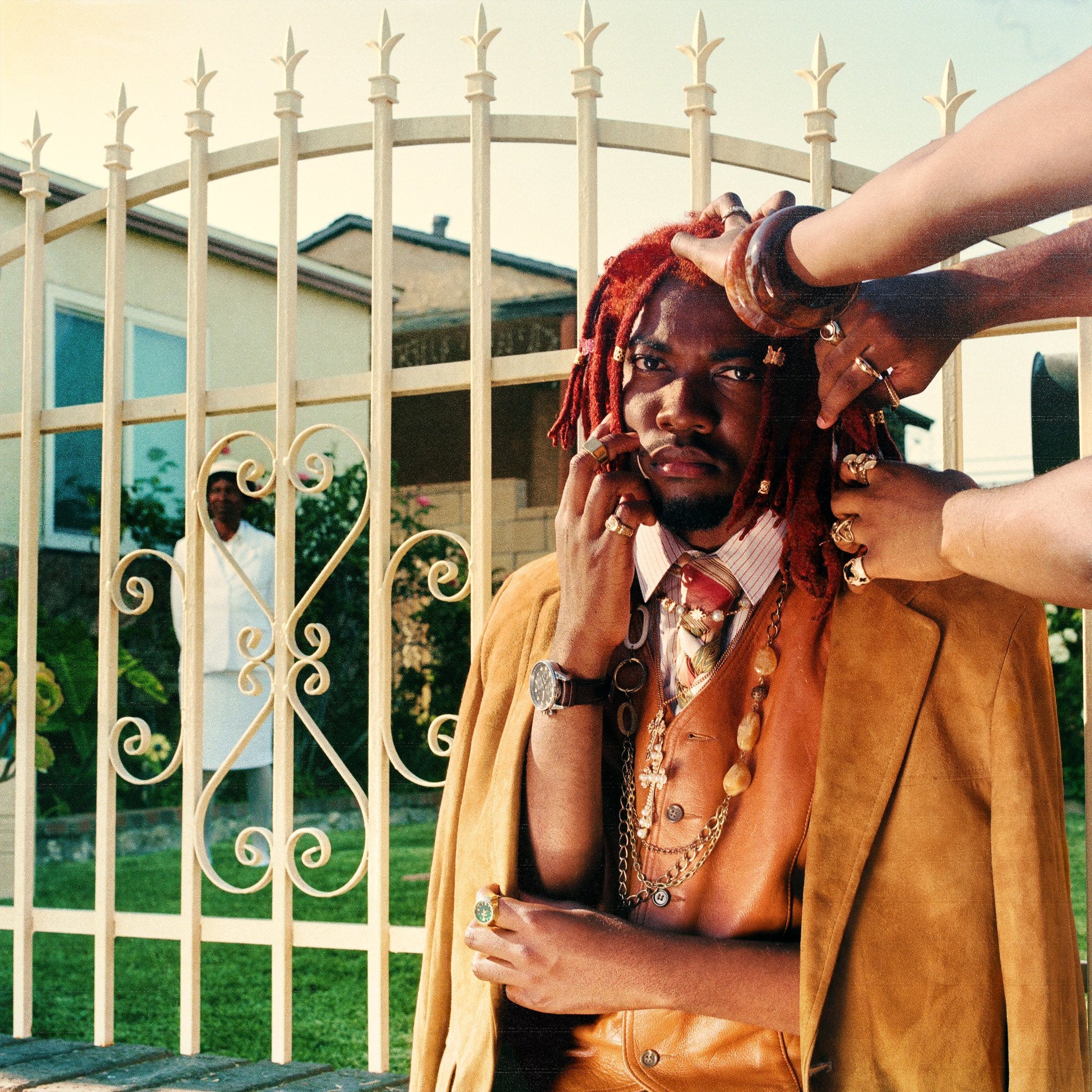
Before we knew him as redveil, real name Marcus Morton, he had made records on his own since he was old enough to tinker with a computer in Prince George’s County, Maryland. As a kid, he played drums in a church band, soaked up funk and soul at home, and, after hearing The Internet’s “Palace/Curse,” started teaching himself piano and FL Studio. Those early experiments led to his 2019 debut Bittersweet Cry at age fifteen, the breakout Niagara in 2020, and Learn 2 Swim in 2022, all self‑produced statements that combined bright, triumphant beats with angsty verses. A six‑song EP in 2023, Playing w/ Fire, hinted at a more celebratory streak and featured JPEGMAFIA and Mekdelawit, but it was still born from a home setup.
By late 2023, Morton felt hemmed in by suburban Maryland. He started building his next album and, by January 2024, relocated to Los Angeles, seeking greater opportunities. In California, he could work in real studios and bring in players—pianist Johnny May, bassist Jermaine Paul, guitarist Keelan Walters, flutist Amber Navran, drummer Myles Martin, keyboardist Brian Hargrove, and trumpeter Julian Knowles. Live instruments and airy studios let him push beyond loops and sample chops; the songs on Sankofa still carry his stamp but feel warmer, fuller, and more layered. The title comes from a Ghanaian proverb urging people to go back for what they’ve forgotten, and Morton leans into that tension between past and future without turning the album into a treatise.
Home colors the first thread that runs through Sankofa. On the soul‑driven “Lone Star,” he imagines himself caught between Texas summers with grandparents and the life he’s built since. Carolyn Malachi’s opener describes a domestic scene around a baby grand piano and stew on the stove, but Morton’s verse blows past politeness. He smirks at impostor‑syndrome accusations, then flips Greek‑letter slang into a dig at rivals: “How you got a dog inside you like Omega Psi Phi but taking cues from dummies?” What sticks is his memory of “posting up in Texas every summer like a border czar,” and he can see it vividly around August 2015, with Nate and Granny, long before music started paying for funerals and flights. The beat’s whirring synths and a nagging organ line tick like a clock, while his flow oscillates between singsong and serrated, as if he’s fighting the urge to linger in childhood.
That pull toward lineage returns when he samples his own family tree on the two-part “Buzzerbeater / Black Christmas.” The first section rewinds to adolescence: riding bikes, envying his older brother’s skates, performing for a camcorder his father bought, turning his friend Mike into a refuge over gaming headsets. Some lines recall Air Force sneakers and recess, but the undertow is abandonment. He’s trying to reassemble a family from memories and competitions. In the “Black Christmas” half, he writes a letter to his absent brother, confessing that he planned his own suicide at thirteen and now, at eighteen, feels “too alive” onstage. He admits to copying the family’s habit of suffering in silence and finally recognizes the older sibling not as a monster but as “a mastermind” who deserves freedom. When he recalls seeing that brother at a show—“It was Christmas in July, and I could touch the snow”—it’s a flash of grace, not a punch line.
Travel and displacement complicate the notion of home. “History” drops him into airports and Caribbean layovers with a black suitcase stuffed to the brim. He signs some pact, shares a cramped sedan with strangers, and hurls curses at tourists. There’s resentment toward people who treat his home as a vacation destination and toward fellow travelers who steal (“sticky fingers”) yet act caring. The hook of “We’ve been history from the start” sounds like a warning against erasure, but he refuses to let his story be flattened by migration. Morton’s voice is raw and hoarse, as though he recorded the verse after a night of screaming, while the beat stays mellow and atmospheric, giving him room to vent. On “Glimpse of You,” he circles back to Prince George’s County, flying into D.C. and knocking on a door with the rhythm of a bounce‑beat. The person who answers, heavily implied to be his older brother, who suffers from paranoid schizophrenia, looks past him, panics, and sometimes kicks him out mid‑visit. The rap verse tries to keep updates brief (“I broke up with my last girlfriend, my eyes have been debilitating”) as if hoping not to trigger another episode.
When you make it to the end, a spoken excerpt retells the biblical story of the Gerasene demoniac, a man living among tombs who was freed from torment; Morton uses that parable to sustain faith that his brother can heal. The song’s minimal keys and gentle drums leave his voice exposed, and his performance shifts from melodic pleading to nervous staccato. Even when he’s rapping about flights and funerals, the sense of home remains tied to specific people, foods, and prayers. The second thread is selfhood and mental strain. “Or So I” is a driving song that doubles as a battle over autonomy and faith. Over a sparse arrangement, he recalls sitting in church pews and being mesmerized by a pastor’s watch while stuck at a red light, then speeding away to avoid being guilt‑tripped out of money. Later, he admits he spent “the last five years parked up,” living in his car and breathing through an axe‑hanging stench. He values freedom so much that when a police officer asks who made him, he answers, “It’s me, I’m content, so Jesus, get the fuck out of my way.”
The tension between independence and guidance surfaces again on “Pray 4 Me.” He wakes in Hollywood, checks his phone before breathing, and jokes that he’s signed his own Patriot Act, as though volunteering for surveillance. He compares the city’s sunsets to heaven while confessing that only impending doom makes sense, and the chorus (“I hope you pray for me”) tumbles out like a plea to anyone still invested in his well‑being. On the second verse, he recounts moving to California, hitting the age of twenty, and feeling his sanity fracture. He worries that “ducking and dodging psychosis got my heartbeat tied” and that there’s a ninety‑percent chance he’ll never hear the applause promised by anonymous strangers. His flow darts between rapid‑fire couplets and held‑out syllables, mirroring the anxiety of watching a timer tick down. The beat uses warm keys and a bouncy rimshot drum loop, but his voice is centered enough to sound like it’s right inside your head.
Identity gets blurrier on “Mini Me” and “Save.” In the former, he plays with card deck metaphors—he’s out of luck, out of suits, diamonds that mirror his scars—and asks, “Who will I be today?” while his mini‑me vanishes. He knows he doesn’t want to live inside a costume, but he also wonders if it would be easier to put the persona back on. The tune’s synth‑bass wiggles and the hook, delivered in a falsetto, are catchy enough to disguise how bleak the sentiment is; it’s a shrug toward shapeshifting. “Save” picks up after the costume has been shed. He remembers seventh grade, wearing a hoodie tight like a bonnet, self‑soothing turned into a default presentation. He kept his laces filthy because he feared losing his soul if he cleaned them. He mocks the idea of “K‑Pop ebonics” and wonders whether authenticity is a choice or a cage.
“Gotta save myself
I love you dearly, but I gotta save me.” — redveil on “Save”
He admits he doesn’t know where the “shards of his essence” flew when pride changed in the second verse. He asks who’s saving him and leans on a ghostly character named Rosie for guidance. The track’s airy pads and brushed drums feel weightless, and his layered vocals rise and fall like a swimmer treading water. Throughout these songs, Morton treats mental strain not as a rhetorical motif but as day‑to‑day confusion, where he might be speeding through L.A. traffic or lying on a childhood bed, but the question of who he is and who he serves.
The expanded palette is one of Sankofa’s selling points. After years of crafting beats in his bedroom, Morton wrote this album with access to Rhodes pianos, synth racks, and a rotating list of session players. The difference is immediate: “Lone Star” shuffles on drums that feel like a marching band cracking snares at half‑time, while a gauzy organ adds an almost gospel warmth. “Brown Sugar,” a duet with Smino, rides on a bubbling bass line and twinkling keys that evoke reggae and soul more than trap, and both singers slip between rapping and crooning without forcing the blend. “Pray 4 Me” layers subtle synths with a live drum kit so that the beat breathes rather than loops. On “Buzzerbeater,” the percussion stomps like a marching cadence, but the guitar licks are delicate, creating tension between childhood games and adult anxieties. “Black Christmas” slows into a jazzy ballad with brushed drums and trumpet; Morton raps hoarsely over soft chords, letting his voice crack when lines hit close. “Or So I” and “Save” are almost ambient, yet they keep momentum through layered vocal stacks and occasional rhythmic stutters. Morton still uses samples, but he buries them under warm instrumentation.
His vocal performances are just as varied. Morton’s rapping used to lean heavily on a smooth, closed‑throat tone reminiscent of Earl Sweatshirt and MIKE. Here he stretches. There are moments where he’s singing more than rapping, and his pitch is imperfect but earnest. When he raps about being twenty years old and feeling his sanity fracture, the rawness and passion in his voice sell the fear. He doubles some lines for emphasis and leaves others raw, letting stray breaths cut through. That sense of vulnerability carries into the production choices—sometimes the vocals sit behind instruments, other times they’re bone‑dry and exposed. Morton’s versatility lies in his ability to change tone and posture to suit a line. He can deliver a flexing couplet like “they impostoring me” with a grin, then end the verse by whisper‑singing “I’m all good” until you believe he’s trying to convince himself.
These strengths occasionally overrun the songs. There are moments where the new resources blur Morton’s identity. “Stay the Night,” a melancholic duet that leans into indie‑R&B guitars and breathy backing vocals, feels generic; its lyrics about asking someone to stay are less vivid than the rest of the album. On the aforementioned “History,” the hook keeps circling while the verses move from home teaching that doesn’t fit the real world, to that cramped sedan with the black suitcase, to the tourist-resort resentment and the Anglo-Saxon seatmate. He’s talking about being pre-erased—politically, economically, even in his own family story—so this works as a kind of fatalism. The conclusion comes first, then the verses keep proving it. Morton has always been a maximalist. He loves leaving little moments in production for his fans to catch, and if some elements stick out, it’s because he’s trying things. You can hear him feeling out the balance between craft and catharsis.
The story behind Sankofa—a talented young artist leaving his hometown, confronting mental illness in his family, and fighting to preserve his identity—could invite heavy‑handed sermons. Morton avoids that by grounding the songs in details: a bag of Morning Star veggie patties, a pastor’s watch flashing at a red light, a bounce‑beat knock on a brother’s front door, grade‑school hoodies, and filthy laces. He folds biblical references into everyday concerns without framing the album as gospel. When he calls himself “Kittitian Jesus” on one song, it’s less self‑mythologizing than a joke about heritage and survival. His use of the sankofa symbol isn’t didactic here, as much as it is a lens through which to view his tug‑of‑war between past and present. The album goes from songs that turn inward, followed by tracks that look outward—mirrors that vacillation. There’s no climactic moment where he resolves his demons or declares his thesis. But the album ends where he’s still knocking on a door, still hoping for a miracle.
Standout (★★★★½)
Favorite Track(s): “Lone Star,” “Or So I,” “Buzzerbeater / Black Christmas,” “Glimpse of You”