

Album Review: Scarred and Sacred by SOLCHLD
A poet brought finished words to a jazz trio, and the trio had the sense to get out of her way. SOLCHLD’s debut is spoken word that doesn’t need music to justify it.
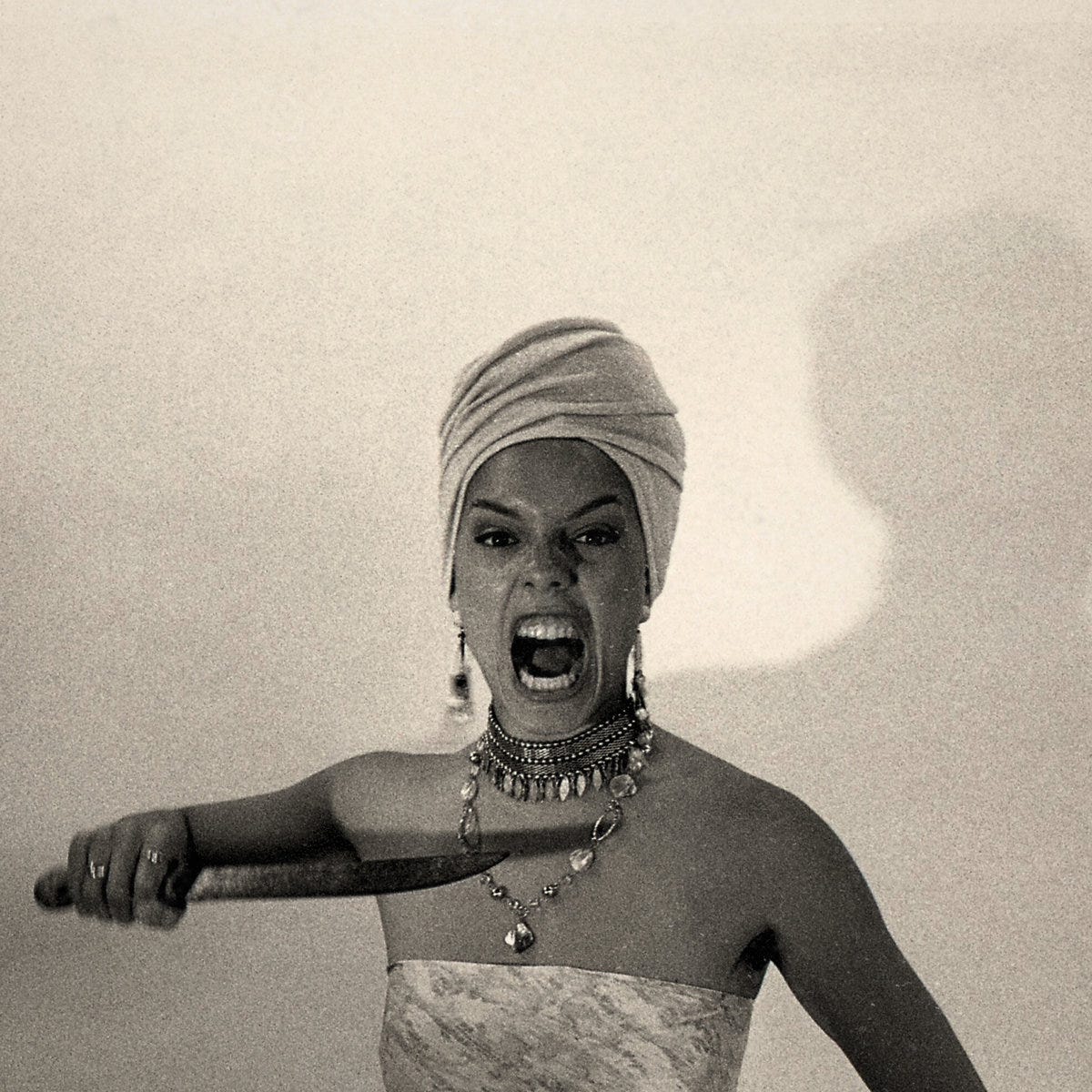
There is a particular kind of album that gets made when the words existed before the band showed up. The poems were already finished, already breathing, before anyone touched a key or counted off a tempo. On Scarred and Sacred, the debut from SOLCHLD, that sequence matters. SOLCHLD is the musical identity of Aurora Liddle-Christie, a Magan-djin (Brisbane)-based artist of Arrernte, Alyawarr, Jamaican, Irish, and Scottish settler descent whose Arrernte lineage runs back to Mparntwe (Alice Springs). Callum Pask wrote the piano parts, Julia Beiers handled bass, Ryan Hammermeister took drums, and Tristan Rogers played trumpet. A poet in a room with four jazz musicians, and the poems came first.
“My Nana Is a Pelican” is the strongest thing here, and the reason is plain. Aurora was six years old, sitting on her grandmother’s knee, and she told the woman she looked like a pelican. The nana laughed, touched the loose skin on her neck. But what Aurora meant—with a six-year-old’s vocabulary failing her—was that her grandmother was a banyan tree, a seaside, a forest. The writing jumps decades. The same two people sit together again, the nana now eighty-three, body hunched and tired, mind still sharp as a filing cabinet. Aurora asks if she’s afraid of dying. The answer:
“Aurora, I am a pelican, and death is but my next migration.”
That passage does what spoken word almost never pulls off on a studio recording. It moves through real time, from a child’s misfire to an old woman’s grace, and it doesn’t hurry. Pask’s piano thins to almost nothing beneath the closing lines. You don’t need accompaniment when the words are already doing everything.
The political material goes somewhere entirely different. “Freedom Come” is the longest, most direct track here. Aurora calls for an “urban witch” to “cleanse them colonial spirits.” She quotes Beyoncé mid-stride: “You can’t break my soul.” She folds cocoa butter curls and Eurocentric conformity into one breath, then drops without warning into “children laughing below the sound of bombs dropping/over children crying, bodies beneath the rubble.” The Blackfulla-Palestinian Solidarity Dinner in Brisbane used this as its centerpiece—you can hear why. When Aurora says “from the river to the sea/Palestine will be,” she’s naming a shared condition between First Nations Australians and Palestinians, colonial occupation on both ends, and she does it without hedging. The final stretch escalates to “Aunty said, ‘Fuck hope’/I say, ‘Fuck hope’/Freedom come now,” and Rogers’ trumpet flares underneath like it just received orders.
Only once does the album drop the collective entirely. “My Love Is Aged Wine” opens a door the rest of Scarred and Sacred keeps locked. Aurora describes her love as aged wine, “stored away in dark shadows/fermenting, waiting.” A man tried to crack the glass, to show her something past avoidance. If she were honest, she tells him, “You will bear the name of every man that has ever hurt me,” and “You could speak in gentleness/But I am only fluent in danger.” She heals in spirals, she says, and every cycle broken reveals another dimension of abandonment. That phrasing alone, “fluent in danger,” is the kind of line a songwriter would build an entire LP around. The track finishes with “you came close, boy/you came close,” and the slight waver in Aurora’s delivery gives the whole record a new temperature. Everything else on Scarred and Sacred speaks outward, to ancestors, to oppressors, to a nation. This one speaks to a man standing right there, and it turns him away.
Not everything on the record tells a story, and “Do You See Us?” opens with a physical roll call: “Chest out, head up, stride strong, energy big/Laugh loud, hair proud, face fresh, fit funky, voice even/Did I stutter.” Then a reversal that bites: “when they tell us to go back to where we came from/that where we come from is the very fabric of their existence.” The Rastafarian theology in “I am that I am, and I and I” sits beside that line, unannounced. “I Am Nature” catalogs specific Country: ghost gums, iron-soaked sands, dried riverbeds, and the narrow brook. These are Central Australian places, and when Aurora recites her lineages (“Aranda, Aleyawra, Afro-Jamaican Gaelic”), the catalog has a purpose beyond accumulation. The spoken word tradition these pieces belong to is built for rooms full of people pulling breath together, and on a studio album, that exchange isn’t always available. “Sun Rising” collapses pregnancy, ancestral memory, and ceremony under three minutes, and it would probably wreck a live audience.
The title track contains the sharpest political phrasing on the record. Aurora describes drinking “from wells poisoned with ill intentions,” then standing “atop mountains of my own grief.” She calls struggle “an heirloom of our lineage” and perspective “the offspring of time,” and those two framings sit right next to each other without competing. The closing lines deliver a double gesture: “I say with a peace sign and a middle finger/this is what it means to be brown and liberated/I’m grounded on stolen land/I’m hopeful despite the injustice.” The peace sign and the middle finger at the same time. Aurora Liddle-Christie’s debut holds both, and it doesn’t apologize for either.
Great (★★★★☆)
Favorite Track(s): “My Nana Is a Pelican,” “Freedom Come,” “My Love Is Aged Wine”