

Album Review: Seen by Latanya Alberto
A poet by training, Latanya Alberto fills her debut with kept knives, dodged bullets, and a healer’s scarred hands. Her comfort songs are greeting-card pleasant; the ugly ones are the real writing.
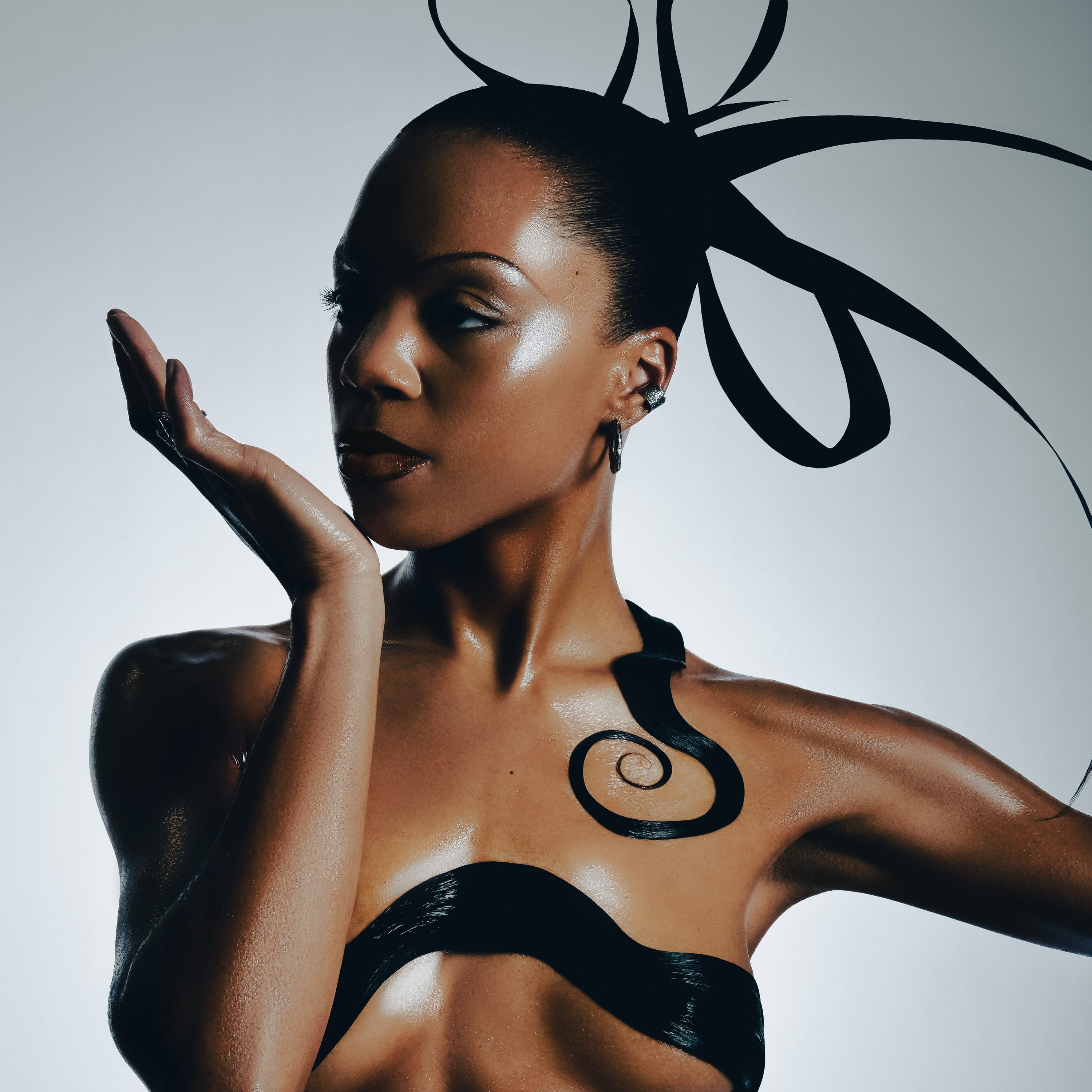
A blown-out bulb hangs over the room in “Save Me from Myself,” and the woman below it holds her hands out to someone she can’t bear to leave. She is the one in need of being saved and she says it without cover: he stops the blood, catches her when she falls and, by the end, she promises to do the saving in return. Latanya Alberto, a poet before she became a songwriter, does scenes like this better than most of the rest of her debut. Give her a room, a body, a bulb hanging overhead, and the writing becomes instant. Put her trying to grab hold of a lesson, and it becomes limp.
The heaviest of the tracks here is “Watch You Leave,” where the whole struggle is the act of staying; she adheres strictly to a rule she will not break: “No one leaves unless we’re healed.” She attends to the other person, heals him, accepts what will come and reports it calmly; “Feel like I could die under your command sometimes,” she sings, and in the next instant, “Sometimes I can dodge your bullets/Turn them into stone with a soft touch/Turn anger around into tough love.” What happens in the house, stays in the house: the screams, she has decided, are proof of some kind of love. She briefly asks the question, “Is it God between us or am I on my own way out?,” lets it hang in the air, and returns to the one promise she will not retract.
Two songs tackle male fragility from opposing positions; in the jazzy confrontation “Kill for Us” she goes straight for a man, head-on, “Mr Big Man, if I stand up straight to expand my shoulder blades, do you see me?” and then the next minute of playful dancing turns her words into the weapon “I can see behind your fragility and I can only say that it is that I see it that unnerves you.” “On Your Side” fights the same war on a broader, vaguer scale “Have you fenced your masculinity?/Are you scared of your fragility?” accompanied by the conversational “You see me, I see you,” the calling-card of the song’s most obvious moment, where two people have a quiet face-off. The verses that orbit it strain for “inclusion in democracy,” and “the absence of misogyny,” and “release in dignity,” three rhymes that manage to state values rather than sing them; the battle between the two people is the better of the two songs, and the call to democracy and dignity still only sound like rhetoric.
Hurt hands flit across “Humble,” a bouncy Afrobeat track with her most self-deprecating self-image. “Self-titled doctor, healer of pain” is how she characterizes herself, then admits “I look in the mirror, it’s humbling/The wounds on my hands suggest I’m struggling/With being the help I thought others would need.” She was raised by mothers to give, she says, and the people she saves often aren’t gracious enough. The same hands turn up scorched in “Almost There,” a smooth-moving song that devotes its verses to confidence and faith in what will catch you, but drops into a bridge that shrugs all of that off. “I’ve been burnt by the same cigarette fourteen times,” she sings, and “I kept the knife where you stabbed me.” The path she offers to escape it either involves spreading the hurt to others or leaping out of it. It’s easily her best-written verse, and its brilliance dwarfs the sing-song exhortation that surrounds it.
Lighter and smaller-footed, “Purify” is an easier heave. Her English trips, a charm rather than a flaw, “Ain’t one of us lies/We all slide... So I know there’s no purified.” Everyone is contaminated. And she is not uncomfortable stating that plainly.
She can be playful on “Hold Your Hand” and be funny about it; despite being dressed and ready in big girl clothes and more than up to the task, she wants someone to give her a hand. The greatest compliment is small and self-satisfied: she would rather “Place my soft entitled face in the palm of your hands” and rest her head and the day in someone’s lap than do it alone. She has the capacity to carry it herself, but prefers not to. It is the song where she is most likable, want and competence at odds.
Her comforting songs are the ordinary ones: “Long Road,” built on barely more than Rhodes and bass, has her asking love to serve as her shield, warning against the false healing that comes quick and doesn’t stick, practical, rational advice that would sound best in a greeting card. “Window to the Soul,” the Latin-tinged track, is the least substance in the entire project; she has trusted, fought for, been shown unbelievable patience by, and the chorus, instead of anything profound, lands on, “Window to the soul, I see you all the way through.” Nice, true, and asking for nothing from her that the weightier songs hadn’t already imposed.
She reserves her most naked voice for “Sweet Child,” a monologue to a child, or rather, the girl she was, to her daughter, perhaps, telling her justice will take its sweet time, so the girl should just snatch it. The child is no longer innocent; she has begun to know how to struggle. She will have women to guide her through the injustices that are yet to come. Already in the interlude, she made this point clearly with, “Vulnerability is courage in you, weakness in me,” bestowing the credit for resilience on others that she will not give to herself. Latanya Alberto is more writer than singer, still catching up; the lines that endure are those with an object, a presence or a pained hand: The uplifting statements can vanish by morning. The cuts do not diminish.
Great (★★★★☆)
Favorite Track(s): “Humble,” “Watch You Leave,” “Almost There”