

Album Review: Set Her Free by alayna
On her sophomore record, the New Zealand singer-songwriter stops borrowing her reflection from others. The writing is sharper, and the self-talk finally sounds like it belongs to an adult.
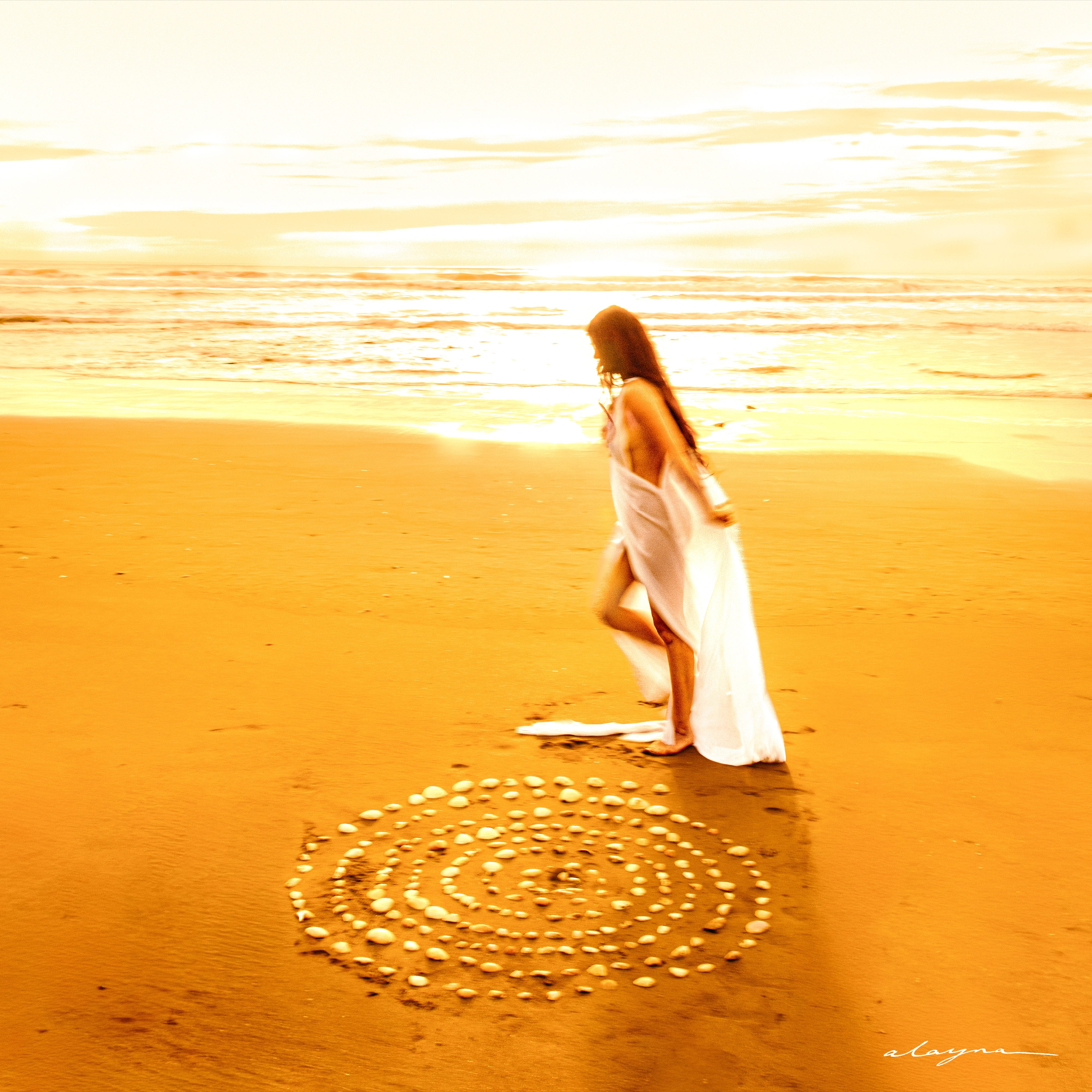
A title like Set Her Free promises release, but the album spends most of its running time in the room before that, where a woman checks the mirror and doesn’t believe what she sees, asks for reassurance and doubts it the second it arrives, wants softness and retreats because accepting it means admitting she needed it. Rotorua, New Zealand singer-songwriter alayna built these thirteen songs around that stubborn habit: outsourcing identity to whoever happens to be watching. She hands her self-worth to lovers, to mirrors, to anyone whose attention might confirm she’s solid, and the album’s best moments pin that habit to the wall. When alayna confronts herself, she picks plain, specific images. When she loves someone, she describes what that love costs her.
This is her second album, following 2023’s Self Portrait of a Woman Unravelling, and the shift between the two records is less about mood than about focus. The debut bled in every direction, open wounds everywhere, the writing gripping for whatever was closest. This one picks a few veins and stays with them. The self-talk has gotten sharper, and the love songs have moved from generalized ache into real arguments with real people, the kind where both sides are afraid and neither one is the villain.
“Love of My Life” lays the album’s central problem bare in its opening verse. She is sitting in sunlight, but can’t trust the feeling because nobody else is watching. “As if I only materialise/In front of someone else’s eyes,” she admits, and the honesty of that line is hard to overstate. She’s diagnosing herself mid-sentence, and the pre-chorus pivots by having her press a hand to her own chest and feel “her lifeline,” a gesture so physical it interrupts the abstraction. The chorus answers back with a voice that says, “You don’t have to try, you’re already mine,” and because the song never identifies that voice as anyone other than herself, the reassurance avoids saccharine.
With “Braveheart,” it tightens the self-audit. The second verse is blunt in a way most self-help pop sidesteps: “’Cause it was you who was hiding/Tryin’ to blame it on everyone else/And it’s you slowly dying/Before you’re underneath the ground.” The shift from second-person address to mirror, asking whether she’s building a life sentence inside her own skull, means the song interrogates cowardice. The chorus question, whether it’s time to “put it down now,” goes unanswered, and that refusal to resolve is what makes the song trustworthy.
The relationship material is just as measured. “But It’s Lonely” declines the convenient story where one partner overwhelms the other. Instead of accepting “My feelings are an ocean and yours are a pool,” alayna pushes back: “I don’t believe that to be true/Maybe you don’t see yourself the way that I do.” She redirects the problem away from her own volume toward the other person’s refusal to recognize their own depth. The island-and-shore image at the end of that verse is one of the record’s strongest because it describes longing without begging. She wants to be on the island, but she might only ever remain its border.
Care, on “Small Things,” gets measured in miniature acts. The opening verse cuts right to a bleeding finger, a Band-Aid produced without being asked, and she admits that “a little blood showed me something your heart’s made of.” Love here is unglamorous, automatic, bodily. The chorus keeps returning to that cut finger, and the injury is so minor and so literal that the surrounding language never inflates. It’s one of the few love songs on the album that doesn’t negotiate. Someone is hurt, someone else shows up. That’s the whole claim.
The album’s hardest promise belongs to “Love You More.” The bridge draws an extraordinary line: “I don’t own you, I/I just love you back/Simple as fact/I love you more than I love us.” That distinction, loving a person more than you love the relationship you share with them, is rare in pop songwriting because it sacrifices the couple for the individual. She follows it with the lyric, “And if that weighs too much/I’ll gladly turn to dust,” naming a willingness to dissolve, forfeiting the claim entirely instead of leveraging disappearance. Most love songs about letting go still clutch. This one opens its hand.
“Softly” is the most direct reckoning with her own patterns. “Throwing myself out of balance, putting my worth in romantic” opens the song without preamble, and the pre-chorus answers by insisting “all of the love I’ve ever had, it stays right here.” The chorus, falling in and out of love but still landing softly, works because it treats survival as sufficient. She doesn’t need a comeback anthem. She needs to not break on impact, and the melody lets that small victory breathe instead of swelling it into something louder.
Anxiety gets geographic coordinates on “Hold Me.” She has booked a flight, packed “all my feelings” in a bag, and gone quiet. The verse about needing “some cheer from smiling eyes” is recognizable to anyone who has traveled alone while emotionally overloaded, and the later image, “if you asked me for coordinates where my heart sits/I could tell you ‘cause it’s heavy as a stone,” turns the body into freight she has to haul from gate to gate. She needs someone to take the weight, and the song is brave enough to admit that needing is the whole point, not a weakness to dress up.
Generational gratitude on “Mother’s Mother” counts backward through women in the family, naming each link in the chain. The gratitude roots itself in action, watering, grounding, growing, and avoids sentiment entirely. When she calls herself “the beating heart outside your chest,” the line reads as debt acknowledged and unpaid, and the song is smart enough to leave it there without trying to even the ledger.
The title track closes the record by stripping language almost entirely. “What of I/If I set her free/What’s left of me?” is the whole argument. By the final pass through those words, “what’s left” has stopped sounding like a fear and started sounding like a genuine question she hasn’t answered yet. The album doesn’t answer it either, which is the most honest choice available. “Animal” swings for a different register, sensual and commanding, and the shift is welcome even when the lyrics (“You want to touch my heaven?/Get on your knees”) trade the album’s native precision for provocation, “I See You” and “Tiny Spaces” lean on broader affirmations that don't match the surgical honesty elsewhere. These three songs don’t damage the record, but they remind you how good the best ones are by comparison. But a sophomore album that teaches itself a new way to talk about needing people, without claiming them, has done something worth defending.
Great (★★★★☆)
Favorite Track(s): “Love of My Life,” “Braveheart,” “Love You More”