

Album Review: Simmie Sims III by Buddy
L.A. vet Buddy prints his government name across the jacket of album four. The party tracks and the prayer tracks prove to be one set of tracks, and the argument holds.
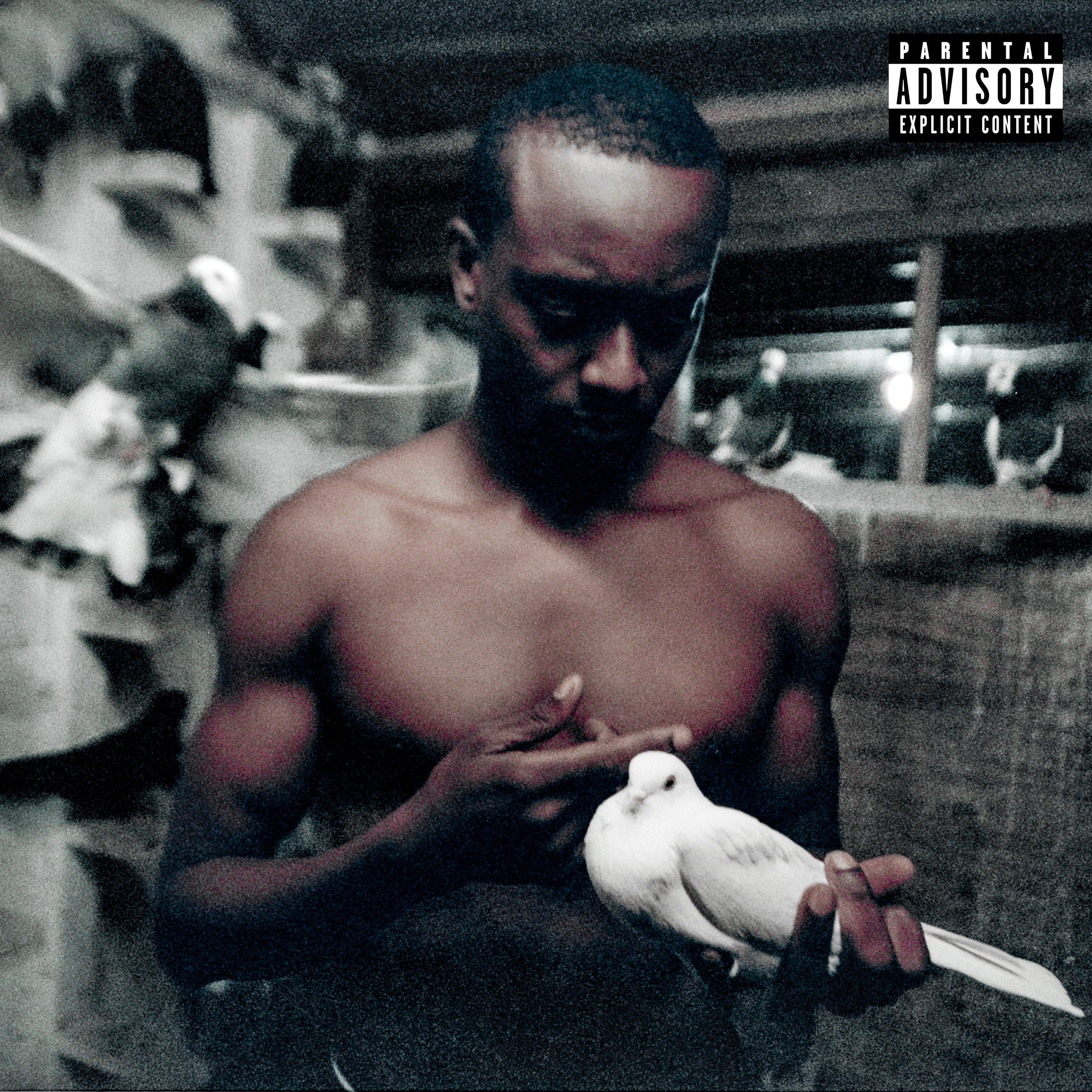
For fifteen years the name on every album cover has been Buddy. This one says Simmie Sims III, his real name—handed down from his father and his grandfather, never printed above a song of his until now. The uncle whose death gets reported on the first track was another Simmie, and the son credited further down as a featured performer is Simmie Sims Jr. Three generations of Simmies on one album jacket, counting Buddy himself, who turned thirty-two last September and has apparently decided it is time.
A decade and change ago this was a kid Pharrell had just ushered into i Am Other. His RCA debut Harlan & Alondra (2018) inherits its name from the cross streets of his childhood house, and the follow-ups rolled out on a clockwork cycle: Don of Diamond Dreams in 2020, Superghetto in 2022, Janktape Vol. 1 with Kent Jamz in 2020, Ocean & Montana with Kaytranada in 2017. Buddy has picked up recurring TV work (Bel-Air, Rap Sh!t, the Snowfall spinoff) and performs five nights a month at the Blue Note in Los Angeles, singing over Don Brown’s collective. None of the music across that decade sounded meaner than what Buddy was recording on day one. His default mode is bouncy and melodic, scaled for Friday nights with the top down, and the drums underneath Simmie Sims III maintain that default. What has changed is the voice above them. On the first song Buddy tells you his uncle has died and his father just called him grieving. That news is the thing he can’t stop writing around.
Indigo Boys drift in for the album’s saddest love song. “Marmalade” puns Chateau Marmont (the Sunset Strip hotel), and for most of its length Buddy is asking where his ex went. “Heard you moved out of LA/Wonder where you stay/Getting harder to refrain every time I hear your name,” the voice slips over and over toward Chateau Marmalade, another land, another planet. Kent Jamz shows up later as the Janktape Vol. 1 partner to trade verses with Buddy on “Bittersweet,” a duet about mutual failure. Kent thought he’d be happy once she walked away and bought himself a new chain instead. Buddy thought he’d be good and ended up alone. Both men close their verses on a four-time-repeated promise to get themselves together before calling her, and neither of them dials the phone.
Every party song on the album has a prayer sitting somewhere underneath it. “Reasons” starts everything off with Buddy listing what he is not: not a preacher, not a deacon, not a pastor, not a priest, not evil, and he still believes there’s a God. By the third verse he has pushed family away, now grinds so hard he hardly sees them, has a dead uncle and a father calling him grieving, and his response is to drink more. Then switches into second person, “Wait a minute now/Know you really love him but he gone already/Better when ya younger but you grown already,” handing someone else the grief Buddy hasn’t processed himself.
On “Round Me,” it spills its prayers in a tumble nested inside a song whose repeated demand is about keeping people out. Pray for my daddy, pray for my dead uncle, pray for my auntie, pray for my dead locs, pray for his problems, his money, his mama. Late in the song the title flips, and the guy who repelled haters and bad company in the first verse now counts God, his homies, his sisters, and angels as around him instead of kept from him. “Pray for a Blessing,” further in, has Buddy walking through everything showing up in his week at once: a lotta love, a lotta hate, a lotta salt, a lotta shade, a lotta praise, and every list ends on the same request for a blessing. Jay Rock inherits the third verse with refusal after refusal; heaven is what he wants, hell is a hole, he ain’t selling his soul, ain’t stabbing the bros, ain’t relaxing the hoes, ain’t faking for the gram, ain’t taking a life. Buddy is still asking for a blessing anyway.
Long Beach’s Huey Briss arrives to share “Hopped Out” with Buddy. Seven verses, two MCs, and a lyric moving through more L.A. real estate than most west-coast rap songs know what to do with. Plane to the whip to the chopper to top of the building. Compton to Watts to Slauson to Dover Street Market to the Highlight Room in West Hollywood to Vegas to Miami. In his third verse Buddy spells his own name out in luxury fashion (“My shoes they say CC right there see can’t you see see/And my shirt CDG it’s B-U-D from CPT”). Corny on paper, funny out loud. Guapdad 4000 appears a few tracks earlier for “NUNYA” and inherits a line Buddy already said, “how much worse could it be.” For Buddy it’s the setup for a stunt. For Guapdad it means literally out of jail. Two different relationships to the police, compressed into one shared boast. And “OTW” with Kalan.FrFr runs the identical game. Money, women, bottles, strippers, babies all headed toward the Westside. Then the closing minute collapses the premise into a question that loops until it swallows the whole song:
“When the party is over
Where you gon’ go?
Who you gon’ call?”
Buddy doesn’t answer it.
FAUCET is the stage name Buddy’s sister releases music under. Her verse on “House Jam” is the longest any woman sings on this album. Somewhere else across the credits sheet is a child named Simmie Sims Jr., listed as a featured performer. His father is Simmie Sims III. His grandfather is that Simmie Sims who called grieving in track one. All three Simmie Simses are somewhere in the credits.
L.A. rap in 2026 is a divided room. Kendrick is touring with a Pulitzer. ScHoolboy Q is working his own calendar. Vince Staples writes for television now. Jay Rock guests on a fourth full-length from a rapper his city has barely noticed. The producers of Simmie Sims III are mostly people in their twenties whose names have not traveled east of the 10. Nobody in this picture runs the conversation. What Buddy has going for him is longevity plus range. Fifteen years of working, one album every two or three years, a parallel acting career, a Blue Note residency. All of it counted for something. Printing his real name above the title at thirty-two is not a rebrand. It is what you do once the game’s version of you has shrunk smaller than the one your father handed you. His son has the same name.
Great (★★★★☆)
Favorite Track(s): “Round Me,” “Pray for a Blessing,” “Bittersweet”