

Album Review: Sir Render by Navy Blue
Closing a self-produced trilogy, the Brooklyn rapper turns in his densest, most allusive set yet and keeps pace with guests like Mike Shabb and a posthumous Ka.
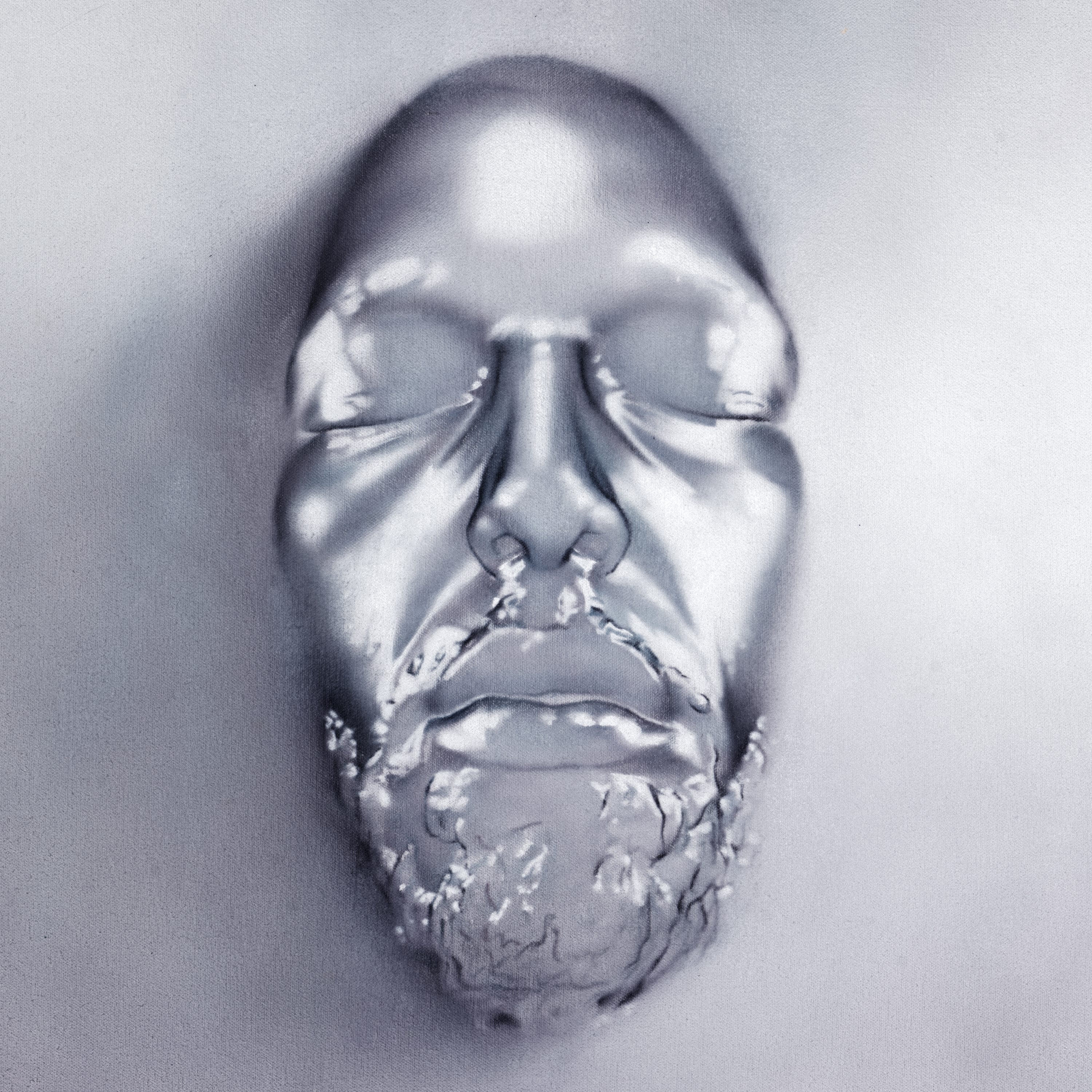
For most of the past few years, Navy Blue has done it all himself. He writes the raps, chops the samples, builds the drums, and puts out the records, one by one, until there are mountains of them. The new one caps a series he kicked off two years ago; the title is a pun: Sir Render versus surrender. He raps like other people footnote; every bar has its secondary and its tertiary meaning and references tucked into its rhymes until an individual line requires three read-throughs to unfold. Sage Elsesser is adept at it. He exercises this with the help of The Alchemist, Mario Luciano, Jason Wool, Shungu, and others. Writing so dense can become pointless; for long stretches of his music, it never does.
He’s at his most straightforward on “Commencement”: “I cast a line when fishing out the reservoir/I pass time with deep sighs and interlocking arms/I capsized then I turned my life over to God.” One thing becomes another until it’s out of his hands entirely. The rhyme feels precise and not forced. The intensity grows on “Reflections.” He filters through the uglier stuff using a geometric trope: “I struggle with survival, I was suicidal/That’s the golden ratio, the structure of a spiral,” which comes off less like ornamentation than like inevitable outcome. Even his name keeps popping up: “Sage is a title, Sage a true lover, but Sage been a rival.”
Consider the football run on “Belladonna” as counter-evidence to all of it being symptom: he bends “a ball around the wall like Keira Knightley,” makes his wings “biggest when I beckon like Beckham with the arm band,” positions a rival as the Ty Lue for his Iverson, and stops to interject, “Would you rather be happy or right, G?/Choose wisely.” That’s a man who revels in mastery of his craft and stacks up sporting analogies and film references like building blocks to form a sustained, unapologetic flex. Earl Sweatshirt comes through on similar frequencies: “Whole lotta rage, in and out of phase,” “I was listening to Lil B and Cormega,” “Got my baby highchair at the boss table for sure.”
The party people bring down the writing, and it’s the best that can happen to it. On “Residuum,” billy woods gives a whole scene in someone else’s rented room: “I sit with the drink and listen to the rain/Watch her paint with her hair in two braids,” then turns the weather inward with “It’s pouring out like a heart with a hole,” then caps off the strangest imagery on the record with the heartbreak as “a T-shirt with only one seam.” Meanwhile, ELUCID is cruising through a city with “the peace sign to total strangers,” “laughing at mall cops,” turning up a Stevie record in a borrowed car. The drums are more aggressive on “Residuum” than much of what surrounds it and are placed under verses that point out. Navy is dealing with mythology; woods and ELUCID use objects. And it’s the objects that stick with you. Mike Shabb is direct on “Over”: “I was right there when they buried bro,” but the track quickly becomes a Vince Carter flashback: “Drive fifty like I’m in my Vince Carter years/I’m Tracy on that late game, all backboards.”
On “Circa,” Navy begins his set by noting that “I’m alive, was only five when I knew death,” while Ka replies from beyond the close of 2024 when the Brownsville rapper would be found dead. As any artist Navy has ever worked with, Ka packs every line, and the words never fail to conjure something concrete—a kid who “had a hunch in lunchbox, mom’s packed a prayer,” a boy who’d “watch Happy Days during my saddest year,” a fact about the way the world operates—“the establishment only want to establish fear.” Crying, he writes “only got you beat harder, smarter to master tear,” and with each sentence, he gives you something to picture, something to comprehend. That’s where the form keeps raising the bar, and at least on “Circa,” Navy is raising it.
It is his simplest language that does the most work, cutting through the periphery and the more oblique. He says, “In my case, self-harm brought peace/It was written on my face, I got a calm you can’t breach,” on “If God Had Legs,” then even more clearly on the title track, “I been in them psych wards tryna get a grip/This what livin’ life for, I call it what it is.”
His brother’s “My brother tomb don’t have a headstone/It’s just a cross that sits across from my reflection” on “The Birth of Medicine” is the simplest way to describe grief, offering no outward metaphor or borrow. In a catalog where his subjects matter more when they’re not put to use, he produces every track and keeps pace with the heavyweights while only getting sparse when the imagery outweighs the emotion. Navy’s near the top of the game when it comes to this kind of writing, and he asks that we read him at least as closely as he writes.
Great (★★★★☆)
Favorite Track(s): “Commencement,” “Reflections,” “Circa”