

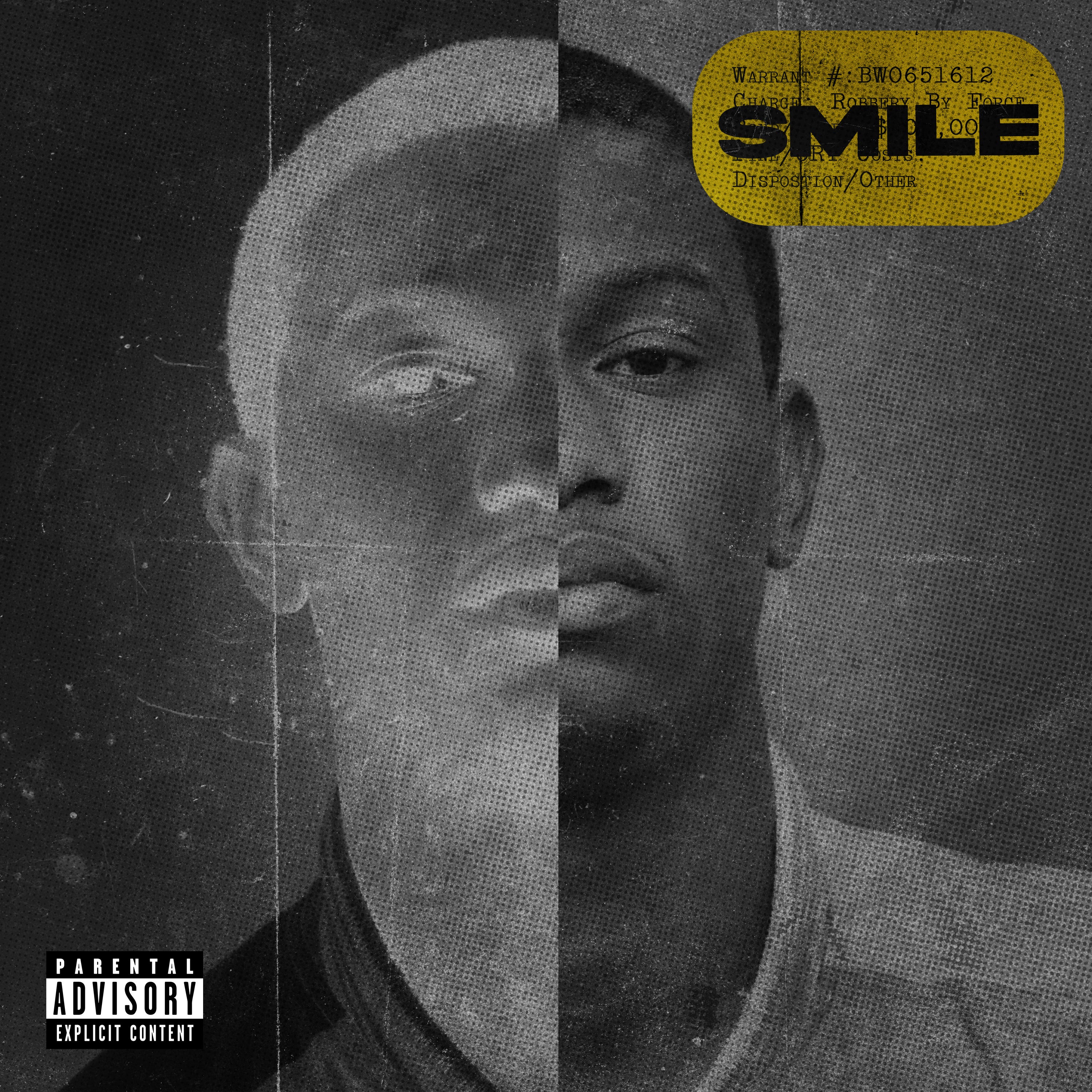
Album Review: Smile by Nick Grant
The South Carolina rapper’s latest release builds his case for staying outside the trend market, and the album is the strongest argument he has filed yet.
Translator’s Note: Originally written in Japanese; translated into English for publication.
Near Walterboro, South Carolina, a boy of twelve began writing on his grandmother’s porch. It was a dare by kids in the neighborhood. Walterboro is a small town with 5,000 people and two traffic lights. It has a bypass highway. Nick Grant kept writing there for ten years even after he left. Following I Took It Personal, Smile has this artist that the music business has not figured out how to scout and this time he stopped waiting for scouts.
Eight of the ten tracks are solid, slots earned track by track. One track, “Dope Bitch,” is the only one that is weak. The beat is clubby and has thin Fenty references and a hook looping “dope bitch.” But “Money Problems” rides on Yuri’s thick bass and crisp snare, listing all that money still controls. He mentions his aunt overdoses and his grandmother puts up signs forbidding visits with chalk. Yet, he speaks in the same tone as the next bar about Triple Goose. Only a single couplet is different: “Last saw you on your birthday/Next time was at her grave.” The song becomes fully personal when music does not make room for grief.
Over somber B.Daniel samples and lean drums, the song “Sensitive Gangsta” lays out its thesis clearly. Grant dissects the rap economy of gangs: filming beefs for posts, fabricating positions to secure allies, signing deals for a few million, and watching a son get killed over dice. The beat for “Same Song” of Stoic layers two closely related soul samples over a hard drum break. Along with TDE’s Punch, Grant rides these bassless sections chanting “Motherfucker keep your hands high.” Flow locks to the downbeat of each line consonants, hitting the kick so “BBLs and injections” lands alongside “bad karma, big pharma and slave town” rhythmically.
‘88, his 2016 mixtape, features Killer Mike, BJ the Chicago Kid, and Big K.R.I.T. André 3000 and Nas signed this artist at age 27 from a grandmother’s house and they were asked to prove belonging. Those co-signs are gone from credit but writing has advanced without them. On “Generational Runs/No Shortcuts, Grant raps, “I’ve shed some gray waiting for your dismissals.” This sounds as a joke, but serious work is hidden. What ‘88 was centered around waiting for someone’s best opinion no longer matters.
CyHi’s opening verse for “Razor Ramon” has the tightest writing on the album. From “crooked pastor in the pulpit” to “I carve your face/As if I was a French chef, I’m talking garde manger.” Grant prefers straightforward lyrics that hit downbeat but CyHi plays with denser, more playful syllables nesting within 16 bars. He ends the song by cutting playful elements and keeps density: “Smoke whoever like Bishop did Radames.” That decision is the strongest case for Smile as well. Let’s not gloss over Ransom’s verse: “And even though we thinking the same, it’s just fruits that’s low-hanging produced a throat strangling.”
Favorite Track(s): “Money Problems,” “Razor Ramon,” “Everyday I Wake”
Small typo on “TDE’s Punch”