

Album Review: Sometimes Money Cost Too Much by Grafh
A veteran of shelved deals and sidewalk commerce makes the rare drug-rap album that counts the cost in children.
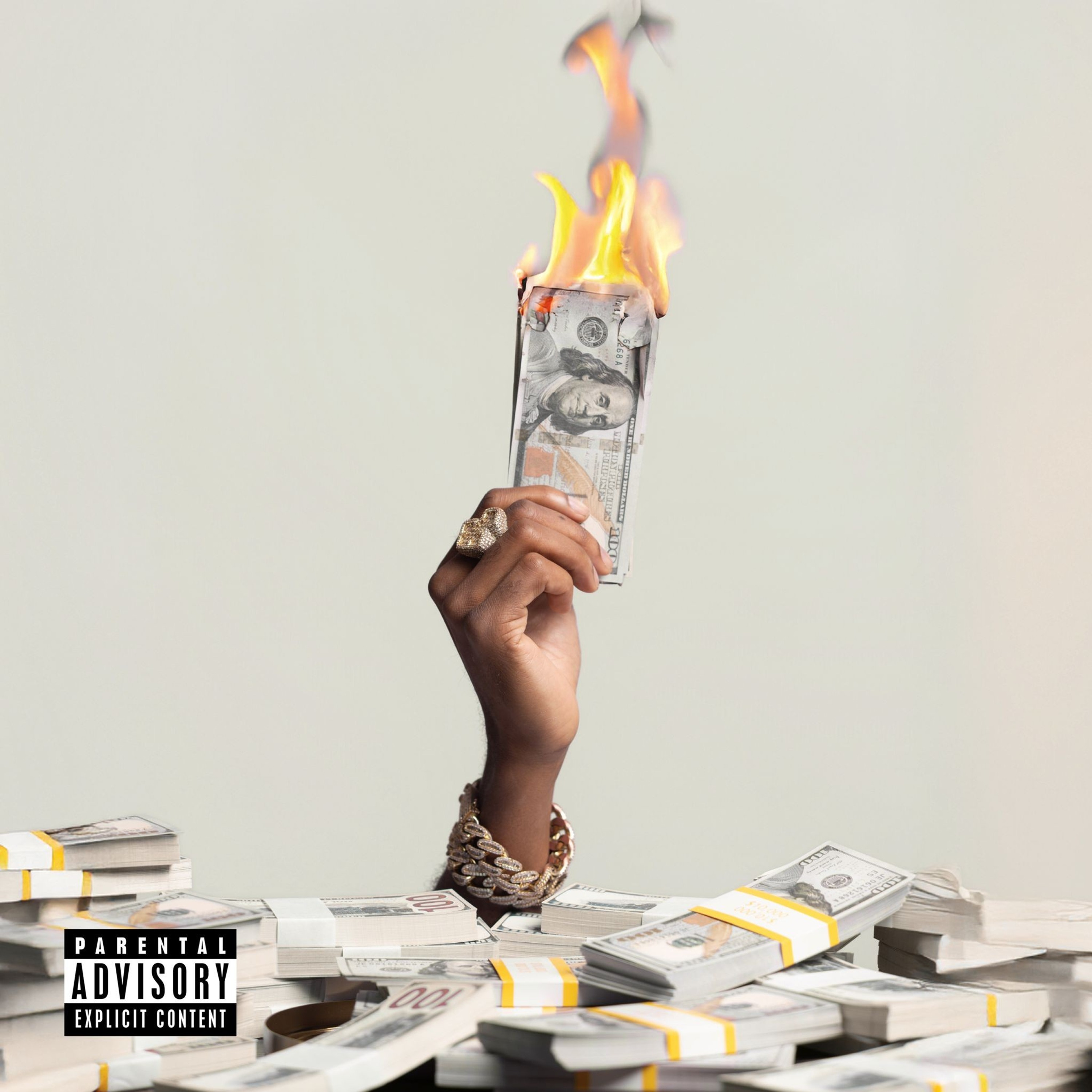
It’s a certain type of parenting that goes on in neighborhoods where there’s nowhere to grow up, kids adopted by adults whose biological parents are in prison or on drugs or dead or who know all of them somehow; the guardians don’t do any paperwork. They use money from the corner and from kitchens to buy the kids their school supplies and the line between love and money gets obliterated before any one could say it. Philip Anthony Bernard, who raps as Grafh, grew up in South Jamaica, Queens, when the crack wars were a reality, and saw his own mentor shot down right in front of him, followed by his father; he was a kid learning to be a man who knew how to take care of himself without really becoming anything beyond that. Sometimes Money Cost Too Much has that question in the title, although the answers are in his biography from years ago, scattered across lists of narcotics, declarations of love, posse tracks and the three-verse tale of a kid called Little Kenny that sums the whole thing up.
A looping New York vocal and a Wu-Tang paraphrase establish Grafh within the tradition of Queens rappers, who tend to refer to their borough as some sort of state of being; “Cash rules everything around me, Queens get the money.” He runs down his résumé-turnstile jumper, coke smuggler, gold chain, olive drab fatigues, presenting himself as an evidence submitter in a case he’s been building for twenty years; the tapes, shelved major-label releases, and independent works have culminated in this TCF Music Group collaboration. The litany feels tired, bureaucratic; “Give me six and I’ll make a dozen,” he says, taking the cooking metaphor for the deal, while the police in the second verse think he’s “just a thug in tan Timbs and construction gloves.” On “Squeeze First,” Benny the Butcher comes through with domestic details: a hundred thousand dollars in an Adidas box, the business setup in the pizza place, cards being played on a stained kitchen table. Where a lot of the dirty work takes place, the kitchen is the nexus of the business and family life: “Your own brother don’t like you, fuck around and go upstate, your own mother won’t write you.”
On the posse cut “Outside,” Styles P, 38 Spesh (who produced the track) and Mitchy Slick each bring their corner’s testimonial from Yonkers, Rochester, and San Diego; it’s as though they’ve been summoned to the same courthouse for a single hearing. Styles describes the scene where “silence is on the joint, they killing you with the sound off,” the muffled gunshot appearing like a weather report. The sharpest domestic detail comes from Grafh, with coke dust on the kitchen table and his baby mama needing allowance, so “we gon’ eat around it.” The table is where business and family both occur and no one flinches because it’s Tuesday.
Grafh opens “Brick By Brick” to find a Bible on one side of the bed and a loaded nine on the other and a devilish temptation, “go for mine.” He’s making it clear that the drug trade is simply shift work with lesser benefits. He confesses a dependence on the drugs-and then corrects himself, “Not on them, I sell them.” “Documented” re-establishes the self-mythologizing by citing Black Hand Entertainment and Chaz Williams by name, reducing his past life to rhyme after rhyme: a record deal still has the trap inside, “Phil Jackson in the mud field practicing run drills backwards,” an image that’s absurd and perfect, discipline used in a life without a script.
On “Twin,” over the R&B production from Kxvi, Grafh writes a love song, asking “baby, you look amazing all the time” and then in the next line saying “wish I could invoice all your exes for wasting your time.” The second verse is earnest, “We made it through the hard times, why? ‘Cause we prayed for each other. I broke your heart and you broke mine, but we stayed for each other,” with the climax: “I invest too much time with bitches I would never, ever marry, but you.”
Little Kenny’s mama was a crack addict. “Some Wounds Never Heal,” the closing track, tells his story over three verses and a Tish Hyman hook that asks “Can you hear it hollering without a sound?” “I look in his fridge, all I see is spoiled milk and baking flour,” Grafh says, “so he starving and he dirty, she ain’t make him shower, she be tryna cover up the smell with baby powder.” He’s in twelfth grade, still a kid himself, telling this woman how to raise her son, paying Kenny’s school fees, buying him real Nikes instead of the fakes Grafh had when he was not cool. He taught Kenny to fight, but the boy was always flinching, always scared, used to abuse. One day she beat him with a wooden spoon to the point he couldn’t move. Grafh took Kenny shopping when he got out of the hospital, shot hoops with him, kept blocking his shot until the kid couldn’t stop laughing. “I said, ‘I’ll see you tomorrow,’ but tomorrow never came, a black body bag with my whole world in it.” The title makes itself plain here. Money from the street paid for Kenny’s Nikes and school fees, and none of it kept him alive. The child is dead. Whatever Grafh provided, the cost exceeded the price.
Joyner Lucas stalls “Big League” in boilerplate competition raps: “Too hot, believe it or not, word to the Ripley,” and his verse about burning down a crib while gripping the Bible is hostile imagery with nothing underneath it. “Rollin’” is pleasant ride music carried by Dope Gang Porter’s Michelin-star-chef-and-cannoli-in-Sicily bragging, but it sits oddly next to the heavier material. “Suicide” pairs Grafh with Tech N9ne for a chopper exhibition that sounds imported from a different record entirely, a technical display that has no emotional business following “Better With Time,” where Bun B talks about linking up with Pimp C, hitting the road in a white Prelude, and doing it “for my mother and father, make a living for my son and my daughter, and a million out a motherfucking quarter.” The best songs could fill a devastating eight-song LP. The excess is the tax on independence; when you’re building without a major label, you keep everything.
Grafh has been on the margins for two decades, signed and shelved, co-signed and forgotten, given distribution deals through Sony and Roc-A-Fella and E1 that never produced a proper album during that era. He’s been praised by Drake, Busta Rhymes, Raekwon, and, ugh, Shia LaBeouf. None of it translated into the career his pen deserved. Sometimes Money Cost Too Much is his most personal record, and the question underneath every song is what happens when a twelfth-grader from South Jamaica decides to raise a child who isn’t his, using money the law won’t recognize, in a borough that will bury both of them. He said, “I’ll see you tomorrow,” but tomorrow never came.
Solid (★★★½☆)
Favorite Track(s): “Outside,” “Brick By Brick,” “Some Wounds Never Heal”