

Album Review: Soul Woman by Michelle David & The True-Tones
On her eighth album, Michelle David stops diagnosing the world and starts diagnosing herself, and the gospel-soul she builds with The True-Tones has never sounded more necessary because of it.
Brothers & Sisters, the 2024 Record Kicks debut from Michelle David & The True-Tones, looked at the world through a television screen and talked back to it. The description of that record, in her words, was singing into a mirror, letting whatever bounced off the glass belong to the person standing on the other side. Rolling Stone France, KEXP, BBC 6 Music all picked it up, and deservedly so, because a gospel-soul singer with a Broadway background and session credits alongside Diana Ross choosing to deliver social commentary over analog Muscle Shoals arrangements was a genuinely interesting proposition. And then she asked herself a question she apparently said out loud, something close to this. How can I ask other people to sit with themselves if I haven’t done it?
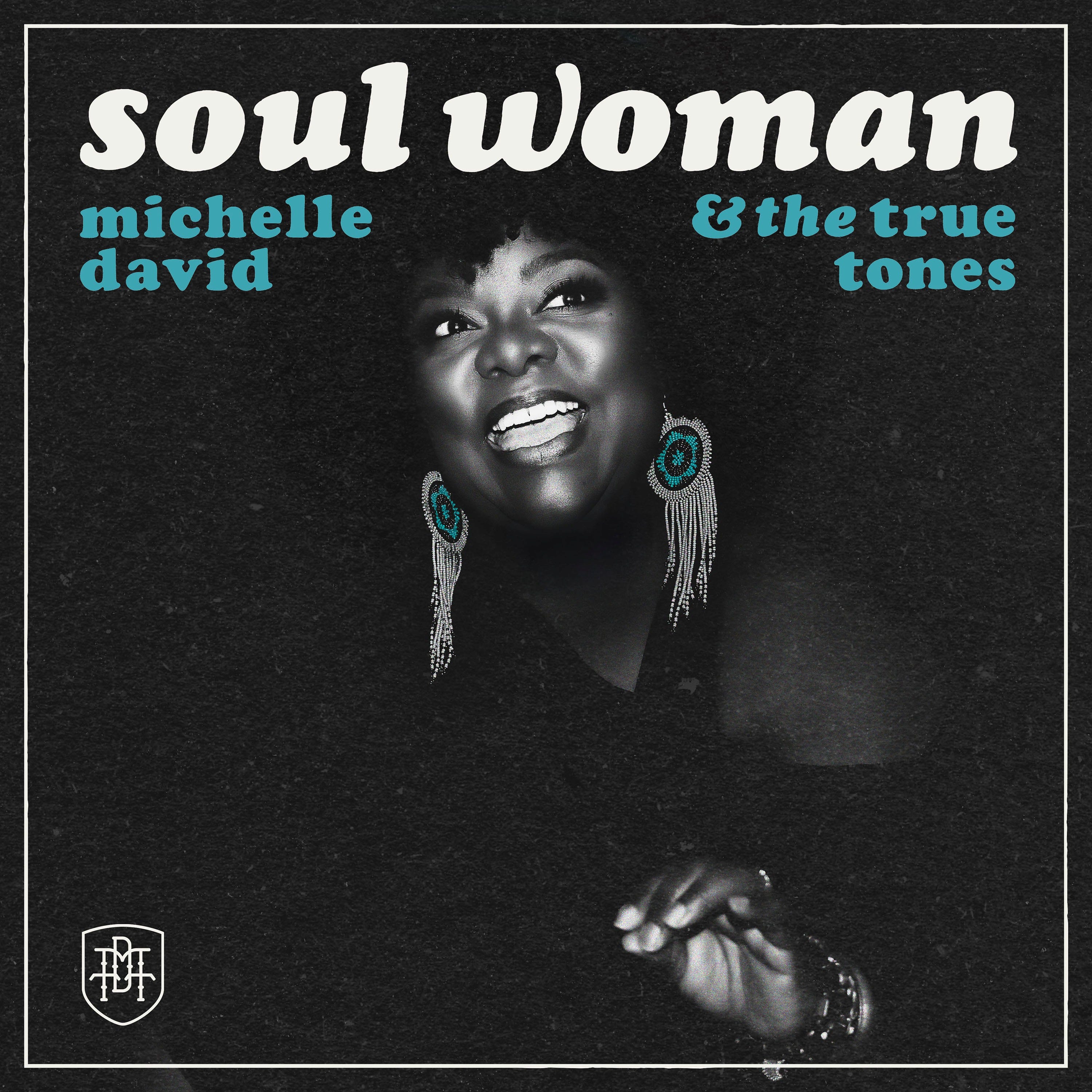
Soul Woman is the album that came from taking that question seriously. Paul Willemsen and Onno Smit on guitars and production, Bas Bouma on drums. They recorded live in the same room, same take, every piece built together and captured whole. The album’s most bruising admissions show up on “Running” and “Speak to Me,” two prayers aimed at a God who won’t answer. On “Running,” she is fasting, praying, keeping quiet, doing everything she knows how to do, and she still can’t hear anything. She thought she had it figured out, and it was “quickly deferred.” Halfway through, the patience drops: “But some things were fake/No, they were really real/How much more can one take/Before it snaps and breaks.” The chorus just keeps going. Running, running, trying to get to something, running into nothing. The answer never comes.
That same frustration carries into “Speak to Me,” over stomping brass and Willemsen’s distorted guitar. The lyric says she’s stuck in her own head, that the wrong side is the one getting fed, that only one voice soothes the noise, and it isn’t talking. Then the bluntness arrives.
“I know all the quotes and the sayings
I heard all the rights and the playings
Can’t get what I don’t have
I’m doing the best I can.”
The scripture is all there. Reciting it hasn’t helped.
The title track is where she stops asking and starts declaring, “I am all that I say I am/I am north, south, east, and west/I am the air that gives life to all who needs to inhale/My womb carries light, dark, and everything in between.” She’s not describing womanhood from a safe distance. She’s naming what she contains. The lyric adds grief by the middle.
“I cry rivers and lakes that can nourish the valleys
I’m the mountains that have endless peaks
I’m simple, yet the complexity of me is vast.”
The third section tightens the screws: “My moans and groans speak volumes to the weight of the world/Yet I conceal the true essence from which the pain was created/I nourish in the face of resistance/I’m structured to construct.” I was built to build, even when everything around me wants to tear down. The delivery carries no pleading. It arrives as fact.
With “Flow,” the track opens with a directive, “Don’t you know, sometimes you gotta let it flow.” The first verse sounds almost philosophical as she sings, “Peace ain’t something you can grasp/It’s in the heart’s state of mind.” Then the philosophy disappears in “Why keep it in, why hold it close/The hurt you feel is hurting you the most.” And the bridge drops every idea the track has been carrying and just says, “Cry out loud/Cry out loud/Cry, cry/Cry.” That’s it. The whole thing collapses from measured advice down to a single instruction.
Broken glass on the floor, pieces of her scattered everywhere. That’s how “Pick Up the Pieces” starts, and she coaches herself through the cleanup from there.
“Clear the path that you have made
To leave room for your growth
It’s not too late to face the naked truth
All that you need to do is be good to you.”
The outro becomes a chant: “Get yourself together, girl/You know you’re not alone.” Bouma’s drums and the full-band push behind her give the self-talk actual physical weight. This is where recording live, as a programmed arrangement, would have let her carry these alone, and they are about not being alone, even in the worst of it.
Only once does the album glance back outward, toward the world she left behind on Brothers & Sisters. On “Seasons,” she says it plainly.
“Truth is the truth, even if the world says different
Never thought I’d see a time when facts were fiction
But there are those who won’t amp up the hype
We still know the value of what’s wrong and right.”
The album’s back half settles into devotion and gratitude with a calm that only lands because the earlier material fought so hard. “You’ll Never Know” is a love letter aimed upward. The lyrics say someone stepped in when she couldn’t see, that darkness swallowed her whole, and all she wants is to repay a debt she can’t even put words on. “I have nothing that could possibly relay just what I’m feeling.” The heaviest question on the record sits inside “When All Is Said and Done.”
“You find yourself alone
Nothing but you and your thoughts
With all the things that you lost
Can you find peace within
That makes it all make sense.”
The third stanza admits confusion about whether she’s understanding what’s being said to her or just bending it the way she wants, and then she prays four times in a row and says, “I’m gonna hold you, love you, and protect you/I’m gonna fight you, for you.”
After nine tracks of searching and breaking and not hearing anything back, she arrives at gratitude anyway. “I Thank You” closes the record as pure, uncomplicated praise: “Lord, I thank ya for Your glory, Your patience.” An artist who spent seven previous records building toward this said the hardest thing, did the work on tape, and let the band push behind her. The bridge cracks the formality wide open.
“I’m grateful every day
I’m grateful, yes, I am
I thank ya, yes, I wake up in the morning
And I’m thinking, I thank ya.”
The outro shakes loose whatever composure was left.
“Oh, with the shake, and the feel, and the shake, and the feel
Mighty good, Lord, every day, Lord.”
She is physically moving while she sings that. The whole band can tell.
Great (★★★★☆)
Favorite Track(s): “Running,” “Soul Woman,” “Speak to Me”