

Album Review: Soundtrack 2 Get Her Back by Jozzy
A hitmaker’s debut that sings to women without explanation. The pen was always there; the nerve is new.
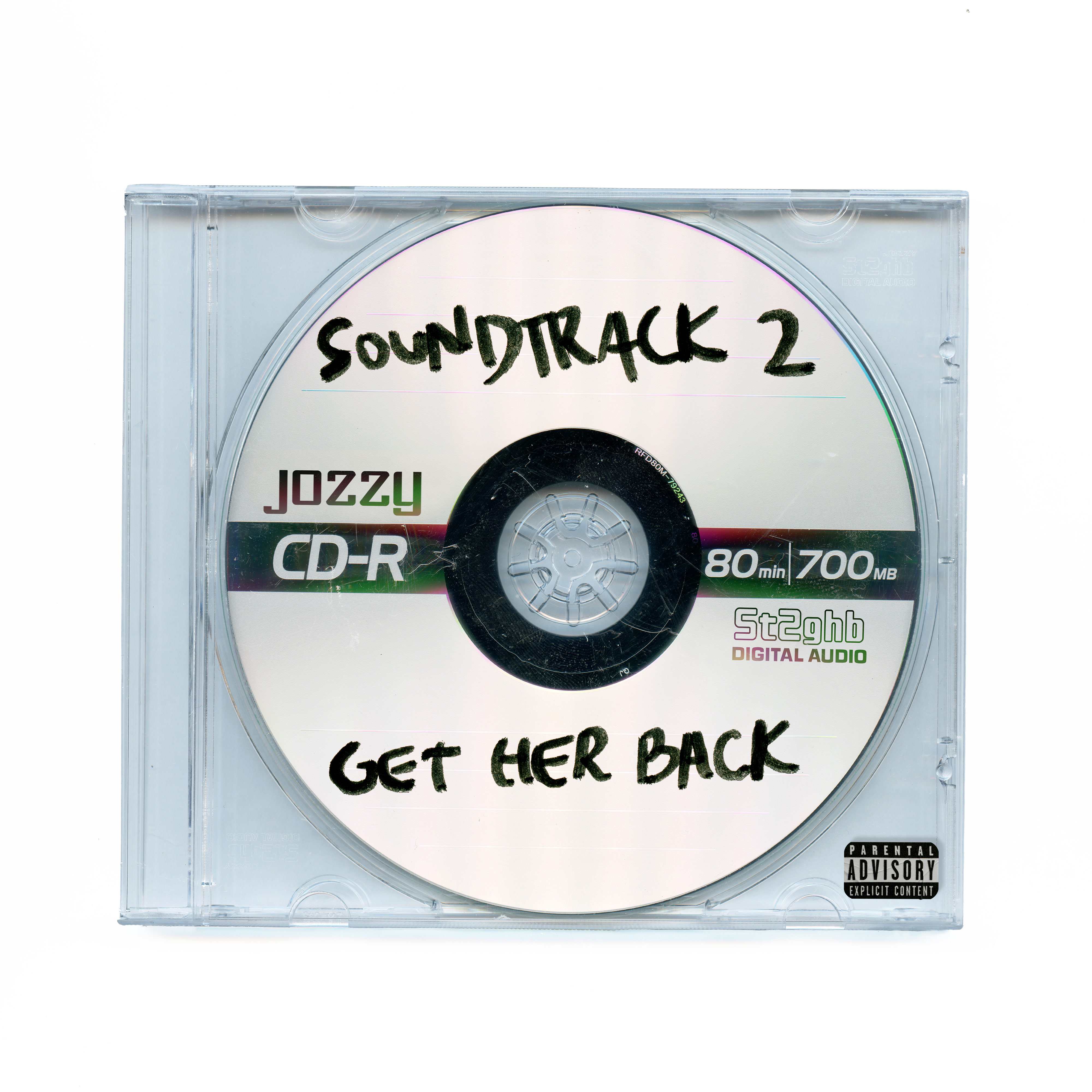
The songwriting world has a particular kind of celebrity that most people never learn by name. You can live inside a song for years, and never once look up who put the words there. Jocelyn Donald, the Memphis-born songwriter who goes by Jozzy, spent the better part of a decade in that invisible seat. She co-wrote the Billy Ray Cyrus verse on “Old Town Road,” which parked at number one for nineteen weeks; “Virgo’s Groove” for Beyoncé; “Low” for SZA; “Body” for Summer Walker; songs for Latto, Mary J. Blige, 21 Savage, Chlöe, Madonna, and others. She grew up in a Memphis household where her mother had been signed to Hi Records, the Willie Mitchell label that gave the world Al Green, and her brother ran a local rap group called Westwood Clique. She’d been writing songs since she was eleven and trained under Timbaland and Missy Elliott in Miami as a teenager.
In 2022, the horrible human being, known as Diddy, brought her to the Billboard Music Awards stage and called her the “R&B Biggie,” signing her as the first and only act on Love Records. Her 2023 EP Songs for Women, Free Game for Niggas hit number one on the iTunes R&B chart. Then everything underneath her collapsed. Diddy was arrested on federal sex trafficking and racketeering charges in September 2024, and Love Records evaporated overnight. Jozzy went dark. She’s spoken about being in a difficult space, about praying, about needing to find her real purpose. She resurfaced on RBC Records/BMG with a one-night stage play at North Hollywood’s El Portal Theatre (cast including Janina Gavankar, scored by Stevie J, written by Brianca Williams) that doubled as a theatrical prologue for this album. Soundtrack 2 Get Her Back is her debut, made at 35, after writing hits for a decade and watching her label deal disappear into a federal indictment.
From a spoken-word intro that confesses to lying, cheating, selfishness, and neglect, Soundtrack 2 Get Her Back moves through pursuit, suspicion, sex, confrontation, fear, attempted repair, and a closing stretch that abandons reconciliation altogether. Jozzy sings all of it to women, and she doesn’t stop to contextualize that. On “I Can,” produced by Jozzy herself with a Keyon Harrold trumpet line threaded through it, she borrows the “Snap your fingers, do your step” refrain and tells a woman she’s picking up where the last person left off: “What he can, I can.” On “Maybe,” she’s frustrated with a partner who won’t give a straight answer:
“Don’t treat me like a maybe
Girl, you know I’m grown, I can handle it.”
The most striking collaboration on the record is “Lucky,” where Mary J. Blige sings the part of the woman Jozzy wronged. Blige’s verse comes in hard, telling Jozzy she gambled with someone’s heart and should take her confidence to Vegas. A legacy R&B singer playing a role inside a queer love story, performed without disclaimer or winking self-awareness, is uncommon. The song keeps the drama domestic and specific enough that the casting becomes a non-issue.
Jozzy has told interviewers she wanted to write songs the way Anita Baker’s “I Apologize” worked, with a woman telling a man she’s sorry, which Baker did in 1994 and almost nobody has done since. On Soundtrack 2 Get Her Back, the apology runs to women, and the person making it is a masculine-presenting queer woman who has talked openly about facing industry bias for not staying feminine enough. The album’s most interesting songs sit in the gap between sexual confidence and emotional panic. “Hold It In,” produced by Stevie J, is an explicit, commanding bedroom track where Jozzy tells her partner to wait until she says so. “F@ck Slow Jams,” with Jeremih, is about a partner who wants the playlist off so she can hear the actual sounds. These are direct, funny, grown-woman sex tracks, and Jozzy writes them with the ease of somebody who has ghostwritten hundreds of hooks. Then “True 2 Me” confesses, “I’m scared of love and I hate to trust/I’ve been heartless for a minute/Put a muzzle on my feelings,” and you’re listening to a completely different voice—or the same one when nobody’s watching. “Santa Monica Bar” mourns a friendship that turned sexual and died: “It’s just my luck, how I lost my friendship for the rush/And now it’s gone.” The songwriting is plainspoken and the regret is specific, which is more than most R&B breakup records manage.
Fresh off his 2025 comeback Waiting on You after thirteen years away, Jon B produces and sings on “Lonely Room,” a reconciliation track with the stately, unhurried feel of a late-‘90s soundtrack ballad. That’s the register Jozzy wanted; she’s cited Above the Rim, Boomerang, and Soul Food as the film soundtracks she grew up replaying. Keyon Harrold, the Ferguson, Missouri-born trumpeter who played the horn parts in Don Cheadle’s Miles Davis biopic Miles Ahead and has appeared on albums by JAŸ-Z, Beyoncé, and D’Angelo, lends “I Can” a brass warmth that lifts the song out of standard midtempo R&B. Zac Brunson, who produced six of the album’s songs, keeps the arrangements lean, leaving Jozzy’s voice close to the front, and BongoByTheWay gives “Lucky” a bumping, uncluttered groove.
Sex material piles up in the middle, and the record drags under it. “Supermans Weakness,” with Chris Brown (also a piece of human garbage), is the most anonymous song here—a kryptonite metaphor, a bussdown AP comparison, writing Jozzy could do in her sleep, and it sounds like she did. “Single” is a breezy party track with a phone number in the hook, charming enough but weightless next to a song like “Maybe.” The skits nail their jokes. “Other Phone (Interlude)” is a quick, well-timed bit about a skeptical friend, and “Tessa’s Interlude” stages a locked-door argument with sharp specificity, proof of Jozzy’s theatrical instincts. But the interludes thin the ratio of full songs, and the album would be tighter with fewer detours into material that any competent R&B writer could have turned in. Jozzy has three Grammys, a Diamond plaque, and credits on records by some of the biggest names alive, all accumulated while staying in liner-note font. Her debut is uneven, but the best songs on it belong to a songwriter who stopped lending out her sharpest lines, and you can hear why she kept them.
Solid (★★★½☆)
Favorite Track(s): “Lucky,” “Maybe,” “Santa Monica Bar”