

Album Review: Strictly 4 the Underground by CK The Spitta
A rapper whose simile bank was built on football pitches brings a fourth album full of Lisbon balconies, red cards, and the kind of autobiographical that only comes from telling on yourself.
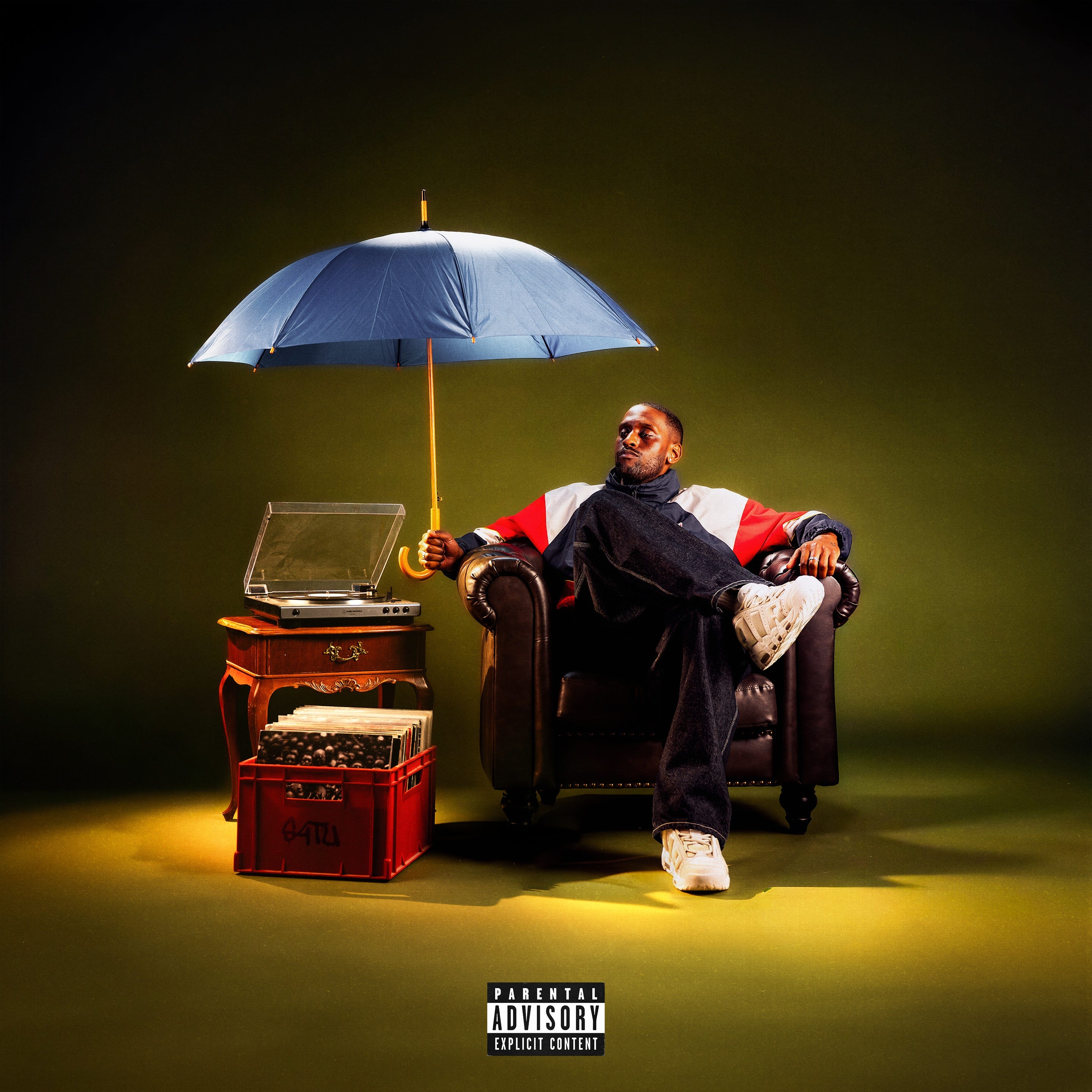
Athletes who wash out of professional sports and turn to music carry a particular wound with them, a competitiveness rerouted but never fully discharged, and the language of the game they lost stays in their mouths long after the body has stopped performing it. On “Fruits of My Labor,” CK The Spitta raps about signing his first football contract, getting applause when he dribbled “like Zinedine,” scoring a goal and catching a red card “Balotelli style,” and then not going pro, the toll of which he describes as the thing that made him hellbent about rap. He ended up in his friend Mansa’s kitchen, Mansa had recording equipment there, one foot in the music, not wholehearted, and he admits on the song that he was the problem, couldn’t decide whether music was his next chapter, had to gather his thoughts before committing to being a serious rapper. That kitchen, the hesitation in it, the fact that he names it and owns the delay, is where you understand what kind of MC this is.
On “This Life of Mine” he talks about a balcony in Lisbon with his family, the wine is vintage, life is good. On “Majestic Tone” he wants to make a mark “like Diego out in Naples,” sits in favela plastic chairs sipping a margarita, calls his spouse “muy bonita,” invokes Santeria. On “S4TU” he pours Pinot Grigio, sleeps overseas while getting paid. On “Tribute to Rap” he compares his persistence to constantly building La Sagrada Familia. He drops “bombaclaat” and “dutty wine for the culture” and empanadas in different songs, and the cumulative picture, European, Caribbean, possibly Portuguese-speaking, certainly diasporic, won’t settle into a recognizable rap origin story. He never explains where he’s from, which is one of the more interesting choices on the record, and it means you have to take the world of the album on its own terms, not slot it into London or New York or Toronto. The Lisbon balcony and the Naples ambition and the favela chairs just sit there, and CK spits from inside them without footnotes.
The football references are his primary way of thinking. On “Karl Kani Freestyle” he receives the ball and curls it “to the left like Foden.” On “Wavy Art” he calls himself “Project Mbappe” and shoots “like Bukayo Saka.” On “Composure” the hook asks him to aim “accurate, Dirk Nowitzki.” On “Tribute to Rap” he’s “Francesco Totti, captain of the game, Daniele De Rossi.” The references span European football with a few basketball crossovers, Kobe, Kareem Abdul-Jabbar, Dirk Nowitzki, Andre Ingram, and what makes them distinct from the usual sports-bar-in-a-rap-verse is that CK played. He knows what it means to curl a ball left, he did it. He knows what a Balotelli-style red card feels, he got one. The similes that work best are the ones attached to physical motion, curling left and shooting and reaching heights, and they carry the muscle memory of an actual athlete. When he compares himself to Totti or De Rossi he is picking captains and leaders, players who stayed loyal to one club, and that selection says something about the kind of artist he intends to be.
With “What a Day,” CK writes about the block with a precision he doesn’t always reach. Boys who haven’t hit puberty are firing shots, not thinking straight. A friend wears a bulletproof vest, they killed his best friend, and the friend says that when he sees them it’s their last breath. CK tried to tell him to chill, said it’s up to God, but the friend said he’s in charge, and CK concedes there’s nothing he can do but say a prayer. He runs through the alternatives, county jail, numbing with prescriptions, putting hands on women, scamming, lies becoming an easy pattern, and then says plainly that he was never a gangster, never tried to act hard, had a two-parent household with morals intact, never felt the need to fabricate. His homie said he’d hold him accountable if he ever lied in his raps. That line grounds the whole song. The verse has been written under the condition of being checked, and the specificity of the images, summertime gunshots while kids are playing, the adults calming them down by saying it’s fireworks, the ghost face the kids saw, comes from somebody who watched the block and not someone who invented one.
The first verse of “Fruits of My Labor” has CK in junior high, jeans baggy, nine-to-fives, Talib Kweli in his headphones, pedaling his bike, cutting thighs and falling in love with Mary Jane. He goes to a party uninvited, vodka in hand, and the insecure feelings drift away with the drinking. His friends are arguing whether Kanye is really better than 50 while The College Dropout plays in the background, and the detail is so precisely mid-2000s it dates itself without trying. The second verse moves to the football pitch, Kendrick’s Overly Dedicated in his headphones now, older homies sneaking him into the club at 17, a girl grinding on him, asking his age while he lies. He wanted to dress as Pharrell but couldn’t afford four hundred dollars for a hoodie. He scored a goal and caught a red card, and the Balotelli quote spliced into the song, “Too many people speak about me bad, and now they have just to shut up,” gives you the cockiness and the punishment. The third verse is the kitchen at Mansa’s, the admission and the decision, and then the studio built at home, the throne declared. CK is narrating failures of nerve alongside accomplishments, telling you about the times he wasn’t wholehearted and the times he was the problem, and the albums playing in his headphones at each stage, Kweli, Kanye, Kendrick, double as a timeline of the rap he was absorbing while his own life kept shifting underneath him.
The Madlib-tribute “Qua$imoto” CK spits about Black power and Black Lives Matter and jokes two lines later about scamming a snow bunny, and the tonal collision feels accidental. On the same song, comparing his pockets getting fatter to “Lizzo ‘fore she realized health matter” is a punchline that contradicts the self-discipline the rest of the album preaches. “Proceed” and “Composure” share a mode, keep the composure, gray clouds but we proceed, a little taste of defeat never did harm, that is sincere and not embarrassing but also not particularly his. Those could be anyone’s bars. CK is most interesting when he can’t be anyone else, and the distance between his sharpest writing and his loosest is noticeable over a full LP. The Elon Musk punchline on “Proceed,” “Call her Twitter finger, had to let go, convert to X,” is the kind of bar that was probably funny in the booth and reads limp on paper, and there are a handful of those scattered through the record, moments where the freestyle muscle outruns the editorial instinct.
CK gives DJ Kool Herc credit on “Unapologetically Me,” “Without you, it ain’t possible,” and pays tribute to Prodigy, rest in peace, and takes the red pill from Morpheus, and speaks to two brothers who made the Forbes list who told him to block the noise. On “Wavy Art” he lists the elements of hip-hop, breakdancing, rhymes, DJs, mixing, scratching, wordplay, with the sincerity of someone who memorized those elements as a kid and still believes in the taxonomy. He titled a song after Quasimoto, Madlib’s pitched-up alter ego. He titled another after Karl Kani, the fashion designer who dressed ‘90s hip-hop. He references MF DOOM on “Unapologetically Me,” masks on the premises, MF DOOMs, and all these citations point to fidelity more than nostalgia, a rapper who learned hip-hop as a canon and raps inside it with the devotion of someone who memorized every lyric the day a song dropped and showed up the next day rapping every word to friends who couldn’t believe he already knew it.
Great (★★★★☆)
Favorite Track(s): “Fruits of My Labor,” “What a Day,” “Karl Kani Freestyle”