

Album Review: Tension by Fridayy
Three albums into a Def Jam run, he opened by out-singing the hook on DJ Khaled’s “God Did.” Fridayy swaps gospel scale for dancefloor scale and turns a record of pure wanting into a case for staying.
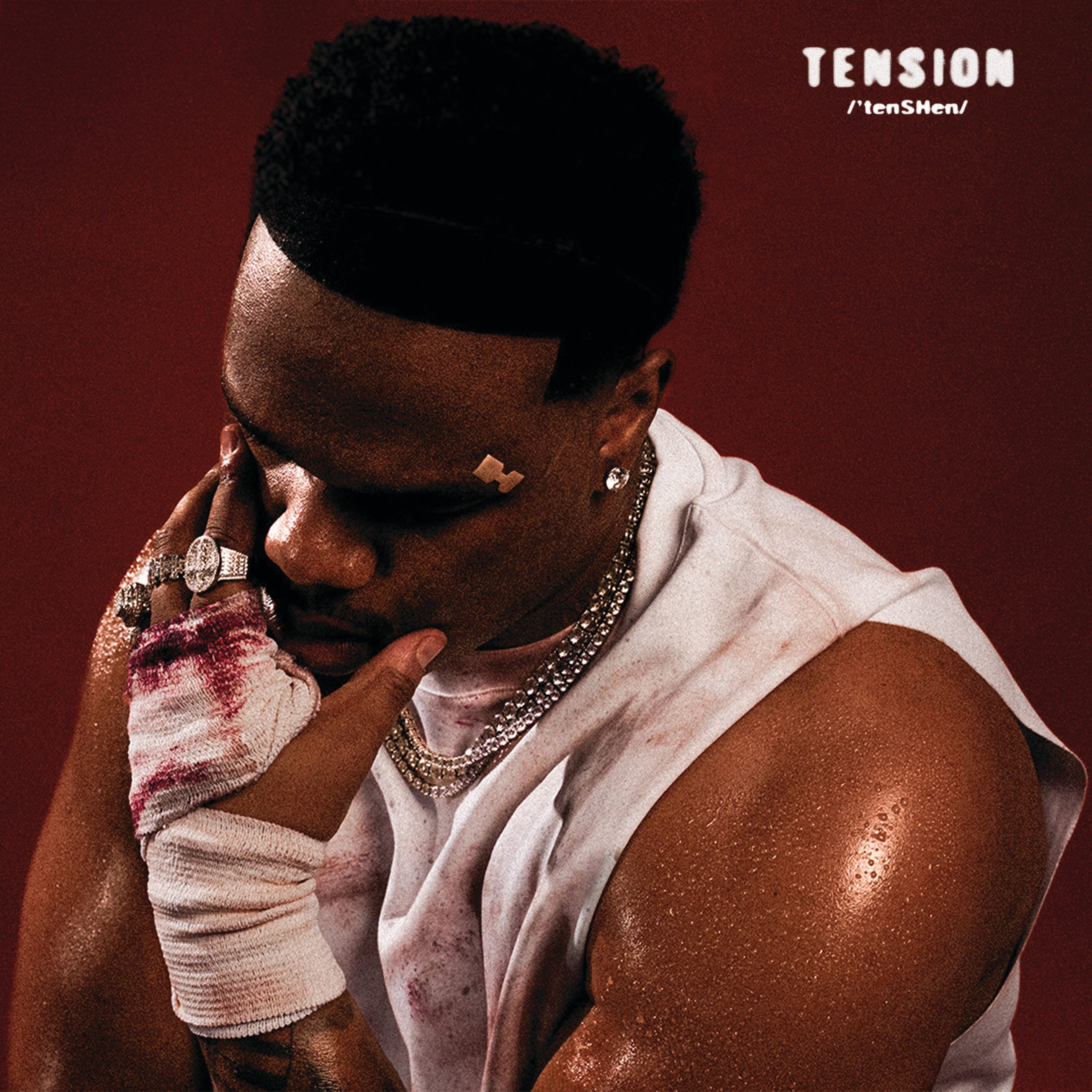
The only thing everyone knows Fridayy has done in roughly ninety seconds, alone, over someone else’s song. That one huge note Fridayy sings at the start of DJ Khaled’s “God Did” belongs in a church, that kind of voice that stops people in their tracks, and for a while it defined the artist, who was really just a Philadelphia-based singer with Haitian origins singing on other rappers’ songs as a featured artist. He stresses most of his third album, Tension, in much smaller rooms. He’s working his magic on each individual woman here, in the dance club and the front seat of cars, and the size of the longing overtakes the size of the room.
On “Can You Stay,” he figures out an entire night by looking at a woman’s clothes, “I know you ain’t wear that dress for nothin’,” and that ease with appraising a situation is the tone he holds onto longest. “Too Late” turns a crowded dance club into an excuse to slip away into something more private, with a line that only a rapper in 2026 could think to say: “Tell me the code to your wifi, I want connect.” The clichés begin to repeat themselves fairly quickly, that drink and that waist and that dance floor and that vow to throw everything away, but he’s witty enough inside them to let the repetition pass for a particular style. “Skip the Club” is that style taken to its most comfortable extreme, the drive home at night with the hazards on, arriving at the quiet regret that lurks behind the flirtation: “Tell me why we got dressed up just to take these clothes right off.”
That same wit keeps the party going but grinds its gears when a song starts requiring more than the come-on. Fridayy calls a woman a goddess on “Cryin,” questions how she can continue to report to work, and watches her cry, “crying, crying, crying,” for him until the words don’t mean anything anymore. “Dance” works the same way, milking the idea of dancing late into the night past the single worthwhile moment when he watches his problems leave the room: “I see my problems running from me.” The flattery is extravagant and it means nothing.
Fridayy becomes a different kind of lyricist when he’s the one being ignored. “Text” is a whole song devoted to having been ignored, jealous and ungainly, checking the app for signs of life: “It ain’t saying read, but I see you on my feed.” He calls the battle a war, going round for round and taking headshots, then says the small truth lurking under that drama: “All I got is you and this phone.” “Time & Place” interrupts a couple arguing and finds them mid-conflict, “still smoke in the air,” and does the small, dishonorable thing, turning the argument into sex before it has ended: “In my bed is where we can find closure.” The woman gets the opening word, warning him off with an itemized list, “you get headache problem, your wallet empty, big arguments,” and Fridayy sings over her.
He catches feelings for a woman inside a no-strings relationship on “Time Will Tell,” and recounts the mistake openly: “It was no strings attached; that was clear for you/It was hard not to attach.” No one is watching anymore, and the show goes downhill. Fridayy knows they both have other people in their lives and labels them an “acceptable loss,” “I know you got niggas, I got women and that’s cool,” before contradicting himself with his best couplet: “Tryna love this new girl, but I still love you/Tryna remove these feelings like a new tattoo.” No villain, no lesson learned; just talking himself through a doomed relationship and charging it to the system.
For all that honesty, Fridayy tries only one trick with his lyrics. “Haiku” works off the syllable structure of the poem it is titled after, “Five, seven, five, send my girl a haiku,” the bravado of the man who decided to fold his feelings into a set number of syllables and post them. It’s also the only song on which he hands the chorus over. ilham takes it and flips the script, so she is the one making the move and he is the one trying to keep up, “Too thick, too fine, he want me/Too bad, I’m outside.” Fridayy’s verses spend whatever pride he keeps hoarding elsewhere, “I ain’t got no pride/I was trippin’, baby, I must’ve been fried,” a far cry from the “marry-me-ten-times-and-call-me-baby” bravado a few songs ago. Fridayy admits it’s gotten out of hand, “this lovin’ done got dangerous,” and keeps dialing.
All the dialing finally results in an answer at the end of the album, where Fridayy’s chase becomes a promise. “Moment” is where Fridayy describes what he is chasing, naming a Luther Vandross song with “about two bridges and a good hook,” and stacking the end of the world on top of it, “If the world was ending and they took everything from me but you/I’d still stay right here.” “Death Do Us Part” keeps that oath going throughout, “us against the world,” and hands over a verse to Mariah the Scientist to answer from her side; she recounts the gossip about them, then meets his oath with a question: “Since when is it a crime to want to love?” The oath is less about providing new information than it is about showing up where Fridayy has been heading throughout the album, ever since he was telling her in his opening whispers that no one else could understand what the two of them understood. “Tension” begins with a secret, two people no one else gets, and the last two songs make that secret a marriage he never stops insisting on. That one voice that could silence an entire room in one note spends an entire album singing song after song to keep a person from leaving it.
Solid (★★★½☆)
Favorite Track(s): “Text,” “Time Will Tell,” “Moment”