

Album Review: The Apple Tree Under the Sea by hemlocke springs
A debut that crams religious panic, body comedy, and fairy-tale violence into ten songs worth of synth-pop, daring you to laugh before you flinch. hemlocke springs is the Black pop star in the making.
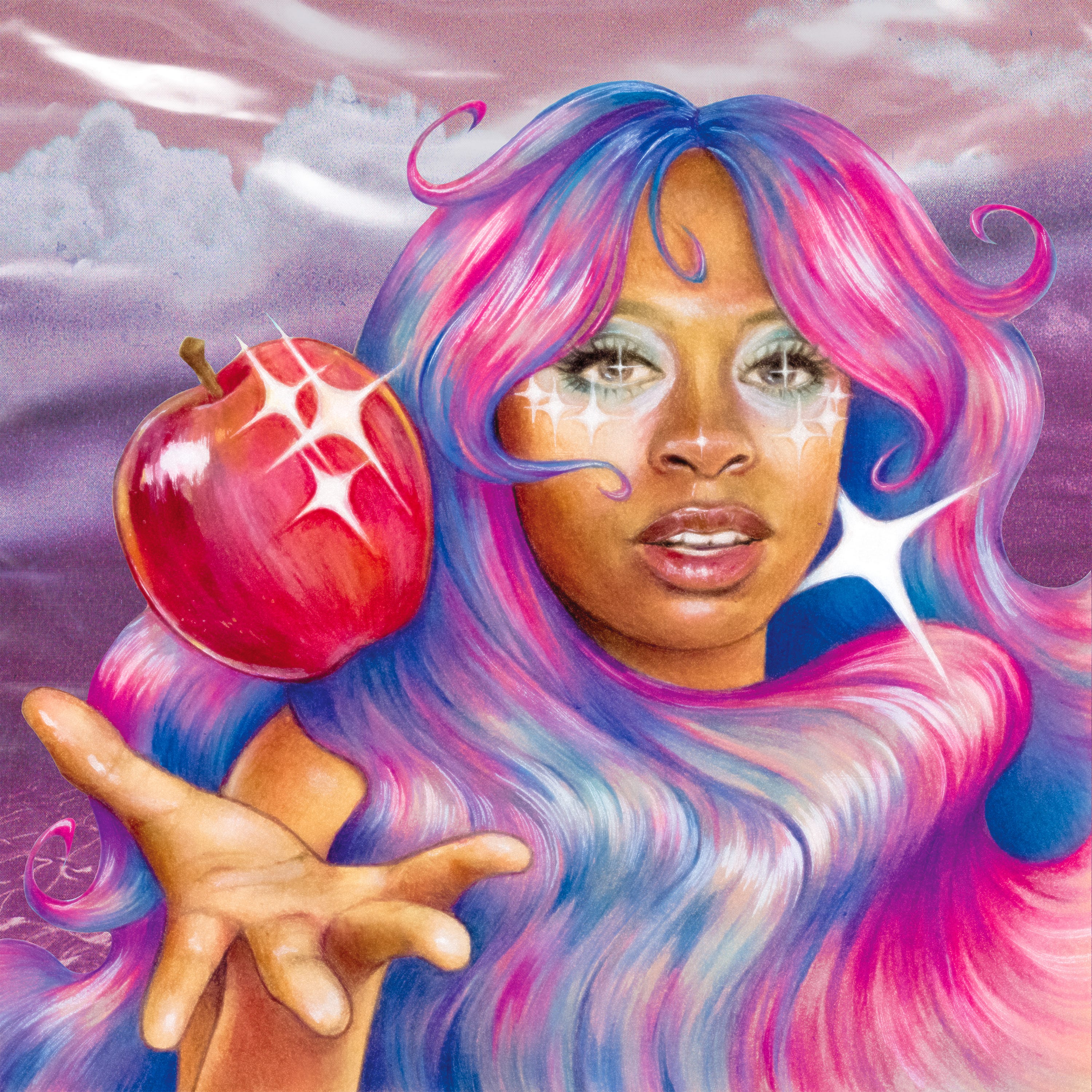
Concept albums built from children’s-book grammar and Sunday-school dread tend to announce their cleverness early and coast. The Apple Tree Under the Sea earns more patience than that pitch suggests, as she barely trusts the costume she picked. The fairy-tale vocabulary is constant, words pulled from scripture and Grimm and bodily disgust cycling through every song, but the person singing them keeps slipping out of character. Isimeme “Naomi” Udu, the North Carolina-raised singer and producer who records as hemlocke springs, co-produced these ten songs with BURNS, and together they’ve turned her bedroom-demo instincts into something much bigger and stranger.
The album opens with a prayer to El Shaddai, hunts pirates on track three, and refuses to dissolve into pillars of salt on track five. None of those gestures scan as cosplay, because the panic in Udu’s voice holds steady even when the scenery shifts. She trembles knowing who to confide in, and that trembling has less to do with faith than with the realization that obedience was never safety. Udu went viral with “girlfriend” in 2022, a fizzy, jerky pop single that Pitchfork compared to Family Jewels-era Marina and Kate Bush’s falsetto. The 2023 EP going…going…GONE! proved the voice could hold a room, but it also kept the stakes low, bright and kitschy. The Apple Tree Under the Sea is where the theatrical instinct gets loaded with actual weight, the storybook language stretched until it has to carry addiction, coercion, and religious guilt at the same time.
“the beginning of the end” says the word “opioids” out loud in its first verse, then rhymes it with “paranoia” in its second. The narrator swings between wanting to avoid filling holes with substances and wanting to be in the company of pretty girls and pretty boys. Between those poles sits the album’s most naked confession of bewilderment.
“I think I think I know
No, I don’t.”
No mythology dressing that up, no borrowed archetype softening it. Udu wrote this song on the bathroom floor of a Spelman College library years ago, and the rawness survived whatever BURNS did to the arrangement. The chorus builds to a wish for someone to just go away, stuttering and breaking off mid-sentence, and the melody remaining catchy while the words crumble is part of why the record resists easy placement.
The album’s ugliest song hides behind its prettiest title. “w-w-w-w-w” looks like a romance on first glance, but the verses drag in a different direction. A very lonely girl, racial epithets, a family in pain and strife, and the line “Thank goodness, come and take her.” The pre-chorus lays out a Sunday morning scene, cooking breakfast for a man with one foot in the grave, a man who has already bought a child to enslave. Udu sings that last detail with a laugh in her throat, and the “ha” she drops before noting he’s seventy-three years old carries a nausea the bubbly melody can’t wash away. Whatever this song is actually about, and the specifics point somewhere between coerced marriage and generational trauma, it hauls the album’s fairy-tale register into territory that nursery rhymes were never meant to hold.
Jealousy on “head, shoulders, knees and ankles” gets written as a stalking narrative, complete with a golden-bowed Cupid who has a rash demeanor and a jealousy that only seems to grow. Udu watches from somewhere she can’t be seen, catalogues a stranger’s fatal disease of kissing below the knees, and wagers he’s a ruffian with a countenance so drawn. The archaic diction sells the comedy, but the song never fully commits to the joke. By the outro, she’s dropped the old English and is fantasizing about breaking his arms together, and the “fuck” she mutters after being abandoned sits right next to an invitation to make this dream a heaven-sent. The melody bounces and preens through all of it, giving the jealousy real teeth inside the cartoon mouth.
Comedy vanishes almost entirely on “moses.” She runs blindfolded, parts the sea with her two hands, and refuses to dissolve into pillars of salt lest she be struck in vain. Devotion here is labor, the verses stacking everything she has to surrender. The clothes off her back, fruitless work for the greater good, all of it misunderstood. When her fingers reach his, she drowns. The chorus insists on survival, pushing through the trough until her final dying day, and that oath picks up force because the verses show how little the devotion returns. “Lord, I’m not the evil-doer in this foolish love affair!” she shouts in the second verse, and the exclamation mark is audible. Whether that prayer is aimed at a man or at God depends on how you read the rest of the album, and the ambiguity here is earned through accumulation, not vagueness.
A voice asks, “Where are you, my lady?” at the top of “sever the blight,” and the answer is the basement, ankles tied, waiting. The narrator heaves a sighing breath, watches flowers arrive, bluebells and dahlias tied with a white ribbon, and insists love is miles away. She knows she is not Snow White, the fairest of the land, and she hides the pain while the hurt dares her to say it out loud. The waiting in this song is a slow corrosion, self-imposed and punishing, and the chorus asking “Will I still wait here for you?” never resolves into either a yes or a no. Udu released this song as a single back in 2023, separate from the EP, and its placement here finally gives it a narrative home. That context sharpens the waiting — the album’s middle section chills noticeably around it, and the bouncier tracks on either side can’t warm it.
Ambition and its attendant sickness collide on “sense (is).” Udu’s character took the wrong turn down to Hollywood, found an empty cup, filled it up underneath someone’s toys and dear expenses. The weakest wanted an antidote. The bridge confesses to doing the things you like, hoping to make the trip tonight, and then admits she was laid bare, left behind, and forced to make it alone. “Only me and I can turn an inch into a mile/But have I lost myself walking on foot?” That question cuts through the storybook language because it sounds like something a real person would ask after moving across the country for a career that hasn’t materialized yet. The “wrong turn down to Hollywood” detail, paired with Udu’s actual relocation from North Carolina to Los Angeles, gives the song a documentary plainness that the record’s mythology can’t quite absorb.
The cleanest pop song on the album is also the one whose language most openly contradicts its energy. On “set me free,” she asks to be heeded when she calls, led into bliss, captured in arms, and set free, all in the same breath. “I just want to be your canvas,” she sings in the pre-chorus, and the metaphor rubs strangely against an album that has spent its previous songs fighting against being shaped by someone else’s hands. The second verse gives her body away more directly, “Open up your heart to my works of art/They are yours to take,” and by the end, her backing vocals ask, “Am I ready for your love?” and “Am I ready for you to take me?” Those questions hang unresolved next to a chorus that never stops demanding freedom.
The album closes with Udu’s sharpest identity statement. “I can’t be the girl I used to know,” she sings on “be the girl!,” grounding the feeling with the detail of an East Pacific shore and tears she no longer has to offer it. The interlude chant, “Eat the apple, stick the pearl/I can never be the girl,” bends growth into a ritual she hasn’t fully accepted. The second verse remembers running hand in hand, lightning to thunder, and the shift toward wishing the best for someone who left her high and dry arrives with a resigned warmth. The final chorus piles up refrains and negations, “no, I don’t,” “no, no,” and the album ends mid-declaration, she’s still sorting out whether she’s mourning who she was or celebrating who she might become.
Great (★★★★☆)
Favorite Track(s): “the beginning of the end,” “w-w-w-w-w,” “moses”