

Album Review: The Clock Don’t Go Back by Juicy J
With spoken-word instead of rapping over Paul Cornish’s six-piece live band, Juicy J fills his third jazz album with character studies and comes back surprisingly with real detail.
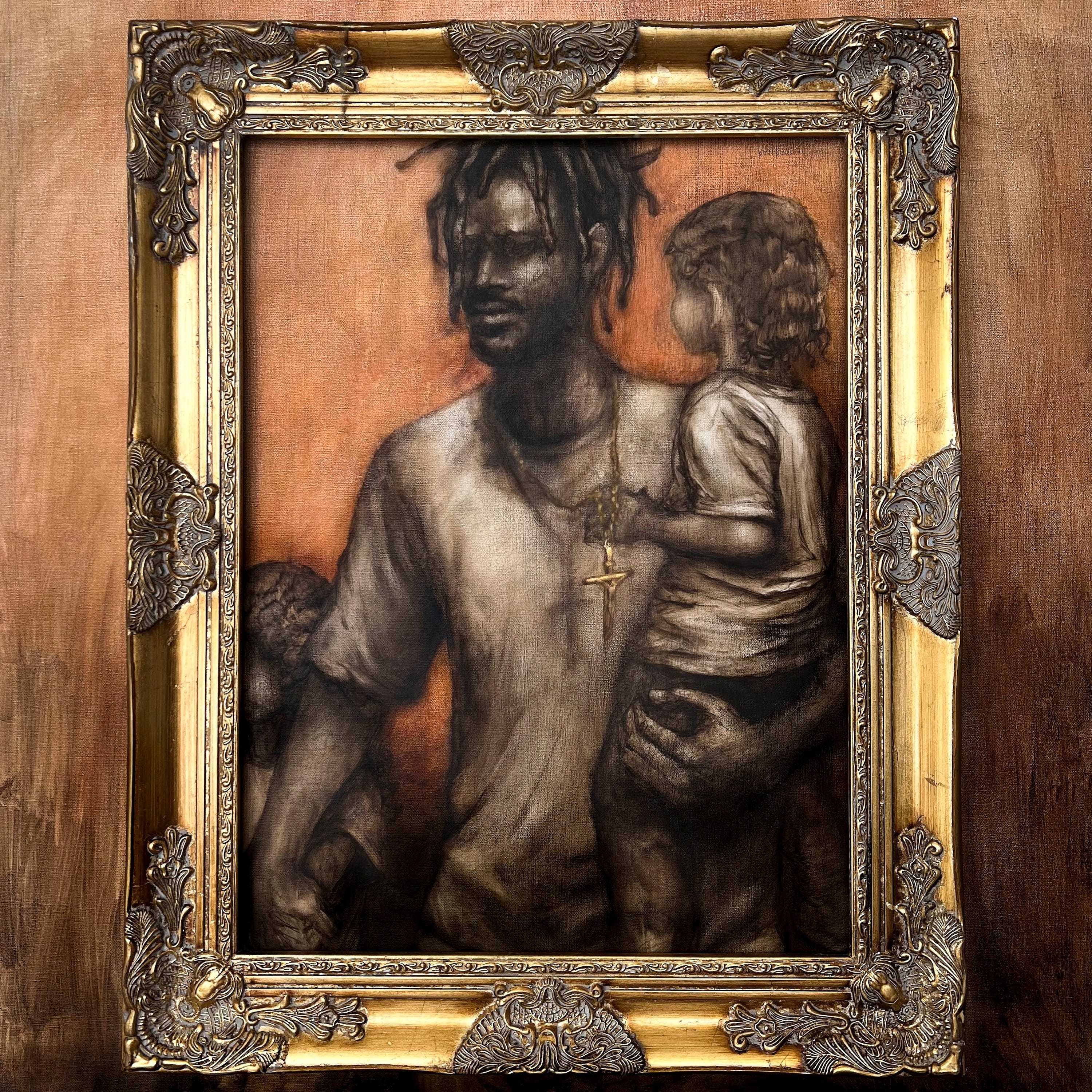
The form was already in place on Ravenite Social Club and Caught Up In This Illusion. This band talks its way through its song instead of rapping it. Produced and performed by Paul Cornish, with Keyon Harrold on trumpet and Georgia Anne Muldrow on synthesizer, The Clock Don’t Go Back sees Juicy J step back from singing himself to let others take the talking over, allowing him to remain close enough to each singer to say what happened to each individual in the song.
On one of the most powerful songs, “The Addiction,” the cousin who was able to provide for his girl had no problem before she caught on that the bills were late. He bet on sports games and doubled down to get out of the debt, which resulted in the lights to his home being turned off. Juicy J sits with him, coffee in hand, telling him he is chasing dreams that are breaking his life up. He borrows from friends, burns bridges behind him, deposits his last hundred dollars into the slots, wins, and calls it a sign from God that he was chosen. He sells his car for a check advance. Then, he learns that his wife has been having an affair with another man. As he pawns his watch and chain to cover rent, his mother stops taking his calls.
On “Everybody Makes Mistakes,” he asks for forgiveness for losing focus and the Xanax he takes. In the song, he looks back at his wife and acknowledges the things he lost from her. He even states that he would rather have her over his awards. Yet, to show her that he is working on his relationship, he offers her another trip to Cabo, then changes his mind and tells her he just wants her to stay home with him for a break.
With piano and trumpet coming into play, “Beautiful Disguise” goes in about politicians selling hope to the people while buying power over them, children fleeing from bombs in their cities, and mothers who cannot understand why their children have to die. The song has couplets to each of its verses. In one verse, the rich man contrasts with the man of color. In another verse, he asks what would happen if love were to become more contagious than hate, if kindness were to triumph over people’s natural tendency to repeat their mistakes, and if people could feel others’ pain personally. The poem closes with the line “There is no stranger in the crowd,” which suggests that the individuals in the poem are all of the same type.
The phone call from his friend on “The Difference” shows that the friend is sick. The two discuss his friend’s deformity at birth and how he is different and smarter than the other individuals in his community. He responds to his friend asking why he cares about his friend’s appearance on social media by saying that people and their insecurities are high, so people react to seeing their friends’ profiles on the platform. He then looks at his friend’s Facebook profile and asks if his profile picture is of him. The two men are then shown again together at the party the friend hosted the month prior, where the party’s attendees were bored until he entered the room.
He talks about his friend who borrowed money from him and disappeared for 30 days. The friend then returned with a friend who lost money gambling against him on a bet with money that did not even exist. “Expect the Unexpected” speaks of his father discovering that he had a baby and then him having a baby of his own as a result of the marriage to his father. He speaks of another one of his friends that disappeared for 30 days, then disappeared from his home and turned off his lights, went to church to pray, went to therapy, and decided to live a private life away from the party of friends they once shared. In each of the verses of the song, though, the friends and he are back together again at the same party with their same false smiles, their strange conversations when good things occur for others. His friends also pray for him and his pain rather than for his peace.
In the beginning of “You Gonna Learn Today,” he introduces his two children and tells the audience what their names and grade levels are. Next, he introduces a short story about raising his children and a love story for his kids from a drugstore greeting card. He then speaks about his experience raising his kids as a father in contrast to the other story introduced within the song.
“Love is spelled T-I-M-E, that's the truth indeed.”
In “2 Sides,” there are two individuals, each presented in the song: one is holding a Bible in the front row of an audience, while the other is at home creating a brand for herself online. He provides an equal amount of attention to each of these two individuals but presents each of them in contrast to each other. One individual was taught to maintain a commitment to what was holy, while the other was taught to do what she could to survive the world in which she lived. The song closes with a voice from Memphis reflecting on these two individuals and their lives, yet the song ends with them in the same location building the same brand.
In his only two rap verses on “Decline” (with the vocals of Durand Bernarr in the end), he speaks of the events that happened that were related to his phone calls from his friend. One verse speaks of a pastor who was excommunicated from his church, another friend who died, and another friend who died because of a trap laid for him by friends of his. Additionally, he states that his record label made a profit from his music after he passed away. Each of the lines of the second verse speaks of the present day, and the presence of him as a chair within the room of individuals attending the party he hosted the prior month.
Great (★★★★☆)
Favorite Track(s): “Everybody Makes Mistakes,” “The Difference,” “The Addiction,” “2 Sides”