

Album Review: The Ends, Never Ends by Joe James
Thirteen homes before secondary school, homeless at sixteen, years of silence with his mum. The Essex rapper’s debut turns all of it into the most complete piece of British rap memoir in years.
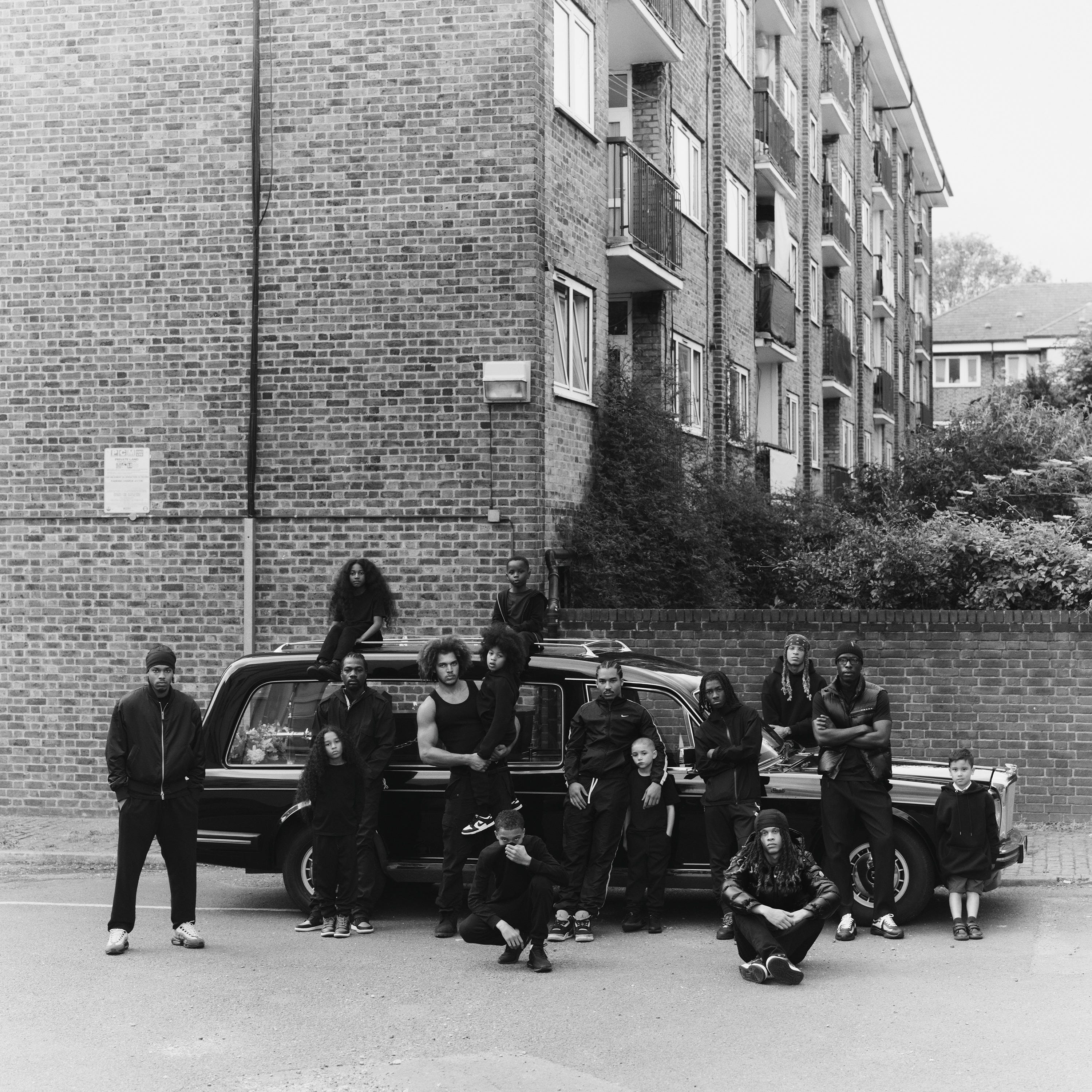
Before Joe James was ready for secondary school, the kid was already familiar with having lived in thirteen houses, moving between Southend-on-Sea and northwest London, between his young mum and whatever man she was with at the time. His seafaring gave him a pier and a postcode that was supposed to keep the same kind of pressure the city was keeping for itself. He was brought up among that motion and took notes. The Ends, Never Ends, his debut album, features him rapping autobiographical verses over live instrumentation, and the memories come with dates attached—ages, addresses, names of the men who were coming and going.
His exhausted mother watches her son losing himself to gang culture on the track “Who Is She?,” the spoken-word prologue on which Joe goes through the lives of a single woman being a paramedic, clinician, student, “a leader, a mother, academic and friend.” More mothers follow. On the track “Back Together,” he takes us back to his childhood again: “Well, when I was one, my pops just left out the house.” His stepdad named Mike left him when he was three. The next one “used to smack me about like a punching bag” when he was nine. At fourteen, police would knock on their door, and at sixteen, he would be forced to leave their home completely, living on sofas, floors, night buses. He and his mum then would not talk for many years, and the verse that would end that silence would become the warmest he would ever write: going to the Chanel store and saying to his mum softly, “Mum, remember, we used to be poor?” And at the end of the track, “Ooh, love/You put me back together” could have been addressed to his mum just as well as to any lover.
They labeled him autistic when he was young, and he believed them until he would rewrite that word in “Fully Submerged”: “I took away the U and put an R, I’m artistic.” His mum was young enough to listen to the pills and those pills, by his account, made a zombie out of him who could endure long division. Nan’s death is sung in the second verse of the song, grieving measured in a child’s units: “Felt like my Game Boy Color didn’t have no colors like her.” Astrønne sings the hook from the air, lovely and fallen and sure of the catch, while Joe uses the verses to recite the moments nobody was catching him.
“Bitterstreet Symphony” features the most high breathed into him while the CS gas hangs over a party gone wrong, an early coffin waiting “and it was all for nothing.” He finds himself in Egypt, the thirty-fifth dynasty, watching a young boy who “can’t gauge right from wrong yet but hold a gauge.” Prayer accompanies him in every situation. “I pray that God reveal my enemies/I woke up, I had two friends,” he raps on “Never Ends,” a track featuring aunties saying “Not my son, my little lion” in courts and men getting shot outside an arcade while playing Time Crisis. His faith becomes very pragmatic on the track “Black Cabbie,” peace in the middle of the storm, the roads learned in the way a London cabbie learns the knowledge, breath held like Wim Hof’s, and then he would break off the middle of the song in order to ask whether that lady at the kerb wants to catch a bus or a cab.
Seven diamonds ride his ring, and he calculates them in pain: “A lot of people got hurt for this fuckin’ chain.” On the track “Papercuts,” the money is the devil itself, killing in broad daylight, locking a man out of his family “for a key”, the reason why he would rob for trainers, the reason why his friends sit in the chains. It would get him off the dole and give him something to pay for; nobody ever taught him financial literacy, and a chain spray-painted gold, he reckons, would make a monkey incarcerate himself voluntarily. On “206,” the trade becomes an apprenticeship, whole ones only, no segments, eyes on the clock, brick work until he would buy the block. Between the logistics, he remembers what the blue phone ringing sounded like and how, when they tried to keep him on the ground, “I grew some wings, and I seen gruesome things.”
Hak Baker features on the track “Waterloo,” wishing he could roll his friend a zoot and “turn back time and smoke with you down on Waterloo Pier,” remembering matching Monclers on backs which are gone now. Joe’s verses stand on the same ground, the no-ball-games sign and the eight balls played anyway, a mum crying over a son dead in the summertime, rest in peace Emmanuel, and a writer who “used to write in isolation” and still does. AOD and Felix Joseph provide remembering against a looped voice and string lines. Lancey Foux features on “OBE,” loosening it into melody and menace, living the life of Pablo, certain that “I could sit down with God himself, he’s still gonna show me right.” Loyle Carner shines in “Ignorance Was Never Bliss,” on which Joe tells his brother to slow down with the hustle “even though I know he’s trapping, and he won’t change,” watching day dates turn into court dates, naming the discrepancy clearly: “Between the raps and reality, there’s a discrepancy.” Dave comes with another magnificent verse through “Same Emotions,” embarrassed by his surname for no reason, joking that having two first names makes a man “like, I dunno, Joe James,” while Joe claims Southend, “where white man’ll call you ‘Darky’” and swears the woman sitting beside him will hold his gun the same way she holds his hand.
The therapy-speak is odd enough on him with “Why I Luv U,” saying, ”You put my pain into context, help me understand my process.” He goes from love to hate, and this time he replaces the family memories of the songs with puns (“I called you a slag and you called me a cunt”), Bellatrix spells, a girl singing Adele on the A13. Callum Waddington and Felix Joseph craft the production, and the lyrics have less to lift them than usual.
For “All I Wanted,” James does sit-ups in his bedroom at nine, which gave him a hernia as he tried to achieve a body like Bobby Lashley’s, and he is called stupid and proud by his mother. They’re little things, Lego toys, cuddling, a yellow Game Boy Color, watching SpongeBob in Corey’s house because there was no Sky at home, wearing Kickers rather than school shoes bought from Tesco, because other boys had Kickers. His wants had changed during his teens. During the London riots he went out with a toolie, and his nan told him he’d lost his mind—his Timbers might be expensive but not as expensive as his life. One stack of Timbers had become another stack. His roads had taken his brother away: “Imagine being 15, and you just want your brother back,” and an auntie at church started praying for extra strength. Somewhere between all of this, he wonders if anyone has ever been a kid and known, right then and there, that they’ll never be a kid again.
Great (★★★★☆)
Favorite Track(s): “Back Together,” “Waterloo,” “All I Wanted”