

Album Review: The Fall-Off by J. Cole
The supposed farewell from rap’s most self-interrogating moderate. Cole bets his legacy on a double-disc album split between hunger and wisdom.
There is a particular kind of rapper who never stops measuring the adult against the teenager, who keeps driving back to the block even after the block can’t give him what he needs anymore, who flinches at compliments and then stays up writing bars to earn more of them. The hunger doesn’t go away when the money arrives. If anything, the money makes the hunger stranger, because now the hunger has no practical excuse. You can’t say you’re starving when you own two plots of land. You can’t claim the underdog slot when the entire city spray-paints your name on welcome signs. And yet the compulsion to prove it, to chase approval from dead friends and absent fathers and strangers at gas stations, persists like a ringing in the ears that no amount of success can muffle.
Jermaine Cole has been running this particular fever since The Come Up in 2007, when he was a nineteen-year-old from Fayetteville, North Carolina, rapping into the void about escaping a small city that most of the rap industry couldn’t locate on a map. That mixtape had a double meaning baked into its title, he’d later explain: one for ambition, one for the physical act of leaving home and moving to New York. Everything since has circled the same drain with increasing skill and diminishing surprise. The Warm Up and Friday Night Lights cemented the earnest-kid identity. Cole World and Born Sinner translated it into platinum sales.
Transitioning to 2014 Forest Hills Drive turned his Fayetteville address into a brand. 4 Your Eyez Only tried grief on for size. KOD diagnosed addiction and social media rot. The Off-Season was a refresher course in bar-for-bar intensity, a man shaking rust off his knuckles. And then came the mess with Kendrick Lamar and Drake in 2024, a conflict Cole entered briefly, apologized for publicly, and retreated from in a way that satisfied almost nobody. Through all of it, the fixation remained constant. Who am I when I go home. Who am I when the beat stops. Whether the work will ever feel as alive as it did the first time he sat in a chair surrounded by his mother’s CD collection, wrote a song called “The Storm,” rapped it back to himself fifty times, and called his boy Nervous Reck to come record it.
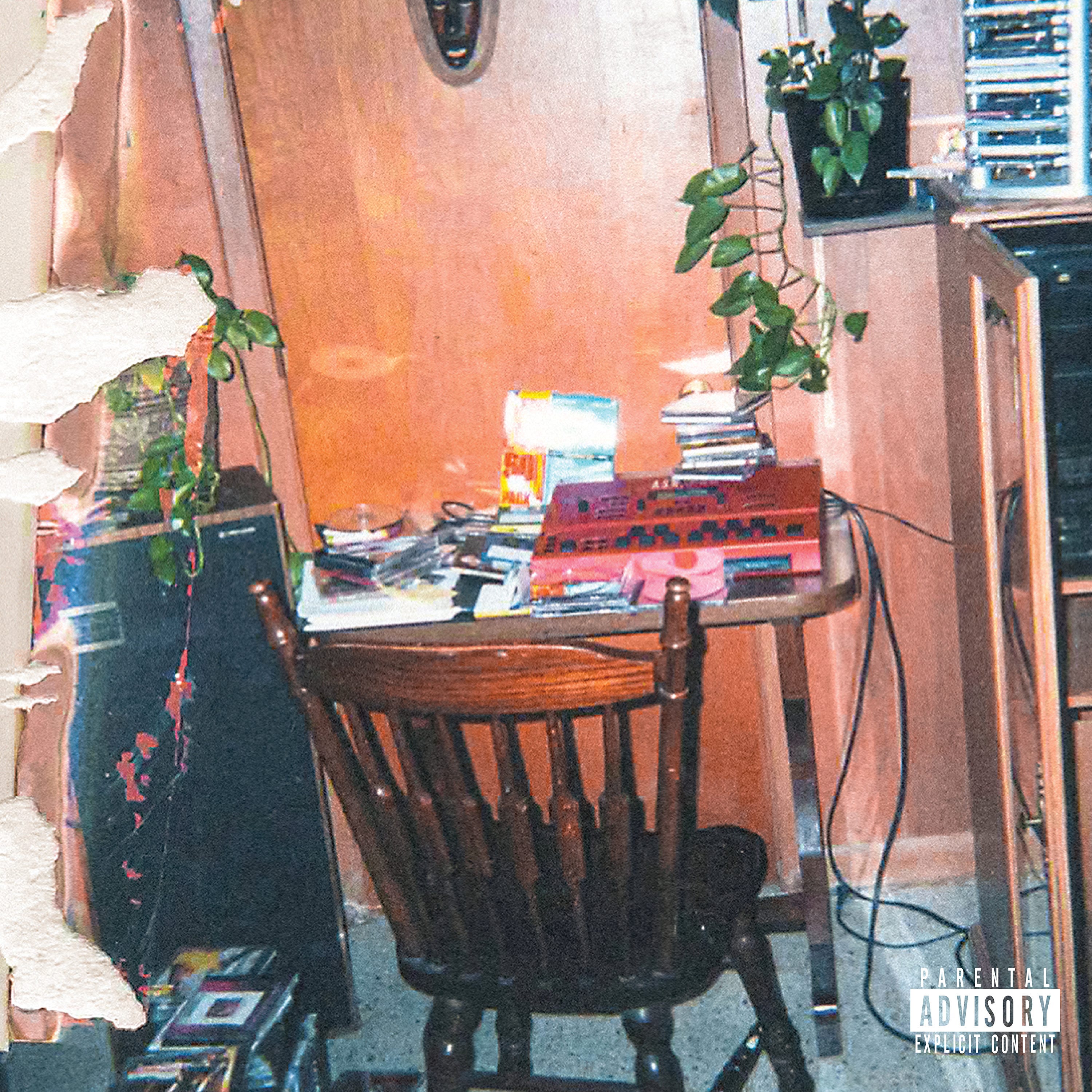
The Fall-Off is the record that’s supposed to answer those questions for good. Cole has said publicly that this double-disc album, as a nod to the “Two Six” Fayetteville area code, was designed as his last LP, a full-circle return to the feeling of The Come Up. He began recording pieces of it in 2016. He hoarded songs for it. He scrapped entire sessions and rebuilt them. The cover art uses a disposable-camera photograph he snapped at fifteen of his very first production setup. A second cover, added after the Drake-Kendrick episode “re-inspired” him, bears his adult face so he can see both versions of himself when he looks back in twenty years. The disc split is the concept’s engine. Disc 29, twelve songs, imagines the perspective of Cole returning to Fayetteville at twenty-nine, a decade after leaving for New York, straddling three competing loyalties: his woman, his craft, and his city. Disc 39, twelve more, revisits that same return trip at thirty-nine, older, with sons and a marriage and a catalog that precedes him into every room. The idea is clean on paper. The execution is lopsided in a way that’s more interesting than perfection would have been.
Disc 29 is the stronger half, and the reason is blunt. The younger MC hasn’t figured out how to be diplomatic yet, so the songs say ugly, specific, particular things. “SAFETY” is a voicemail chain from friends back home, and the messages are devastating because they blend love and cruelty and gossip and death notices with no warning. One friend catches Cole up on a mutual acquaintance named Quay who died from health complications, and in the middle of the update, then in the third verse, drops into open homophobia about Quay’s sexuality before doubling back with something like regret, admitting “we did him wrong,” but also falters [again] with “Runnin’ with fruity types, dick in the booty types” among other lines. The voicemails just keep accumulating, each one a little more tender and a little more poisonous than the last. One friend’s daughter calms down to Cole’s music. The same friend is ready to “punish” someone who made diss tracks. A funeral home address gets rattled off between small talk. Cole never interrupts, never corrects, nor ever moralizes. He just lets the phone ring. It is the sharpest piece of writing on either disc, and it works precisely because he shuts up and lets the Ville talk.
The fire rams through “Poor Thang” where it runs in the opposite direction. Cole is doing all the talking, and what he’s saying is that pride is a weight he chose to carry and can’t put down. The song shifts between two moods while featuring samples of the O’Jays and Boosie. The first verse is a kid picturing his own soul “climbing out an infinite hole,” broke, cold, dreaming about women and money in one distracted breath, aware that his road is “ripe with spikes and broken lanes” and toll booths he can’t afford. The second erupts into a direct address to a guy (that now determined was a local rapper by the name of 910 Space) back home who’s been talking sideways, and Cole gets mean about it: “You grew up with both your parents to teach, punk bitch/So how the fuck all a sudden you turn a G.” He’s calling a man a fraud while simultaneously admitting that his own fury is a character flaw. “I know that’s my pride/I carry it just like a burden/When egos is flared beware that’s when they close the curtain.” The chorus keeps muttering “he wanted love, but he only made more pain,” and it applies to both of them. Whether you want to hear that from Cole, it’s totally up to you.
On “Drum n Bass,” Cole is back in the club, rich, famous, scanning the room for threats out of habit, guilty about the funerals he’s too awkward to attend, and chasing a woman he almost had before the Bentley changed his social math. He’s lucid about the guilt. He knows his life “on cloud nine” is running simultaneous with mothers crying on porches in the city he left, and he admits the guilt’s size is “the rest of the planet.” But the confession doesn’t stop him from drinking, flirting, and comparing himself to the greatest rapper of the century in a single paragraph. He asks himself “what sense do it make coming back when you escape,” and he never answers it, because the answer is that he can’t stop coming back and he doesn’t want to stop.
“The Let Out” is a survival story with no glory in it. While it’s the riskiest song of his career, Cole is at a club, a stranger warns him that people in the hallway are plotting on him, and the rest of the song is pure adrenaline and paranoia: finding the car, getting off the block, hearing shots ring out, running. The narrator talks to himself the way a person talks to himself when the fear is animal and real: “Will I make it home/Only God knows.” There’s a woman grabbing his waist in the middle of the panic, telling him, “I want you,” and it’s almost absurd, desire and mortal fear occupying the same parking lot. “Bombs in the Ville/Hit the Gas” turns stranger. The first half is a love song, all strawberry lip gloss and late-night calls. The second half is a time-travel phone call between Cole and his younger self, and the younger version starts crying the moment he sees the older face. Cole hands the phone to his sons, tells the kid to look at them, and says, “Fame is a drug, you was chosen to take/Unfortunately, can’t be sober and great.” Then he names the album by name: “this is The Fall-Off, I’m fallin’ off, how?” He’s asking if falling off is inevitable for every rapper, or if the title itself is a dare.
“Lonely at the Top” closes Disc 29 with the record’s most vulnerable admission. Reusing the beat from the intro to Benny’s Tana Talk 3, Cole is frustrated that his heroes stopped caring, and he’s terrified that complacency is coming for him. He compares himself to a kid who finally got to climb the slide the big boys used to dominate, only to find the playground empty when he arrived. “Mama done let me come outside but now them slides are vacant.” He wants to believe he could reignite their fire, train with them, shake the rust off. “But even as I write that thought I don’t believe it, dang/Cause maybe it wasn’t even them it’s really me that changed.” That’s a hard line to write when you’ve spent the entire first disc insisting you’re the future of this rap shit.
Something loosens when the album crosses into Disc 39, and it costs the record some of the plainspoken density that made the first half hit. “The Fall-Off Is Inevitable” is a stunt, Cole rapping his entire life backwards from coffin to birth in a single unbroken reverse-chronology. The technique dazzles in a way that makes you nod and then immediately forget what the verse was about besides its own difficulty. Over Mobb Deep’s “The Realest” backdrop, “The Villlest” returns to the old notebook, reads smudged words from a younger Jermaine, and then pivots into a dead friend named James who caught a beating and then got killed, whose father knew Cole’s father from the Army. Cole asks a question that cuts straight through the bravado: “If Darwinism states only the stronger make it/Then why am I here when I don’t feel that I’m as great as him.” That hits close to home, not the Mulatto bars. “Old Dog” with Petey Pablo is homecoming as celebration, all Carolina plates and no-more-record-deal freedom, and it vibrates with the specific joy of driving down 95 into Fayetteville while Petey hollers about swinging shirts as he did with his debut single “Raise Up.” It’s the loosest moment on the entire album, and it needed to come when it did.
Cole tells his wife’s story across four chapters in “Life Sentence,” from childhood crush to temptation to commitment, and it’s so specific it stings. By interpolating DMX’s “How’s It Goin’ Down,” he remembers her waiting for him to call before he was famous, remembers the night he got his deal and she was the first person he dialed, admits to “doin’ dirt, but it’s not as much as I could be” as though restraint deserves a trophy. “What If” puts Cole inside the Biggie-Tupac beef, writing letters between them that never existed, imagining a world where ego and prison paranoia didn’t curdle into murder. It’s a Disc 39 move: the older man has enough distance to write fiction about his heroes, to say “I’ll take the blame for it” in Biggie’s voice, to wish the outcome were different. The line between earned fiction and sentiment depends on your tolerance for “what if” counterfactuals in rap. “Man Up Above” finds Cole close to a friend facing trial, a friend whose son is the same age as his, and the writing in that second verse is among the record’s best. He traces the whole chain, from the friend’s baby mama threatening child support, the stress piling, the faith arriving late, Marvin Sapp’s “Never Would Have Made It” on a jail playlist. It’s granular and sad and it doesn’t pretend God fixes anything, just that prayer is what’s left when the lawyer bills are paid.
Disc 39’s biggest swing comes on the Jake One-produced “I Love Her Again.” By incorporating Common’s “The Light,” Cole narrates his relationship with hip-hop as though it’s a woman he saw in every guy’s car growing up, chased from New York to Atlanta, slept with, fought with, and watched get surgery and start an OnlyFans. It’s funny and bitter and slightly too long, but the argument underneath is real: he admits he tried to possess rap, to keep it for himself, and his mother’s response—“You should’ve known she was like that when you met her”—is the truest sentence in the song. “Quik Stop” winds the album down with a gas station encounter, a stranger who grew up on Cole’s music, now selling flowers on a corner, who tells Cole his songs helped him grieve a murdered brother. Cole takes a selfie with the man, hugs him, and talks himself into remembering why he started. The scene asks nothing of you except to believe it happened, and it does not try to be more than what it is.
The double-disc gamble doesn’t pay off evenly. With the help of Future (who appears on the album twice) and Tems, the first half stays lean, mean, and populated with characters who are allowed to be ugly. Disc 39 bloats in places where the older narrator mistakes declaiming for depth. Songs like “The Fall-Off Is Inevitable” and “and the whole world is the Ville” lean on technical bravado and hometown sloganeering when the record needs that raw discomfort that powered “SAFETY” and “Poor Thang” and “The Let Out.” When Disc 39 Cole starts talking like a myth—“Even God gon wonder how the fuck did he exist”—the bravado rings hollow against the honesty that preceded it. He’s at his worst when he’s trying to scare the room into respecting him and at his best when he’s scared of the room himself.
The statements Cole published alongside the listing reveal a man who remembers the exact chair where he first felt writing take over his brain, who describes that creative state as “God letting you into Heaven for a few hours.” He says the cover photo of that setup “felt fitting for an album that I made with the ending in mind.” That claim, the ending-in-mind claim, presses hard against a record that sometimes doesn’t know when to end a verse, a thought, a flex. The strongest songs on The Fall-Off earn the full-circle promise because they return to the same problems—pride, death, women, the Ville—and show how ten years changed the rapper’s vocabulary without changing his compulsions. The weakest songs/moments are the ones that are full of singing that don’t offer much substance, or the usual typical cringey bars that includes “Left my kids in her mouth like a daycare” on the two-part “WHO TF IZ U” and gives Logic a run for his money by rapping he’s the “hardest nigga on the mic, got a white mother.” In Black History Month. Let that sink in.
What the record is actually about, underneath the concept, is a man who cannot stop auditioning for a role he already got. The relationship songs say it. The hometown songs say it. The God songs say it. Cole wants to be loved, wants to be feared, wants to retire, wants one more round. At thirty-nine (now forty-one) he knows all of this about himself and he still can’t resolve it, and the honesty of that irresolution is the best thing on the album. He hasn’t figured it out. He wrote twenty-four songs about not figuring it out. Some of them are spectacular, some of them need an actual singer, and some of them are long, and both facts are part of the same disease.
Great (★★★★☆)
Favorite Track(s) on Disc 29: “SAFETY,” “Poor Thang,” “Legacy”
Favorite Track(s) on Disc 39: “The Villlest,” “Life Sentence,” “Man Up Above”
Described all the complexity that makes the album great, but then left it @ 4 stars ... what / who do you need to do/be to earn the 5th one?
Also this is a long detailed take for a first listen review. I'm both impressed and worried that a lot more has been read into things that should have been taken at surface level and vice-verse (not enough time spent sitting with the album to glean the deeper things). Whatever the case, I'm on my 3rd listen now. Will revert and compare my thoughts and feelings with this one after
What a fantastic piece. Thank you for writing this. Tried to find your other writing on the internet but couldn't get anything