

Album Review: THE GEMINI by Elijah Blake
With his latest studio release, Elijah Blake steps out from the shadows. What he finds there is messy, jealous, possessive, and occasionally devastating.
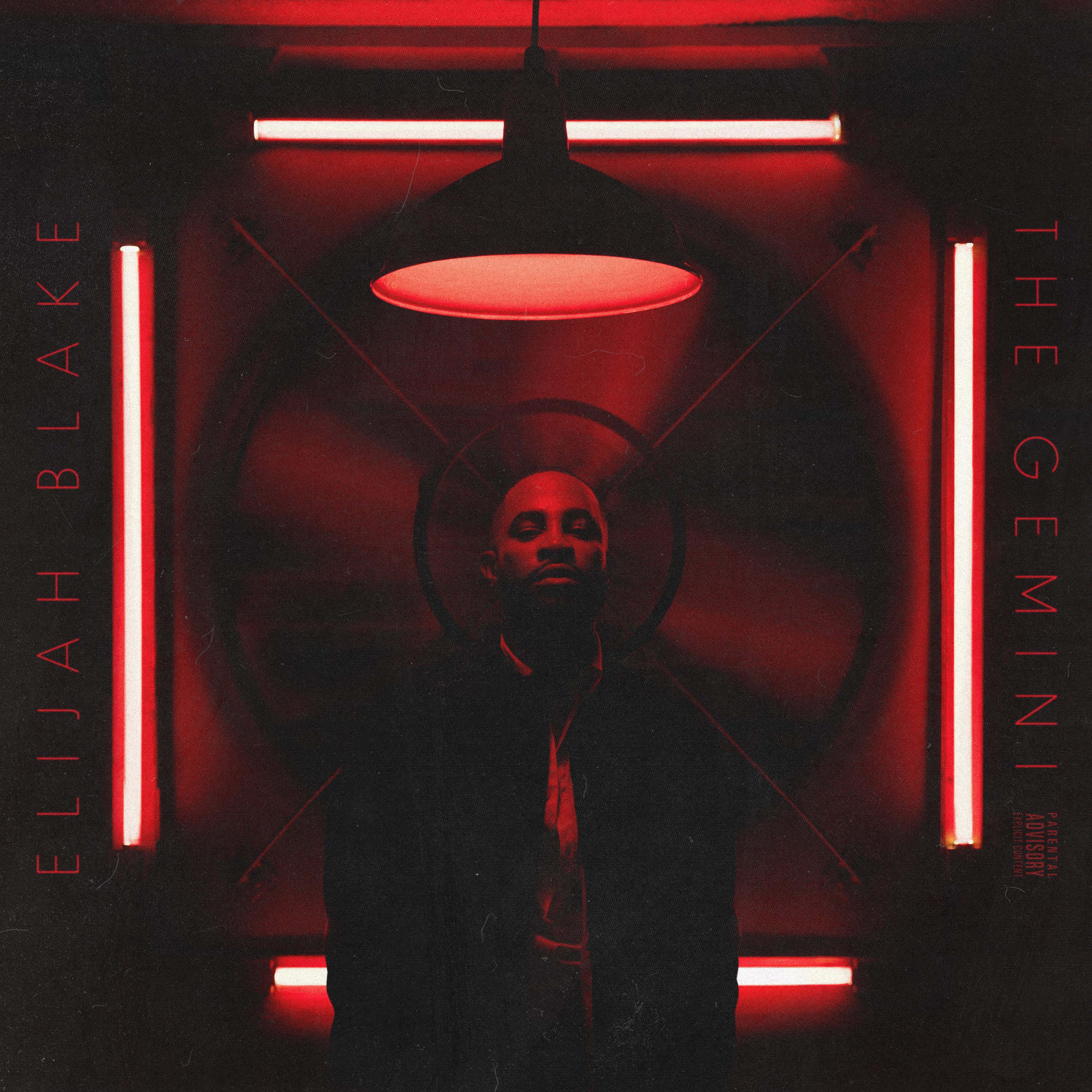
The best pop songwriters learn to disappear. They study how desire moves through a melody, how heartbreak lands in a bridge, how to build a hook that feels like it belongs to whoever’s singing it. The craft is selflessness, or at least the performance of it—your voice in someone else’s mouth, your pain filtered through their persona. Elijah Blake spent years mastering that vanishing act. He co-wrote Usher’s “Climax,” one of the decade’s most quietly devastating R&B singles. He’s shaped records for Rihanna, Keyshia Cole, Justin Bieber, a catalog of hits that bear his fingerprints but not his name. 2024’s elijah. was supposed to be his reintroduction, a sprawling statement that blended electronic textures with the church-trained sincerity of his Haitian-Dominican upbringing. THE GEMINI is leaner and meaner, and the brevity sharpens his focus even as it exposes his limitations.
Roark Bailey’s fingerprints are all over this record, co-producing six of the nine tracks, and his influence tilts the sound toward a smoky, mid-tempo R&B that favors atmosphere over pyrotechnics. “Glass House,” which Blake built with Bailey, rides a bouncy two-step groove that feels almost too light for the subject matter, which is paranoia, suspicion, a relationship crumbling in real time. Blake described wanting “a heart-wrenching song over a bed of what some would consider to be a backyard barbecue bounce,” and the disconnect between the sunny instrumental and the spiraling vocals creates genuine unease.
The production choices across THE GEMINI lean into that tension between polish and mess. Jack Siegz and Syience open the album with “Open Spaces,” a pillowy arrangement that floats on guitars and soft percussion, but the gentleness undercuts what Blake is trying to say about suffocation. The bird-in-a-cage imagery needed something claustrophobic, but instead, the instrumental drifts into the same structure. “C’est La Vie,” which Blake co-produced with Bailey, does better work, pairing his “you taste like bad drugs” confession with a warm, slightly hazy groove that evokes late-night vulnerability rather than daytime wisdom.
Blake’s vocal performance is the album’s most consistent asset. He’s always had range, but here he deploys it strategically. “Work It Out” is built by Blake with JonJon Traxx, Bailey, and Vindell Smith, and is the closest thing to a radio record here, propulsive and rhythmically insistent, and Blake matches its energy with his most animated performance—jealous, possessive, checking his phone “two hundred times.” His voice tightens when he asks, “Who you lookin’ sexy for?” and you can hear the ego bruising in real time. “White Rum,” produced by J2 and Bailey, is the sonic highlight. The instrumental is heavy on drums, built around electric guitars, sort of like a Country-inspired composition, and Blake’s voice sits exposed, nowhere to hide. The bridge stretches his vocals toward desperation, and it’s the moment where craft and feeling align most completely.
Chuck Harmony’s work on “Bubble” brings a different texture, lusher and more orchestral than anything else here. Harmony, who’s shaped records for Mary J. Blige and Ne-Yo, gives Blake room to exhale, making the album’s quietest moment the one where Blake asks to hide from scrutiny, to stay “free from the karma.” On “Fool’s Gold,” Edgar Etienne provides a skeletal arrangement that lets Blake’s most vicious imagery alight (“Like a vulture you returned to eat my body”).
The 28-minute runtime keeps THE GEMINI from overstaying its welcome, but it also prevents Blake from developing ideas that deserve more space. “Never Gonna Love Like This Again” is pure romantic nostalgia, and the breezy arrangement suits the sentiment, but the song vanishes before it can accumulate real weight. The same goes for “Shouldn’t Wanna Call,” another Blake-Bailey collaboration that captures the compulsion of reaching out to an ex without quite finding a hook memorable enough to justify its placement this late in the tracklist.
Blake’s position in contemporary R&B remains strange. He’s a hitmaker who can’t seem to make hits for himself, a songwriter’s songwriter whose solo work never quite escapes the shadow of what he’s written for others. THE GEMINI is his most focused project, tighter than elijah. and more emotionally direct than his earlier indie releases like Audiology. The production, particularly from Bailey and Etienne, gives his confessions a sonic home that matches their intimacy. But the moments where Blake reaches for profundity (the caged-bird imagery, the therapy-speak about being present) reveal a gap between his melodic instincts and his lyrical depth. He knows how to make longing sound beautiful. He’s still learning how to make it sound true.
Solid (★★★½☆)
Favorite Track(s): “Glass House,” “White Rum,” “Fool’s Gold”
Found some gems on this album! It was a cool experience overall.