

Album Review: THE GENTLEMEN’S CLUB by YG
Hiring a hitman to kill a man who turns out to be himself, YG turns the hardest register of West Coast rap inward and writes some of the best songs of his career.
Content note: this review discusses suicide and self-harm, child sexual abuse, transphobic violence, and graphic violence.
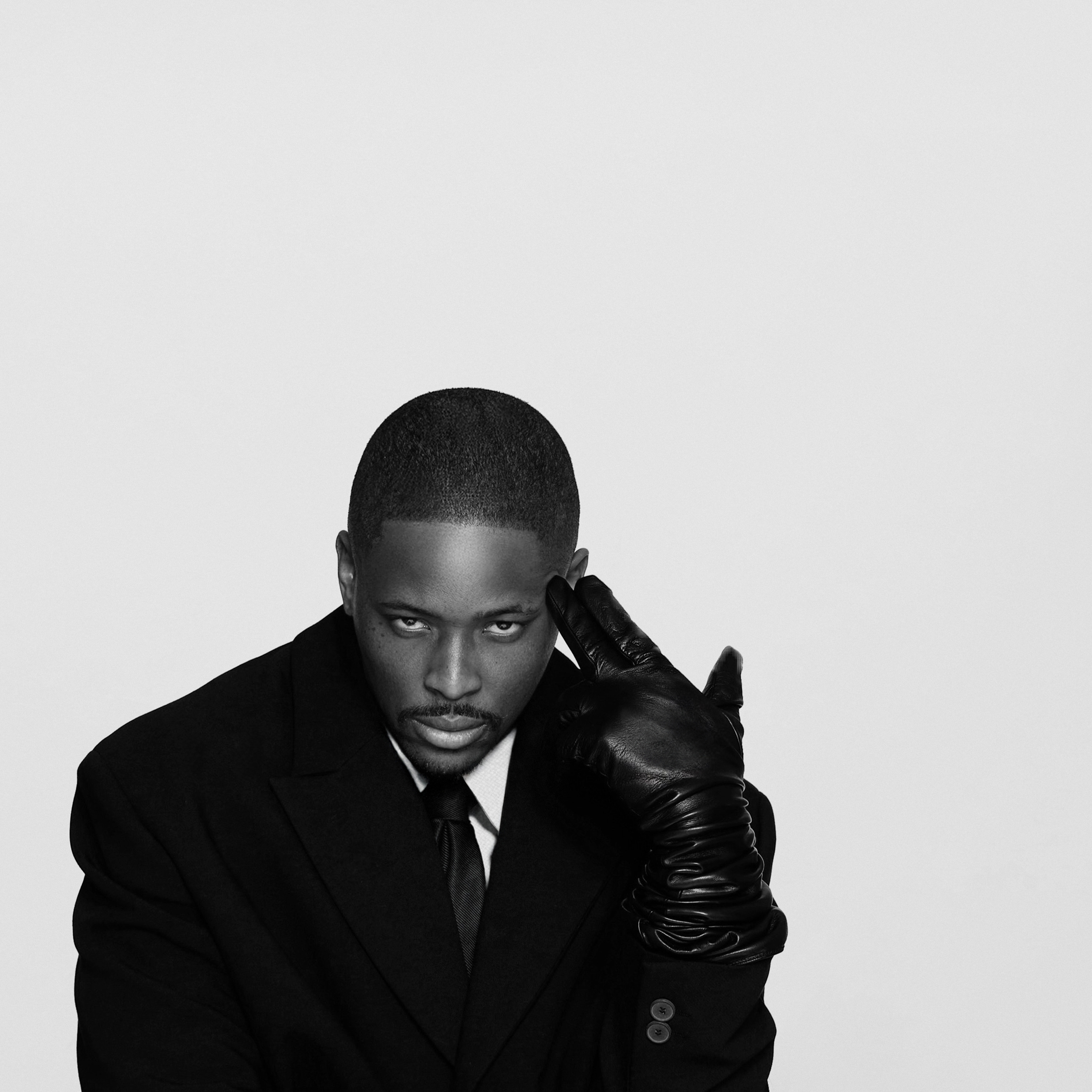
It gets asked in the press and elsewhere why this man in the perfectly-fitted suit has it on. The ringmaster introducing the proceedings for the night sets up the space as one earned. YG kicks off his latest album that revolves around women, money, threat. He put out “2004”—his childhood survival of sexual assault—on rotation in the rollout for the album last year, and while the track’s not here, the statement about trauma remains behind the deeply introspective bent these songs maintain. And finally, with a suit like that, he’s out and says the part his music held under wraps—the bodies in the closet.
YG opening “OMG” with fifty on the wrist, a penthouse at the Ritz, Uncle Sam finessed for two M’s in the safe. Then Pusha T’s verse comes in and matches it with a Grammy in the snow, his hustle on the stove priced cheap. On the first G-Funk induced single “Hollywood”—the only posse cut here—OhGeesy and Fenix Flexin play back and forth with YG across a smoking, drinking, and a hook that’s California-centered (Bompton, Sunset, Slauson, the Nip call is OhGeesy out and about on Slauson); it feels more geography than story, only shifting “Gang Bizness” for the business of his set, “Real Blood, I ain’t never bang Crip,” with the blue rag the only emblem of membership in sight.
The sung sections on “Simon Says” fall to Isaiah Falls, Odeal, and Sasha Keable as YG’s verse runs on his gluttony—a princess in the passenger seat that he’ll shift from a Cybertruck to a Rolls. It is a similar hunger turned secretive on Ying Yang Twins-inspired “On the Low,” as YG’s thirty million requires an act-broke front to hide it with Tyler, the Creator stealing the show in the purest absurdist mode, naked Twister with a three-million-dollar Uber. “Dinner Dates & Heart Breaks” tries for a full narrative arc in the dating journey and is quick to falter-a brief spark of romance followed by a man at his girlfriend’s doorstep, fists clenched tight—with the stakes only being resolved with threat, the sole instance of the writing choosing a clunkier, more percussive intimidation than the elegant and elsewhere executed, threat-laced style.
The list on “Kudos” all falls to the past tense: riding rims, copping for the opps, the clique he funded until somebody ran off with the bricks. The hook thanks it all, and disowns it simultaneously: “Kudos to everything that made me/But lately, everything I ain’t into.” He clearly marks the shift, used to think broke, now rich, thugging with Nip tucked in the middle of it all. “Writing My Wrongs” sheds the gratitude and keeps the wrongs, opps he got popped, an elderly couple robbed, the family he let down, the guilt weighing most on Slim, the friend he claims he warned away from a hot block before the block got him. He closes without any absolution, still pondering whether handing over his bulletproof vest the night they slid somehow got a whole body killed.
The transaction starts with a question: How much for a hit? YG narrates it in character on “Hitman,” outlining a target he’s despised since he was a teen, the chorus a flat showdown, “I don’t like you, and you don’t like me/The last man standing is how it’s gon’ be.” He’s tapping the target’s shoulder, and the face staring back at him sports the exact same cherry-red Philly as him; it was himself. “Ready to Die (Hitman Response)” takes over the second half as the hit target’s retort, addressing “Self” and flipping 50 Cent’s “Many Men,” “Many men want me unalive/Ain’t no biggie, I ain’t ready to die.” The two voices are conceding they are one at the last verse, the writing constricting down to his motivation for drinking and keeping a guard up until he’s instructing himself to step up, lead the youth. Together, they turn a death wish into a story that he can only resolve by battling his way to stay alive.
Accused of a murder in his hometown for a staged news intro, YG devotes “We Know the Truth” to a rebuttal built on denial and a reinterpretation of the event. Here, he insists he was on hand merely to receive money from a gig, dismissing the controversy as internet noise, citing that he was never even implicated by name. All that remains is the declaration, “I’m at war.” While nothing is being presented as factual testimony of any particular incident, the closing verse offers a turning in of this defense, the somber admission that “This part of me I wanna kill,” which slides this most outwardly defiant track into the quiet rhythm of its more introspective counterparts.
There is no song more uncomfortable to witness the end of than “Tiffany.” It begins as a club narrative. Chris meets Tiffany on the dance floor. A fight with a woman he knows, then a drunk drive home. When things get voluptuous, Tiffany announces she’s a trans woman. From there, the song morphs into a brutal murder story, a pickup truck, a shovel in the bed, psalms read aloud before dispatching a victim to hell. At the last moment, Chris aborts, the gun cocked, aimed right for her face. The final verse is handed to Tiffany. Her response is a complex, immediate prayer of fear and faith simultaneously—that she kept silent out of a fear of exactly this, that she grapples with her identity and the world’s judgment, that she’s “not a girl, not a stud” but someone in between. Under it all: “I just wanna be loved.” Her final lines: “I believe in God, I’m worth it/Please don’t do it, I’m not perfect.” YG writes Chris’s aborted violence in the rawest, most visceral first-person. Then, he gives the closing word to the person his character spent the entire song dehumanizing, the most human writing he managed across the entire record. Whether this verse balances out the brutality it preceded is a question the song defers from.
“Insecure” begins with YG announcing the quiet code that has structured so many male lives: “We grew up thinkin’ silence make you solid, but it don’t/Honesty do.” He lists what he’s tried to keep under wraps: the nerves in the bedroom, the drinking, the pills popped to perform before a stripper. All the ways he stays the same lest changing the name invite targets. JID’s verse veers into an even deeper space of anxiety and claustrophobia, a claustrophobic sound that felt like holding hands with God, the dictum that a man should accept one to the chest and offer a smile, even when he’s the one who messed up. Ab-Soul’s verse dives even deeper, back to middle school and the relentless bullying he endured, an SJS survivor now a famous rapper, who can have his pick of any woman save, physique-wise, the one he actually craves.
Buddy’s hook to “Mid Life Crisis” is four simple words repeated about wanting to live or die and why. Under that, YG sheds all pretense of narrative and lays his worst thoughts out plain: Whether he ever thinks about offing himself? He got drunk instead. The stroke that took his father. The Glock that he picks up and puts back down in the room next to his kids. In a shared closing verse with Buddy, it goes over the same bleak ground again and again before a gunshot finally sounds. Then the concept offers a neat reinterpretation: this is a symbolic death, an old YG making space for the new, and welcoming to the gentlemen’s club. That’s the reading the song (or the album) itself wants us to come away with. What perseveres, though, is heavier. His daughter, on the phone, is telling him she misses him, while his gun is still in his hand.
Great (★★★★☆)
Favorite Track(s): “Kudos,” “On the Low,” “Mid Life Crisis”