

Album Review: The Leaks by Lil Baby
2025 finds Atlanta star Lil Baby coming off a misfired studio album and a disintegrating world tour. As a compilation, this felt less like generosity than a way to monetize leftovers.
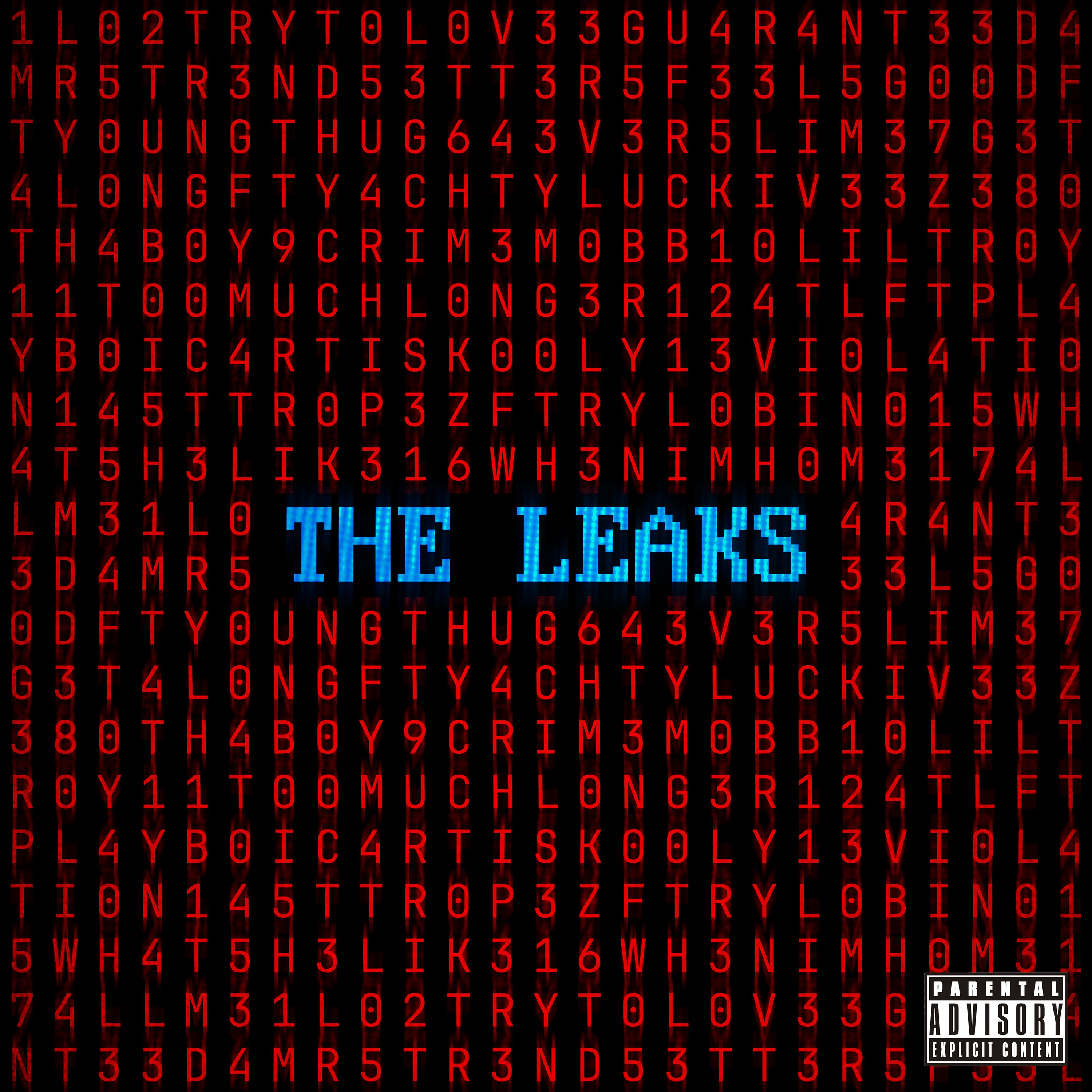
Lil Baby spent most of 2025 trying to outrun his own momentum. WHAM, released at the top of the year, was billed as a statement record and sold well, yet its reception was tepid. Over here, we have noted that he doesn’t belong at the forefront of rap music because he can’t manage to move the sound forward. Even chart analysts at Billboard acknowledged that the album’s chart‑topping debut came despite “lukewarm” feedback from fans. An arena run fared worse: whole stretches of the WHAM World Tour were scrapped, with Australian promoters telling ticketholders that “the shows have been canceled” and that he’d also cancelled “an entire European tour.” Ticketmaster listings for Germany, Brussels, Paris, and New Zealand disappeared as people joked online about his inability to fill arenas. Against that milieu, Lil Baby went on Instagram to reveal that The Leaks was simply a handful of songs that had leaked. He even admitted he “took a couple of songs that [had] already got leaked” and “created a whole album around it.”
What makes this mixtape so thin isn’t the idea of a leaks collection. It’s that nothing here feels like a leak. In hip‑hop lore, an unofficial dump of raw ideas can capture an artist’s curiosity or risk-taking. The Leaks is the opposite. These are finished, polished tracks that never earned spots on better albums. They expose how narrow Lil Baby’s repertoire has become when he isn’t forced to organize his thoughts around a concept. The opener “Mrs. Trendsetter” lays out the blueprint. He raps about “trappin’ to rappin’,” stashing “M on a ’Rari,” sleeping in a dope house, and stepping on enemies’ flow in a haze of self‑congratulation. The hook repeats the same flexes—“Pink slip game, we still got strikers” and “Seven hundred K in my bookbag”—without sharpening them. Two songs later on “Guaranteed,” he reels off nearly identical boasts. He only cares about winning, keeps “twenty different whips,” paints them all red, and declares himself a “certified dripper.” By the time he’s back to telling us he wears Cartier glasses and owns multiple track‑ready SUVs later in the same song, it’s clear that he’s recycling bullet points. The difference between “Real Shit,” “Violate,” and “Forever Slime” isn’t subject matter but tempo.
His writing operates as a checklist of cash, cars, designer brands, guns, women, call‑backs to Zone 4 and an ever‑present “real street” credential. On “Real Shit,” he notes that he’s from “right up the street from the Dome,” that he’s still surrounded by brick sellers, that his Trackhawk is bulletproof, and his Hellcat spins up the street. A brief glimpse of hardship—coming home to the lights off and furniture on the lawn—gives way to yet more boasts about bank accounts and Hellcats. The same pattern appears in the purported love song “Try to Love,” where a chorus about ghosted relationships and hollow words collapses into instructions for his lover to meet the driver and security at his compound. Even the rare lines hinting at paranoia—“I’m forever gon’ be on this slime shit,” he repeats on “Forever Slime”—serve mostly as branding. Trauma and self‑doubt exist only as seasoning, never as subjects.
Production across The Leaks mirrors this flatness. Most beats adopt the same mid‑tempo trap template. You know the moody minor‑key loops, crisp hi‑hats and sub‑bass throbs. “Middle of the Summer” pushes the formula as far as it can go, layering skeletal piano and strings under a story about an ex spinning the block, yet the song is anchored by a monotonous hook that repeats “spin the block” until it’s meaningless. “Forever Slime” is built on a guitar loop and airy drums but goes nowhere; each verse is another shopping list of bracelets, sweaters and cars. Even the ostensibly introspective “Try to Love” floats on a gentle melody that could have supported a confession, yet Lil Baby uses it to brag about condos in the suburbs and a greeter waiting by the plane. A leaks tape could have showcased rough sketches or experiments; instead, the sound palette rarely deviates from what’s familiar. The manic energy of Future, *scratches* Playboi Carti and Skooly on “Let’s Do It,” where Carti rides a jittery synth line and goes about spending on a Brabus and taking molly, is a brief jolt of life that showing how safely the rest of the project plays it.
Lil Baby’s performance is the bigger issue. He still slides into pockets with ease, but the autopilot is undeniable. The triplet flows and sing‑song cadences blur together; hooks and verses feel interchangeable because he rarely moves beyond his comfort zone. When he tells us “If it don’t make money, then it don’t make sense” on “Guaranteed,” it echoes a dozen similar lines in his discography. He boasts about turning “trappin’ to rappin’” and being “goated,” but offers no new insight into the price of fame or the fatigue of constant touring. There’s almost no mention of the WHAM backlash, the cancelled tour dates or the pressures of an aging fan base; instead, he sells stock images of success and persecution. The one moment where he glances at reality—“Niggas low‑key be depressed while it look like I’m at my best” on “Otha Boy”—quickly turns into chest‑puffing as he threatens unnamed rivals and reminds them that he can make them strip. On “All On Me,” he admits he lives three lives (father, rapper, hustler) and confesses that he still can’t sleep despite running up fifty million, but even this flashes by amid references to Jewish lawyers and Magic City.
The guests expose his complacency. Outside of Carti and Skooly, LUCKI opens “Get Along” by murmuring about wolves, snakes and lean; his lethargic delivery suits the woozy beat, and Lil Yachty follows with taunts about codeine and high doses. Veeze’s verse is messy but vivid, with references to Chrome Hearts sweaters, flipping houses and being banned in SoHo. When Lil Baby finally enters, his brags about Cullinans and pulling forty‑nine “zen” for a Xan feel stale. On “Superman,” Young Thug still under house arrest, floats through the beat with his patented croon and non‑sequiturs, as Baby sounds like he’s reading bullet points off a phone. Rylo Rodriguez and Bino Rideaux bring a rawness to “St. Tropez,” talking about county jails, lost friends and scars that won’t heal. Baby’s own contribution—fantasies of Saint‑Tropez, dinner on yachts and meetings with LeBron—lands like a luxury brochure. G Herbo, on “All On Me,” raps about losing seven figures and having to keep his distance to survive, his urgency makes Baby’s lines about tax‑evasion and buying new whips feel small.
None of this means that The Leaks is unlistenable. “All On Me” has promise because G Herbo forces Baby to approach something like vulnerability; he talks about ducking the street life, living three lives and trying to change, and for a moment his cadence loosens and his voice strains. “St. Tropez” also offers glimpses of personality when he wonders aloud if the relationship will work and imagines fireworks in Saint‑Tropez, even if he can’t resist naming yachts and Monaco. “Let’s Do It” works on sheer adrenaline, with Carti’s chaotic hook and a beat that slaps harder than anything else here. Those three tracks suggest that Lil Baby still has instincts—he’s just refusing to trust them. Mostly, though, The Leaks feels like a scramble to maintain brand presence in a year where his grip on the spotlight slipped.
Poor (★½☆☆☆)
Favorite Track(s): “All on Me”