

Album Review: The Nightlife by Honey Dijon
The veteran Chicago DJ’s third album hands every lead to a guest and never softens a single beat. It’s the cleanest case she has made for where this music came from and who gets to keep it.
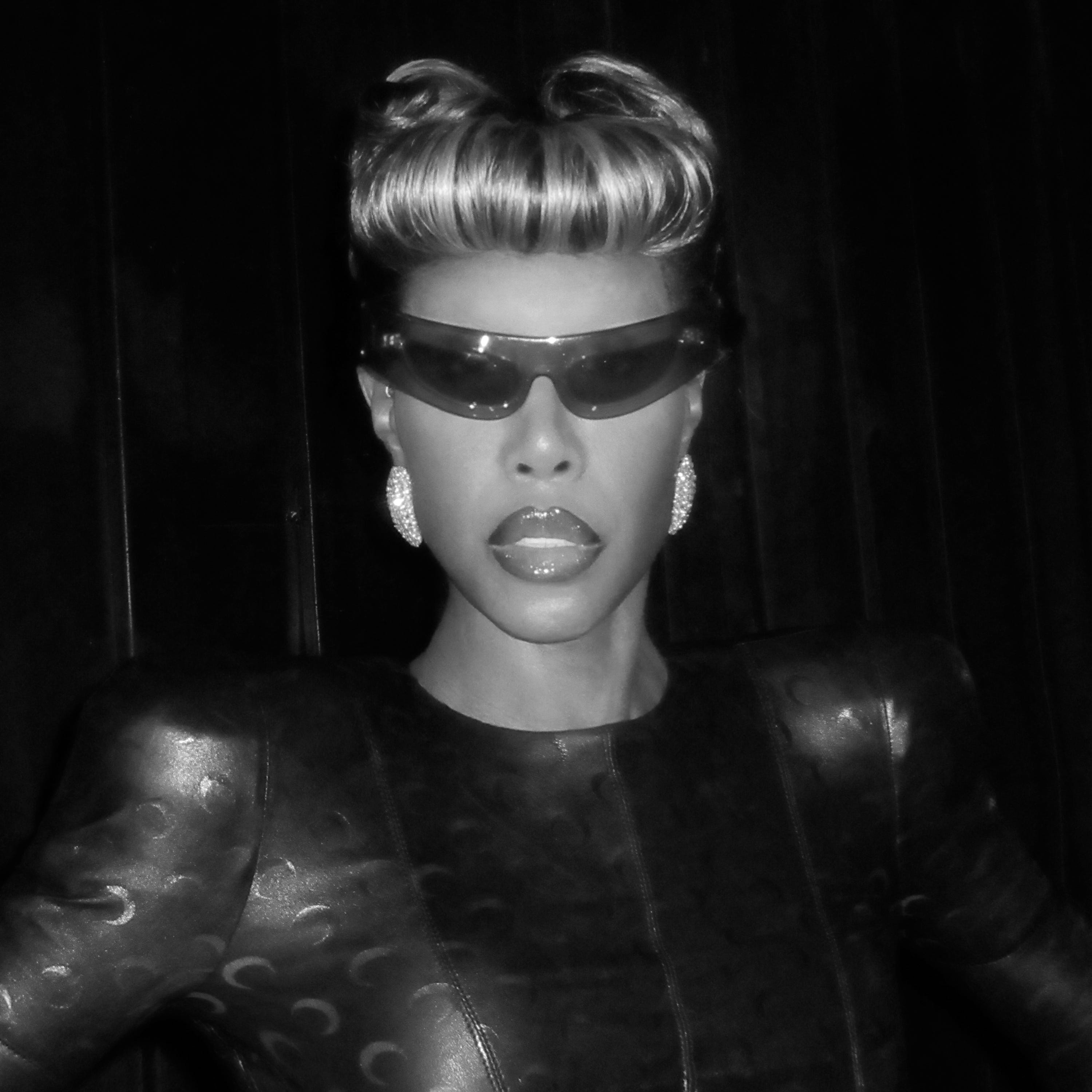
The Warehouse on West Jefferson ran on whoever showed up to sing first. Frankie Knuckles and Ron Hardy were famously conductors of other people’s voices before anything else (Larry Levan did the same thing a state over, at the Paradise Garage), and the diva vocal over a four-on-the-floor kick is older than whatever marketing copy currently gets attached to house music. Three albums in, Honey Dijon knows the tradition she is working inside well enough to write from inside it. The Nightlife hands every lead vocal to a guest while Honey Redmond works behind the boards, a veteran DJ’s Rolodex put on wax.
Adi Oasis opens the third song with a warning, “Your love, it won’t save me.” Danielle Ponder’s smoky alto takes verse two a shade deeper, and Suni MF raps the bridge, “You’ve been friend-zoned, had to put you to the back.” “Just Friends” is the clearest lyric Dijon has assembled across three records, euphoric disco-house laid over a deep soul bed, and it writes a developed kiss-off most dance songs don’t bother putting to paper. Later, Jacob Lusk hushes the party. He starts on a spoken passage, “Black is adjective, adverb, color and noun,” and reciting a four-centuries-old grievance:
“You brought me over here, motherfucker
I didn’t want to come here
To work me to fucking death
And then tell me I’m ungrateful
And I won’t be satisfied.”
Lusk commits to the full gospel command, and the track runs his reading over a warehouse-grit kick and distorted vocal stabs, the production pointing right back to the Warehouse.
But most of the middle belongs to the body. Bree Runway arrives on the second song rapping like she is daring anyone to doubt her:
“I got a bag that go with this bag
I got a walk that go with this ass
I got a whip that give you whiplash
Use every chance to get a bitch mad.”
And she keeps the flex going for four minutes straight. “Slight Werk” is the cleanest rap performance on the record, Runway’s bragging stacked over a kick drum and not much else, with the punch of the sharpest Missy Elliott verses, weapons-grade competence in party clothes. Greentea Peng spends “I Like It Hot” flirting with her own sweat over a hypnotic bassline; later, Cor.Ece, Rush Davis, and Gavin Turek trade a girl-group handoff on “Okay Daddy,” “Make room for the sickest bitch on the avenue, rip the blade like boom.”
This is mostly a rejection album. Mette walks a dance-floor pickup into a clinical diagnosis on “International,” “This shit ain’t real, delusional,” and she signs off at the outro, “I’m emotionally unavailable.” Mahalia holds one line for four minutes on “Rush Me,” “Don’t rush me, take your time, we’re not in love.” Rochelle Jordan plays both voices of a one-way crush on “Private Eye,” one swearing devotion while the other keeps answering “That’s all in your head” from somewhere deeper inside the same headphone. Nobody here falls in love. And that is rarer on the dance floor than the genre would have you believe.
The record’s inward turns belong to Madison McFerrin and Dave Giles II. McFerrin opens “Smoke and Mirrors” over a piano, “Do you remember who you were before you were told who you should be?” By verse two she has a partial answer, “It might be smoke and mirrors but it’s all me.” Bobby McFerrin’s timbre runs through his daughter’s phrasing, and Dijon has never produced a song this private. “Welcome to the Moon” reaches somewhere stranger, six minutes of space-age house split open twice by Giles narrating his arrival on a planet that might be a club, “I’m feeling over myself in this foreign land,” he says, and later, “I now realize I feed off of you.” Dijon came up in Chicago clubs that were shelter for queer kids whose families had kicked them out, and these are the songs where that memory breathes closest to the surface.
Dijon stands at an odd point in 2026. A small, expanding roster of Black queer DJs has commercial daylight they did not have a few years ago (she has been in those rooms two decades longer than most of them). DJ Minx is back on the circuit, Moodymann still headlines, Jayda G and Peggy Gou are in rotation, Kaytranada touches house when he is in the mood. Dijon has been in those rooms for three decades while also soundtracking Dior Men runways for nearly ten, and the labor of pulling this music’s history back toward its founders falls on her more than on most of her generation. That labor is not nothing. The Nightlife was not made to argue any of this. Her argument is whoever said yes when she called.
Great (★★★★☆)
Favorite Track(s): “Just Friends,” “Satisfied,” “Welcome to the Moon”