

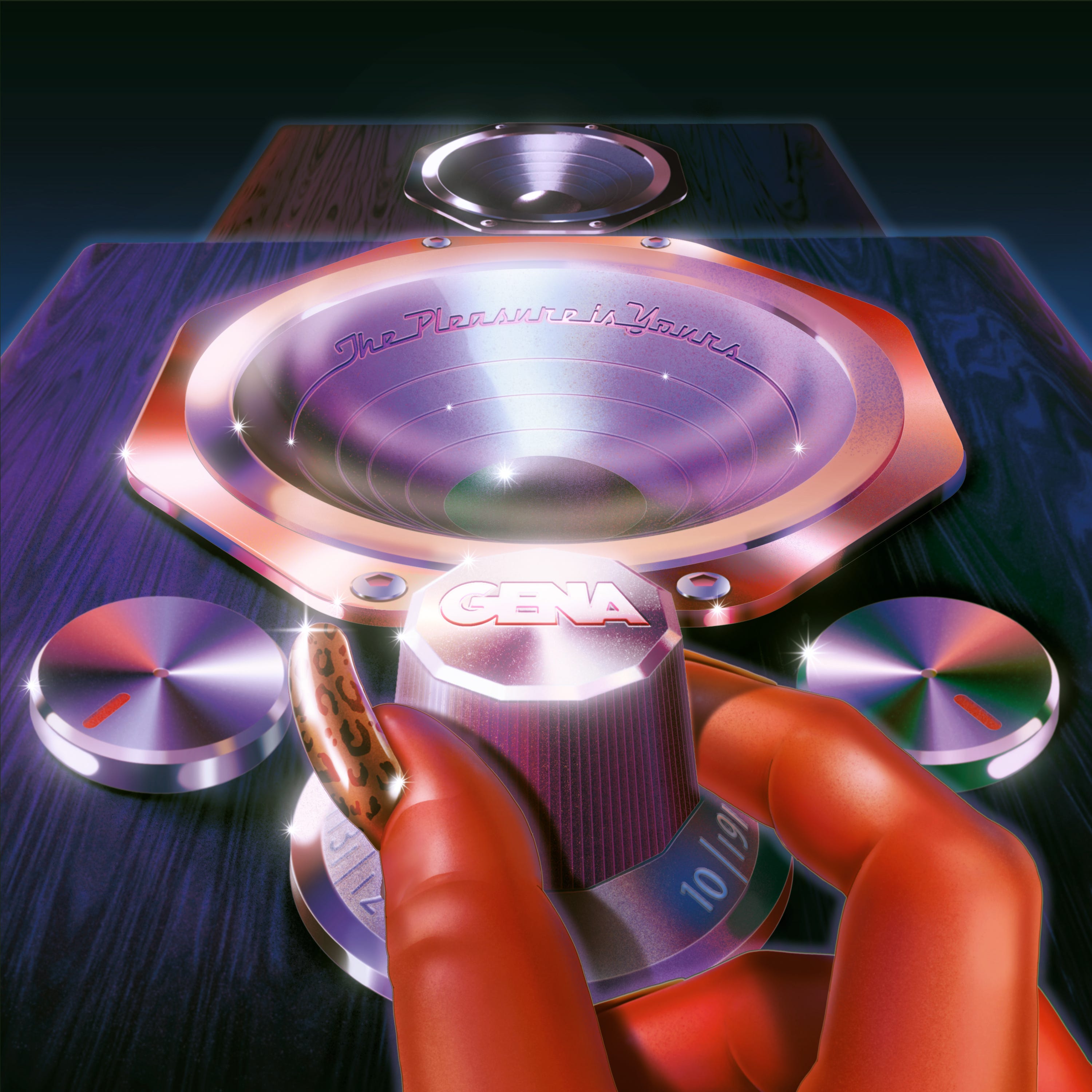
Most people learn to be nice before they learn to be kind. Nice means smiling through discomfort, agreeing when you don’t, letting things slide because the alternative feels rude. Kind is harder. Kind requires you to mean what you say and say what you mean, even when the room gets tense. Liv.e, the Dallas singer whose solo records have always had a slippery, hard-to-pin quality, has spent years circling this tension. Her new partner is Karriem Riggins, the Detroit drummer who played with Common and Erykah Badu and came up alongside J Dilla. Together, they call themselves GENA—short for “God Energy, Naturally Amazing,” also a nod to the character from Martin. On “Theybetterbegladihavetherapy,” Liv.e puts it plainly: “I thought I was taught kindness/But it turns out I was taught niceness/Which really means you are stupid.”
Karriem Riggins doesn’t drop his drums on the beat so much as lean them against it. There’s a looseness to how the percussion sits under Liv.e on this record, sometimes a fraction behind, sometimes hovering, and Liv.e takes that permission and runs. She slides from mock-threat to prayer to bedroom command across sixteen songs without announcing the gear shift, just moving with Riggins’ rhythms the way a person changes their voice depending on who's in the room. The whole record lives in that gap. She sings it straight, no run-on it, no melisma, just the flat fact delivered twice. That same spine shows up on “Left the Club Like ‘Really Nigga!’” in completely different clothes—crass, jealous, pulling up fast, and scanning for trouble. “She’ll take my place but never be the blueprint” carries the same conviction about self-worth, just written in a hotter temperature.
“Unspokern” is where the writing gets strange and vivid. The verses trade positions; Liv.e sings her commands, then flips them, both versions building toward the same dissolution: “So close can’t tell which part is mine/Is it yours, is it mine?” Desire past the point of keeping score. The call-and-response swaps who’s leading often enough that tracking it stops being the point. Nothing else on the album sounds that open. On “Lead It Up,” Liv.e is steering, certain, crown already worn (“Kiss my face, I carry the crown”), asking nobody’s permission. “Douwannabwithastar” sharpens that self-image from a different angle: “No I can’t be yo bumper sticker/And I won’t be yo super woman/You can give me endless figures/But a cage won’t fit up all these numbers.” That’s the album’s clearest statement of what Liv.e will and won’t accept from proximity. Then “readymade” sets the terms plainly. She wants something custom-fitted, built specifically for her, not pulled off any rack: “I like it when tailored/I like it when it fit me.” These songs aren’t about sweetness.
On the production tip, Riggins’ percussion rarely punches hard on a downbeat when he can let the pattern breathe instead. On the confrontational tracks, the drums fill out. And inside that room, Liv.e works through what it actually costs to stop being agreeable and start being clear. The album keeps circling one question: what does a boundary actually look like when you still want someone near you? Liv.e spends much of The Pleasure Is Yours figuring that out in real time—confronting, negotiating, backing off, leaning in. The clarity costs her something every time. The tempo on the gentler songs doesn’t slow down so much as expand, each measure stretching a half-second longer than expected, giving her room to hold a note or drop into a whisper. What shifts most dramatically is how she phrases. She jokes, warns, flirts, and petitions across the same record without smoothing those transitions out. That friction is built in, and it keeps the album from settling into any single mood.
Riggins adds his ad-libs to “HOWWEFLOW,” and it changes the song’s weight entirely. The mutual recognition feels shared, real stakes on both ends: “Some people like to pray that I won’t make it/Most people steady telling the whole world that they need to know ‘bout that.” It knows exactly who decides whose talent gets acknowledged and when. “Doobie Doo Wew” moves from that territory into something more private, the future looking like gold just within reach, the pressure of almost-there becoming its own weather. When she sings “My mind is a window I look out that hoe/Take me up so high I can’t see the flo,” that’s the sensation of being inside ambition pressing against the inside of your skull. Then “omo iya ati baba” arrives and shuts everything else down to prayer—Yoruba petitions for protection, comfort, healing, called in plain invocation with no healing arc attached, no resolution promised.
With “readymade,” she extends the idea of turning inward, not performing for anyone. She wants something tailored to her: "If it ain’t special/Ready made love/Then I don’t want it/I like it when tailored/I like it when it fit me.” The phrasing sounds like someone making demands and negotiating with themselves at the same time. She knows what she wants, and she’s also checking whether she really means it. Their debut single “Circlesz” rounds out the desire thread. She lists small observations about a relationship, and Liv.e delivers them in a round, almost sing-song voice that contrasts with how pointed she sounds elsewhere. The track feels like exhaling. Riggins gives her a merry-go-round groove, circular and warm, drums that skip forward without ever feeling like they’re going anywhere specific. She’s content here, or at least as close to content as the album gets.
Great (★★★★☆)
Favorite Track(s): “Theybetterbegladihavetherapy,” “Left the Club Like ‘Really Nigga!’,” “Unspoken”