

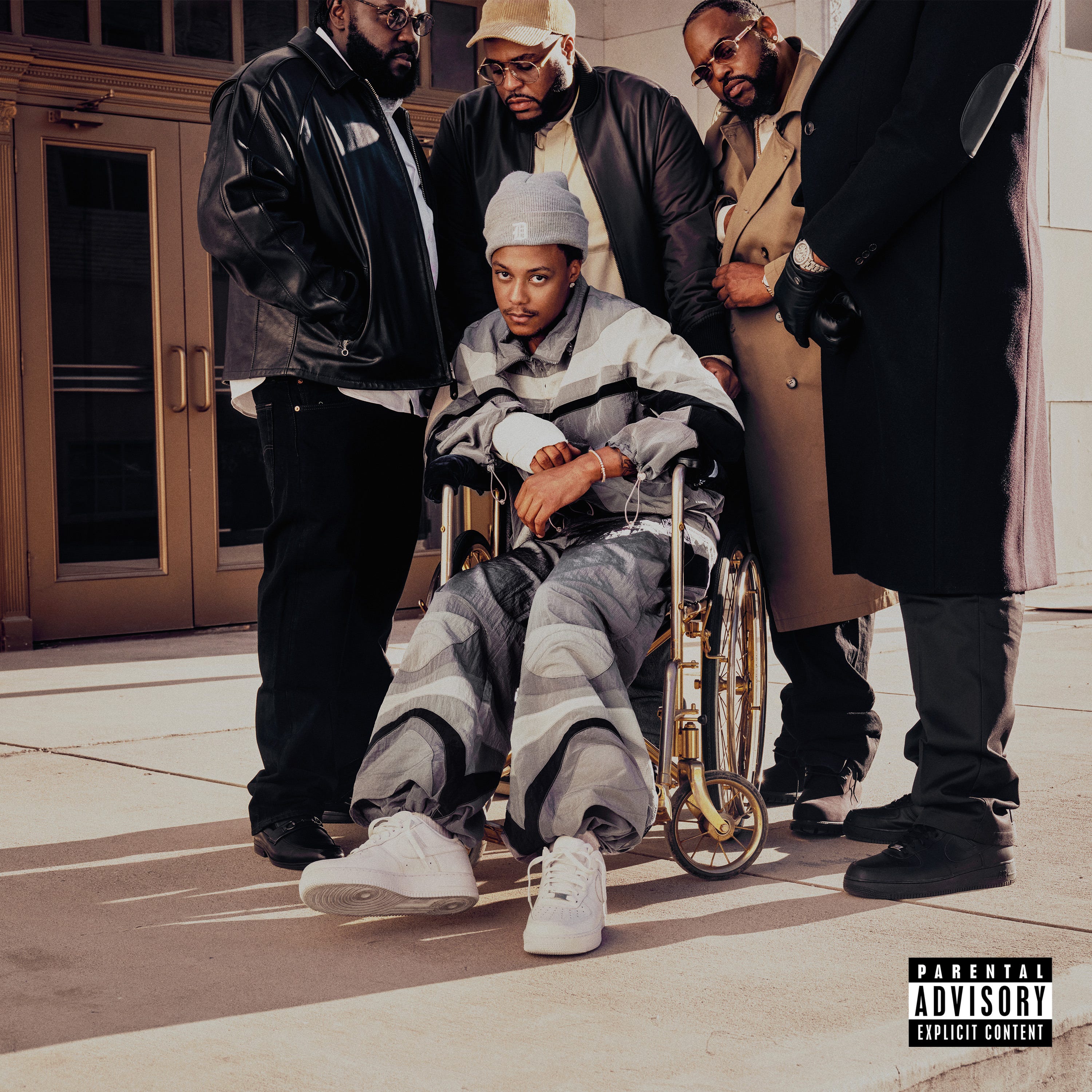
In a conversation released two weeks before the album drop, Nas told Skilla Baby to follow his heart and take over the world, since nothing was really stopping him; if not him, then who? When Detroit rapper Skilla Baby was shot and survived, he was one of the few to take Nas’s words seriously. The rapper took it to heart (as evidenced on The Outlet with Pretty Vee); others have watched him struggle with his mental health and the lows of life. He decided to let people know about his highs, and this album has really saved his life. Now he’s in a good headspace. The Price of Fame is co-executive-produced by Aaron “Dash” Sherrod, Skilla Baby, and Nas.
Skilla Baby would like to be the rapper starring in more cartoons and fewer news alerts, but that’s not the way it is lately. The title he’s chasing has mostly been handed out at funerals, a tradition that runs from Biggie and Pac, back through Nipsey Hussle (murdered in March 2019, just thirteen months after the rapper released his debut, Victory Lap), and on to there, wherever “there” is these days. CNN alone has tracked at least one rapper killed by gun violence every year since 2018, including King Von in 2020 and PnB Rock in 2022. The great exception is 50 Cent, who was shot nine times in Queens in May 2000 and dropped by Columbia while he recovered, waiting three years to release an album—however fortuitously titled Get Rich or Die Tryin’.
Skilla Baby knows the necessity of a roster to claim. On “God’s Favorite,” he lists 50 for the movies, Biggie for the rapping, and Pac for the influence, adding, "I'll die ‘bout my respect, I seen Nipsey do it.” On “No Tears,” Skilla repeats R.I.P.s to King Von and PnB Rock, declares, “Can’t be another legend gone like Biggie and Pac,” and stakes his place: “This my victory lap, I’ma die a legend like I’m Nipsey.” Detroit has survived and thrived through several pivotal eras over the years. As Nancy McLean explored, the Civil Rights movement’s fight was often a fight over jobs, and winning its various struggles over jobs, housing, education, urban renewal, and wages would have been more important to the movement’s history if Detroit had not been its great industrial prize. After deindustrialization spent two generations unwinding that prize, Skilla Baby captured one of its legacies when he rapped that “Detroit ain’t got no fuckin’ jobs, boy, we had to play the streets.”
On the title track (while there’s not much accounting), for example, Skilla Baby offers up, “Fighting depression I said I wasn’t, I’m just lying good.” It’s a reluctantly revealed truth, as even while making it public, the genre’s protocol suggests all the ways he might compensate for it by shooting itself up with success. And he gets some of that in his talk around retaliation, security detail, and survivor's swagger. But then, his bars that stop the song are the no-protocol ones: “She almost lost her son, I wonder how my mama feel.” Even just ten years later, saying that about his father dying doesn’t quite bring back the missed calls. The hook can price fame in money, cars, clothes, and chains all it wants; the verses reprice it in hospitals.
Although Illmatic may have presented him as a poet, Nas is the response from the funeral canon. He has spent thirty-two years making verses and has been a strong proponent of life. And yet, no other track shows how well he makes his case better than “Respect My Gangsta,” where the almost-fallen emcee teaches a young troublemaker named Skilla. Nas starts his verse with the gangster code he knows all too well—keep your reputation clean, and do not take any disrespect, even from civilians. Then, he points out that those people who turn the code into show—the rappers who rap gangsta but can communicate easily with the police, according to Nas—are music rats. “He wrote the book, I wrote the street Bible,” he claims, referring vaguely to his infamous fellow from Queensbridge who wrote The Godfather. But this song is all about the teachers and their pupils—he tells Skilla that they are brothers. And the longest-living writer in rap history should explain what that means.
Skilla Baby raps “Be Me” for those children who believed he was never going to become a success. He recorded this track on his return to Detroit, but he also showed up in the schools because he made another observation—a more straightforward one—“These kids don’t believe nothin’ they don’t see.” So he wanted to be seen by these children, a famous rapper, who used to sit in the same classrooms and felt faint because he could not heat the house with the oven since he had no job and had to stay outside on the streets. And there he was, alive and breathing, walking these hallways of Detroit, which opened for them a door to the world.
Above Average (★★★☆☆)
Favorite Track(s): “Paranoid,” “Dear Mama,” “The Price of Fame”