

Album Review: The Return by Erica Mason
A queer Christian rapper from Williston, Florida, packs her debut with church indictments, depression duets, and abundance theology.
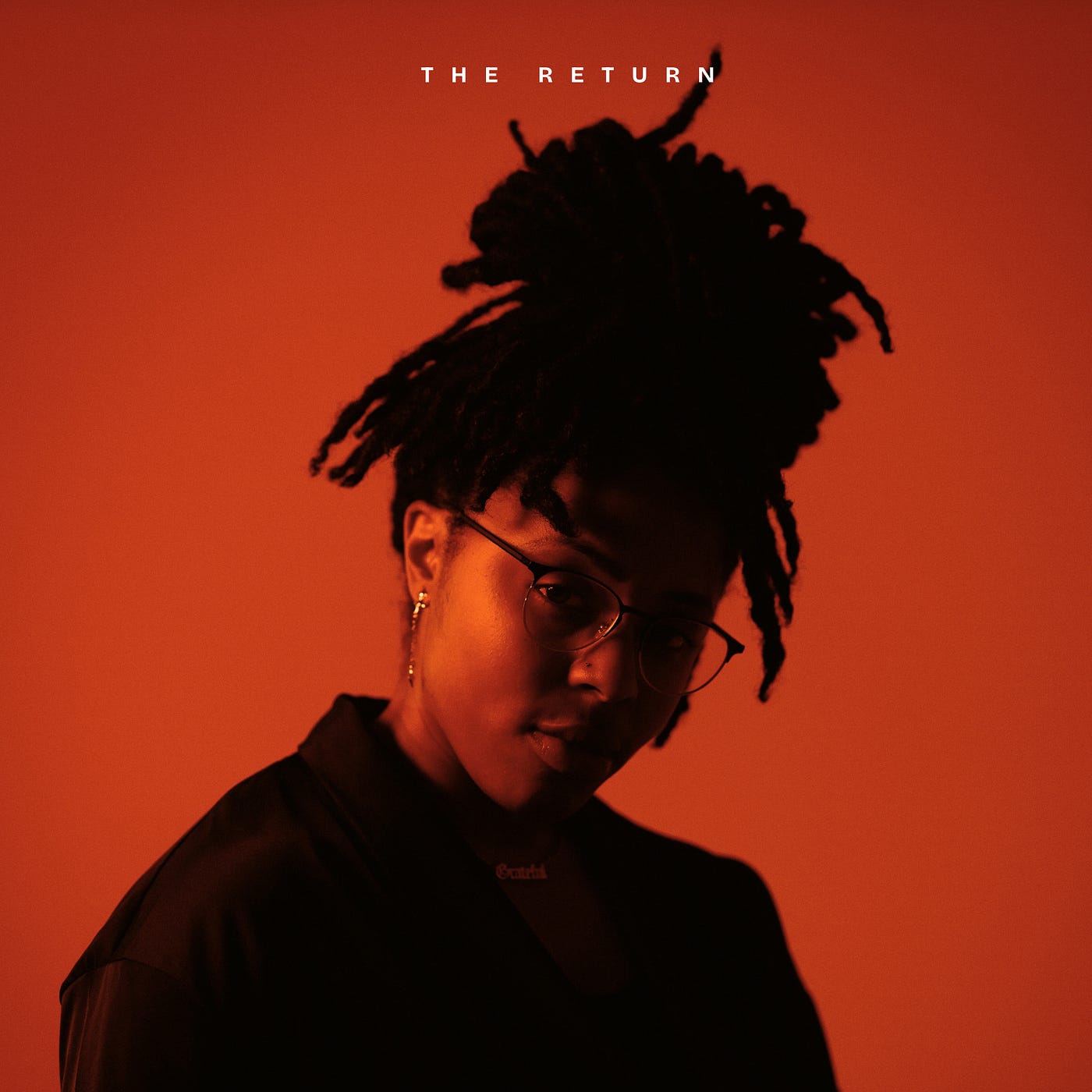
Twelve years old, and she met trauma, so she went to church. That’s the first line of “Holy Water,” the best cut on The Return. The pastor said God delivers when you put him first. They put Erica Mason on stages. She was amazing. She almost lost her soul. Her grandmother told her to get out of that cult. Mason, a rapper and mental health advocate from Williston, Florida (a pinprick town outside Gainesville, now based in Atlanta with close to a million followers across platforms and a touring wellness event called The Healing Experience), grew up in and eventually out of the Black church. She came out publicly as a queer Christian, a combination that congregation culture does not typically make room for, and “Holy Water” puts that break into bars with the kind of accusatory detail the rest of the album rarely musters. From there, she names people in the room. The pastor’s daughter sneaks around because her father is homophobic, but the daughter loves Mason. The First Lady knows the pastor is cheating, but keeps smiling on Sundays. The holy water tastes like Kool-Aid. And the third verse turns ancestral, addressing Black forebears who waded through holy water, wore their crowns and were beaten—the spirit that hovered the waters, Mason raps, is smelling the toxins pumping through churches. That’s a loaded accusation.
Mason left the church, but she kept God. “Dark Times” is written from God’s perspective at the top, and it’s a strange, disarming move—God telling Mason she was born for the darkest times, that’s why she had to be hidden, that God tamed her anger because they both know the violent version, pulled her out of the church and let people drag her name while she still glistened. Halfway through, Mason takes over and the bravado kicks back in (she compares herself to Moses freeing her people, which is a lot). “God Shit” picks up the same thread with less patience. Can you say “god” and “shit” in the same sentence if you’re being honest? Mason does, and runs through depression leaving chains on her, drowning turning into walking on water, praying for hope and getting answered with inner peace. She looked for God and found that God was the inner her. For an artist who built her early audience through Christian hip-hop, that sentence is a full departure from where she started.
Then there’s “Gimmes,” which sounds like it wandered in from a different, looser album. The energy drops, the posture relaxes, and Mason just talks about what she wants. Her money, love, a house that feels like a home, friends who won’t do her wrong, peace, hope. She wants a woman for president in a country that loves all the Black kids. She wants a bad bitch who talks nice and rubs her feet. Good credit with a six-pack but still wants to eat good. More than money and cars and clothes, she wants sleep. More than honeys and broads and bros, she wants peace. A house in Lisbon with the wife, making love every night. It’s the one moment on the album where queer desire and political imagination sit in the same stanza without either one being a thesis or a brave act. Mason just says what she wants, and the fact that her wish list puts a nap and a wife in Lisbon on equal footing with a woman in the White House gives the song a personality none of the harder-charging tracks can touch.
Nobody writes about what depression does to the other person in the room. “Back and Forth,” featuring ANTOINETTE, tries. Mason talks to someone who takes it personally when she doesn’t call during depressive episodes. She wishes they’d call to listen instead of calling to talk, she can barely speak with the weight on her chest. ANTOINETTE’s hook says it feels like drowning. Then the camera flips entirely. Now it’s the partner watching someone they love lose their joy, getting anxious when the phone goes unanswered, afraid one day they’ll get a call saying she’s gone. That dual angle is rare in rap, rarer still in self-help-adjacent rap. It just sits in the mess. “Tug a War” covers neighboring ground—Mason opens with a spoken confession that she’s in the most difficult place in her life, she’s not the old version of herself, but she’s not who she needs to be. She raps that she’s somewhere in between, eating alone to protect her energy, fighting for her own place back. An erased version of herself is sketching herself back. That’s a more honest report than any of the material that announces she already won.
Where The Return trips is sequencing, not the individual songs. “Feeling Myself” has real personality, Mason calling herself a 5’3” god, buying confidence and learning how to spend it because low self-esteem costs too much, then flipping the vanity accusation by telling the crowd they’re a mirror: “if I’m the shit/then you smelling you too.” When God made her, she raps, God had something to say. “Royalty” goes somewhere else entirely. Full abundance theology, Mason saying she landed on earth, chose a body, skin the color of dirt, everything she touches gold, so much God in her genes you’d think she’s rocking True Religion. That’s a specifically Black spiritual argument about divinity and melanin, and it deserves room to breathe. “Been On It” is the funniest thing here, post-depression swagger with a sense of humor about it—peace changed her body, her teeth got whiter because she smiles more, she went from crying on the couch to Megan on the playlist, a stallion they let out of the stables, texting back sassy, popping out like Kung-Fu Kenny said.
“Stay Ready” is the grittiest, Mason rapping about hitting rock bottom and taking the stones to build, going through things pastors only preach about, writing them on her heart so nobody else could ink them out. That ink-it-out bar is one of the sharpest lines on the album. Jafari Jeter produced every song, and you can hear the consistency. His beats hold a comfortable mid-tempo pocket, but the uniformity means there’s no jolt between tracks, nothing that rearranges the furniture when the album needs a new mood. On a record where the lyrical subject shifts meaningfully between church indictment and self-encouragement and queer longing and depressive confession, the production treats all of it with the same even keel. The Return is Mason’s first full-length project after years of viral clips and EP-circuit releases, and it’s clear she had more to say. Most of what she says is worth hearing—better sequencing and a producer willing to shift moods between songs would have turned a good debut into a genuinely impressive one.
Solid (★★★½☆)
Favorite Tracks: “Holy Water,” “Gimmes,” “Back and Forth”