

Album Review: THEE IMMACULATE by Thurz & 14KT
Thurz is a brawler and a block-level storyteller, and his peaks have real teeth, a murdered ice cream man, plus a pawned watch and a flat-out colorism verse. 14KT’s single hand holds the range.
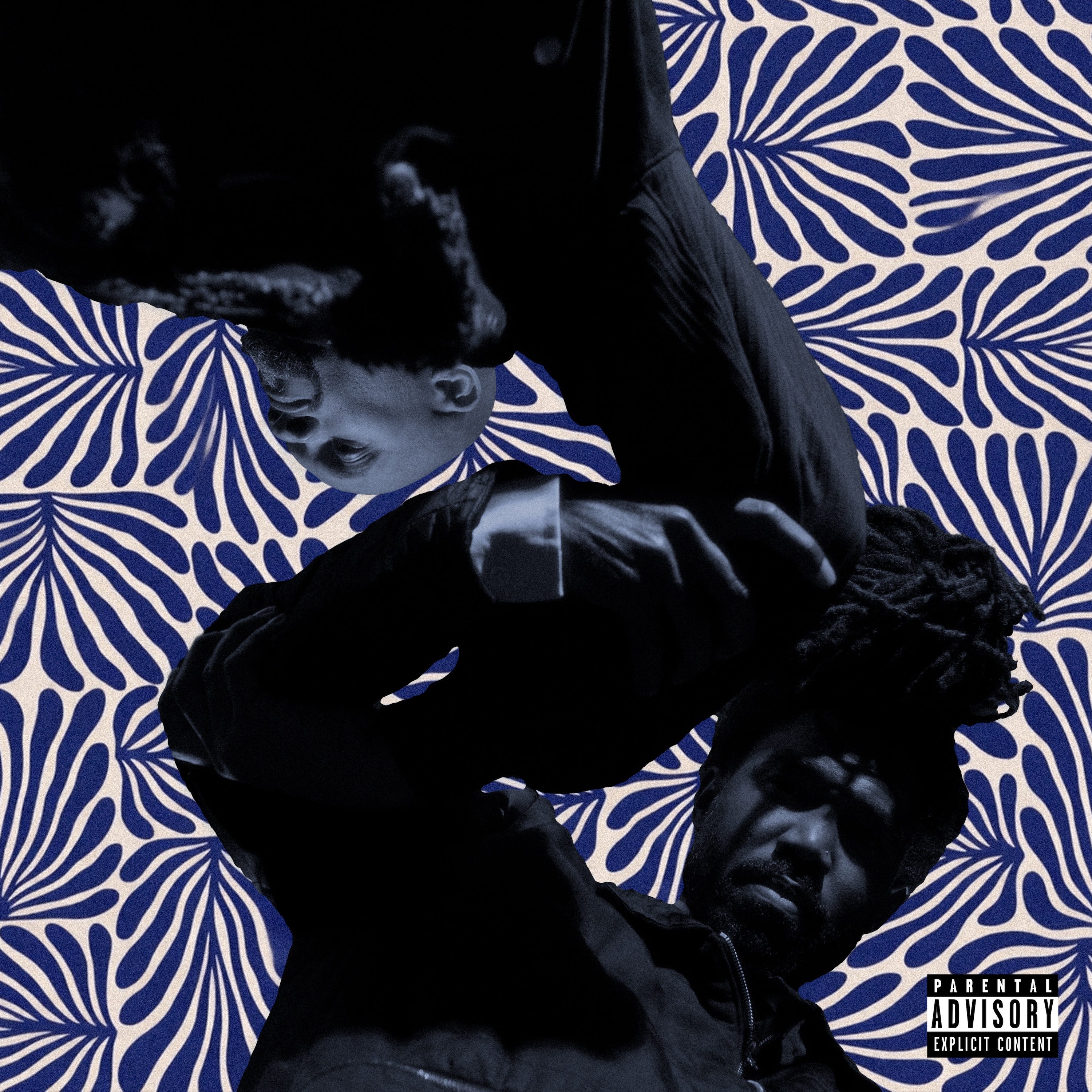
An Escalade circles one block of Inglewood over and over while kids play on the sidewalk; the man watching them vows to open fire before they reach his children. “Father Protect Me pt.1” opens with a sung petition for protection over a verse Thurz, the man himself, is absent from; the MC is so deep in fear that both prayer and threat come from the same lips. Thurz, who raps about Inglewood, was born Yannick Koffi. He is not concerned with this speaker’s terror; he awaits the second half for answers. The deeper he can stick to the ground in his writing, the better he is.
He returns in part two, and the first things he evokes are cartoons from Saturday mornings, the ice cream truck that came at noon. By the time they rolled back, the ice cream man was “popped too high/Pushing rocks, got into it with that wrong goon.” The murder in “Father Protect Me pt.2” is just the economy working on a street; it means nothing more or less than that. He continues to keep his inquiry in the body of the self, asking, “What’s gon’ protect me better, guns or a Bible?” and admitting he had asthma, which meant “a nigga can die from a cough.” Tony provides the coupons to Smith & Wesson and Glock. He never chooses sides; the sung, protracted “Freedom” outro moves beyond the block and chimes like a bell for forefathers in the Middle Passage instead of children on the corner.
Here Thurz abandons prayer for the fight. “Stone that the builders refused is now the murder weapon,” starts “The Cost of Doing Business,” and it continues through images like FIFA, Argentina, the sale of halos, and a plantation he wants burned down so that new growth can emerge. In the second verse, he throws out the cosmology and aims directly at his immediate neighbors: the benchwarmers, the “real leaders” who are crab buckets and will feed themselves on what sinks. He warns them against trying to trick him out of pocket change. He boasts he could urinate Budweiser, and they’d bottle it.
He gives two dollars in value to the soul, and the more concrete one, built on objects, gets further with it. “Cash 4 Gold” filters gold through every association, the chain and the teeth and the watch changing hands across a pawn counter, before BLESS E$CRO and Mez turn the entire concept into a strip mine; one child idolizes a player who “should own at least a little bit of the team” as the GMs “scout[e] our gold.” Thurz intertwines his own story throughout: he was given gold for the first time at three years old, a fourteen-karat engraved bracelet so “mama wanted y’all to know my name/Yannick Koffi.” “Somethin I Can Feel” shoots for the same meaning up in the clouds, and that height costs him. “Would you please give me something I can feel?” is an honest plea, but the verse lines mount Black Mirror, AI in his likeness, the projects, Leopold’s Congo, and a nod to Nina Simone so rapidly the concepts never stand still. The words point at their subjects without entering them. The line that carries the real weight, that “Cash 4 Gold” ends on, is: “They mine us for soul... Minus the black bodies they would pile up if they could.”
The come-up is born when the stakes drop. “Salt Water” pins the listener to perpetual summer, to Venice Beach and Malibu and “four cylinders to four seasons” and slides a real choice into the flex: “Fuck sellin’ drugs when there’s new teachers/When ATM is payin’ twelve hundred a month.” The teacher line outlasts the cologne and the Saint Laurent. The wordless, dancin’ groove of “Living Room Party” walks the same afternoon into the house, where “Album Cover” throws a Friday party and reminds everyone “North of Pico ain’t where my peoples at, it’s all Inglewood.” The flashy language masks the honest broke. Money shifting from savings to checking to layaway to maxed out cards, APR he can’t stand, five-day-a-week pay that bought the fit.
Colorism pulls out the most straightforward writing from him, all of it contained in “Immaculate Skin.” The hook keeps a tight roll call: Marvin Gaye and Lauryn Hill and Curtis Mayfield and Stevie Wonder, who “had me feelin’ like Black was the thing to be,” then the verse deconstructs that from the inside. “I ain’t fair-skinned/So I’m a threat when I walk by or drive by,” Thurz raps before going through “Pope white, Mary white, Jesus whiter,” the Clark Doll experiments and body cams switched off for a man who “might disappear around here.” He goes all the way back to first grade, wishing he’d gotten a normal first name like the other kids when they laughed at his. A Funkadelic-esque beat switch hands over to Jimetta Rose, who grabs for daylight: “Black and brown, hold it down” then an entire verse to a kid named Jerome, with his last line delivering the sting of what his ex’s Creole grandmother told her face-to-face: “Don’t bring no nappy niggas around here.”
When Thurz dials it down, “The Queen Said” opens up with a long spoken passage of himself as God’s anointed and unsinkable by haters, a self-affirmation that sprawls without quite landing, though the verse underneath hits something real: “Being Black and gifted, that shit quite exhausting/Falling short of my full potential is quite haunting.” “Immaculate Timing” stays in this lower gear, time slipping through his fingers, ideas keeping him awake at night, the opening prayer reappearing as “Protect me now.” The most accurate self-assessment comes in a single line of this track: “I be late to the party, but I’ma arrive always on time.” Mostly he’s right. When his feet are on the block, he always arrives on time.
Great (★★★★☆)
Favorite Track(s): “Father Protect Me pt. 2,” “Cash 4 Gold,” “Immaculate Skin”