

Album Review: THIS CANNOT BE SOLD by KB
On THIS CANNOT BE SOLD, KB fences off his marriage, his kids, and his doubt, and his writing has never been better.
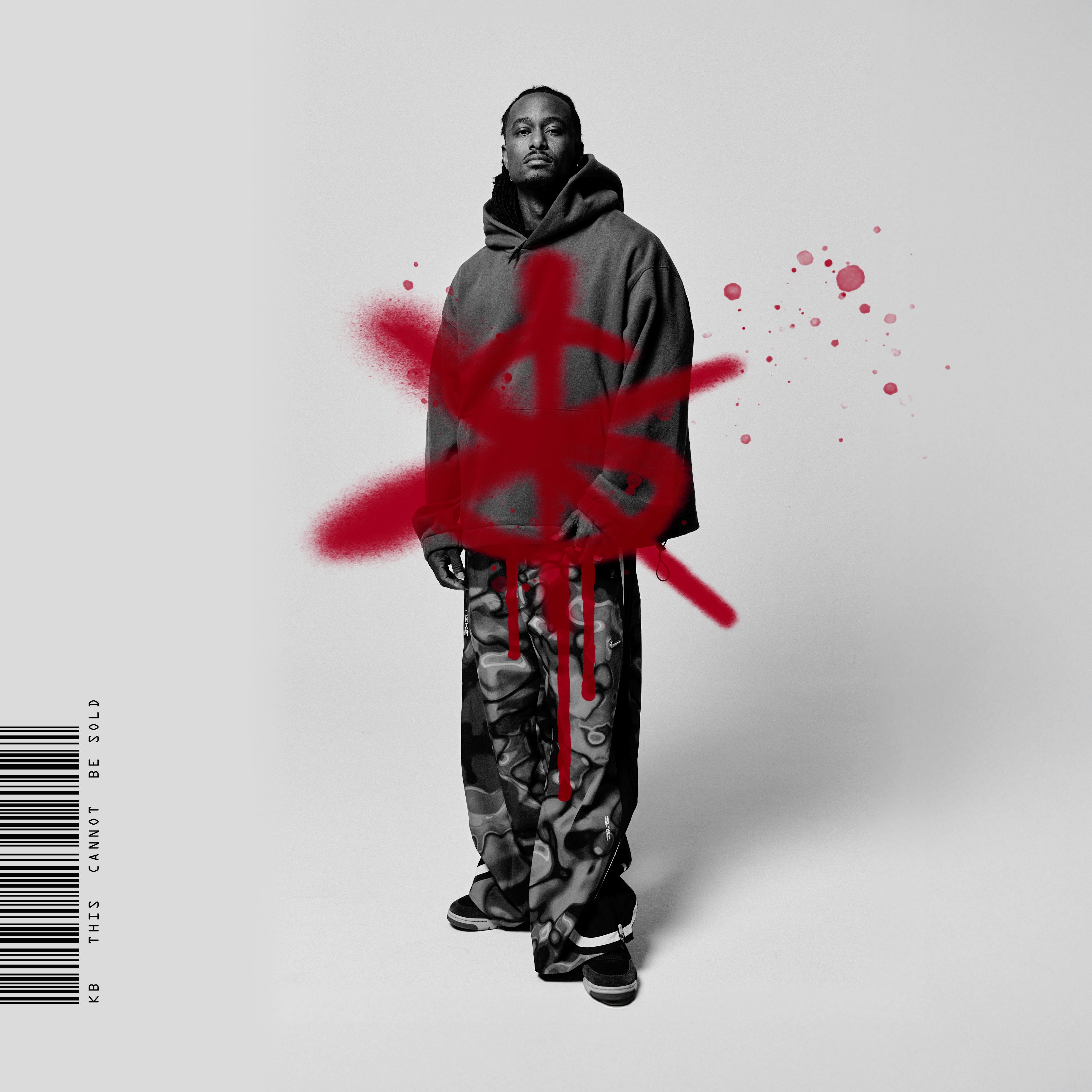
Christian rap operates according to the same market principles as all the other rap that exists today. Booking gigs at the arenas, partnering with brands, streaming dashboard numbers, and a few artists operating in the genre operate as closely to the switchboard as this married father of three with a Dove Award to his name, who founded the Native Supply streetwear line and co-hosts the Southside Rabbi podcast. KB believes that his music is about value, and that his marriage isn’t for sale. The man with so much product on his plate gets to choose what remains off his plate: his family, his doctrine, his own mind and then argues the cost of everything else.
He begins arguing about the cost with the church, insisting on “TOO UNFAZED” that he sleeps no less because of any tweets, then burning the people making those tweets anyway, the ones who “love God for content,” the narcissists whom he depends on inside of a church that he loves still. He brags that he got to see the Druski skit before the Druski skit, back in ‘08. For such a man, who couldn’t care less about anything, the grievances keep a surprisingly tight account of his critics, but the bars for them remain the thinnest part of the song. Once he leaves arguing points for naming prices, KB asks if any of the listeners here have stood for Christ with a gun held to their face or have lost everything except for their faith. He has, he says, and he thinks that makes him impossible to ignore.
On “FLEX,” he takes this same argument to the wider culture, three rappers passing around an uneasy loop while the chorus lists the purple Sprite, the double cup, the bag, the club, and then waves all that aside. KB imagines social media as eternal high school, clout and engagement as new lunch tables and admits to hating it, while praying they invite him to join them. Bizzle wonders what a greater flex could be for a kid in the projects, the jet full of women and the debts that follow, or a bit less money and a clear conscience, then adds that he was never the type to sweeten the deal; he was called to salt the earth.
Bizzle preaches over the tension of a trap loop; the closest thing to a sound of a church appears beneath “SPEAK THRU ME!” A lifted gospel vocal becomes the character of the beat, the hard drums give the bounce, and the vocal the lift, and WHATUPRG uses this same atmosphere for the clearest reporting he does, ICE raids, police unloading, “Put a man with a sign in his hands off his feet/And they took his life right there on the street,” then asks how will anyone learn about hope if the hands and feet are separated. “GOT A REASON” turns this same urgency into celebration, group vocals and claps ready for a crowd to sing along to it, and KB fills his verse with stories of survival, .22s barely missing him, a mother whose prayer he calls bulletproof, three ex-wives in a row like tic-tac-toe, a pocket that could have been full of pills that sound like Tic Tacs. By the third verse, he puns hymn against hem and tells anyone who will listen to check the seams.
The same claps, which push the praise hooks along, appear at a wedding reception on “LEFT HAND,” a Gap Band uptempo-sampled track where the greatest writing is straight gossip. He had six hundred bucks for the first ring and had to squint to see the diamond, so when the real money came through, he bought himself a bigger ring, but his wife told him to return it; they had a baby on the way, and she preferred the first ring. Terrian answers with her own story, 2018, her hand still up, and the call to her father lifted directly into the song: “Hey, Mr. Bass, can I take your daughter’s hand?” The domestic bragging spills over into “KEANU’S SONG,” where the only boasts KB allows himself are about his Mrs. never missing, about never having had mistresses, about his wife wanting purpose over purses, and about how, like Curry, he is dropping thirty in his thirties. The second half begins with the recording of a child telling him “Daddy I love you,” KB asking “Are you saying that ‘cause I let you get on the song?”, and the kid answering, when asked about his favorite things about God, with “That He made you.”
Ben Fuller starts “FATHER” by questioning whether God can really change sinners into sons and daughters, whether nothing can make him drunk or no pill can drug him, and KB responds with the most straightforward verse of his career. Every father he has known has abandoned him. His own father has taken him at age six to a friend’s house and never returned to check on him: “A six-year-old alone with another teen/She stole my innocence, can barely speak on what she done to me.” He despises that he cannot forget it and hates the talk of statistics, and in the second verse, he reports his decision, keeping the last name he almost lost, and for his sons, he will always be the one that he knows he needed to be.
“NO FEELING LASTS FOREVER” goes even lower. In its spoken verses, he describes a belief going insane from the inside, miracles being reread as coincidences, the doubts that feel like logic, like clarity, a man scanning his own memories for proof of his madness. In another verse, he confesses that the craving is about five minutes of success in not failing at everything instead of lust, the brain negotiating “Just this once, you’ve been good lately, you deserve relief,” a lie that feels like oxygen, shame appearing before the click. Another verse belongs to a completely different person, a woman whose husband doesn’t understand, whose children don’t understand, whose own body and brain are betrayal to her. Between every confession, KB recites Psalm 103 in near-paraphrase, compassion, mercy, the reminder that we are dust, until the final word goes to Robert Lowry’s 1876 hymn about the blood.
KB integrates his testimony into the “Holy Forever” refrain on “WE STILL BELIEVE (HLY FOREVER)” and leaves with one keeper, “Your presence is my surgery,” a better bar than the song that revolves around it. On “GOD CAME THROUGH,” he plays his testimony over the big-room hook and mostly sticks to it. “BLOOD 2” gets closest to a beat, a shouted, rock-edged chant with Caleb Conley contributing some grit, though “let the bodies hit the floorboard” is pure cheese, and the saving point is the trash talk about doctrine: “Athanasius pack, Arius get smacked/Heresy is whack.”
This doctrine-as-trash-talk tendency turns political on “THIS CANNOT BE SOLD,” which begins with a warning that this isn’t for the algorithm, before addressing the Left and the MAGAs in one breath, declaring himself “pro-life from the womb and the Gaza,” raising the Epstein list and picturing sinners deporting sinners at the report-in centers. “We conservative with an asterisk,” he says. The same verse turns the mic on himself, therapy every week, confessions to four or five guys who would be horrified if he disappoints them, and an ownership boast folded into theology, no master over him anymore that he owns his masters. His exit terms come in plain speech that the moment it can be sold, he is out.
This ultimatum belongs to a man who has already sorted the matter on “CAMPAIGN,” a sprint of phrase groups over the hard beat, ad-libs working as drum hits, the purest rapping he does. Someone told him that if his skin color were different, he would definitely be much bigger than this, and he answers without heat: “I just believe in a sovereign King/No, I’m not underrated, what’s meant is what’s meant.” After fifteen years in the business, by his own account, he has achieved everything that he wanted, and he is content. His loudest boast on the track is that he wanted exactly this much.
Great (★★★★☆)
Favorite Track(s): “FATHER,” “NO FEELING LASTS FOREVER,” “CAMPAIGN”