

Album Review: THIS MUSIC MAY CONTAIN HOPE. by RAYE
RAYE’s sophomore album splits the difference between a dating-app field guide and a church testimony. Every man she draws is funnier and sadder than the last.
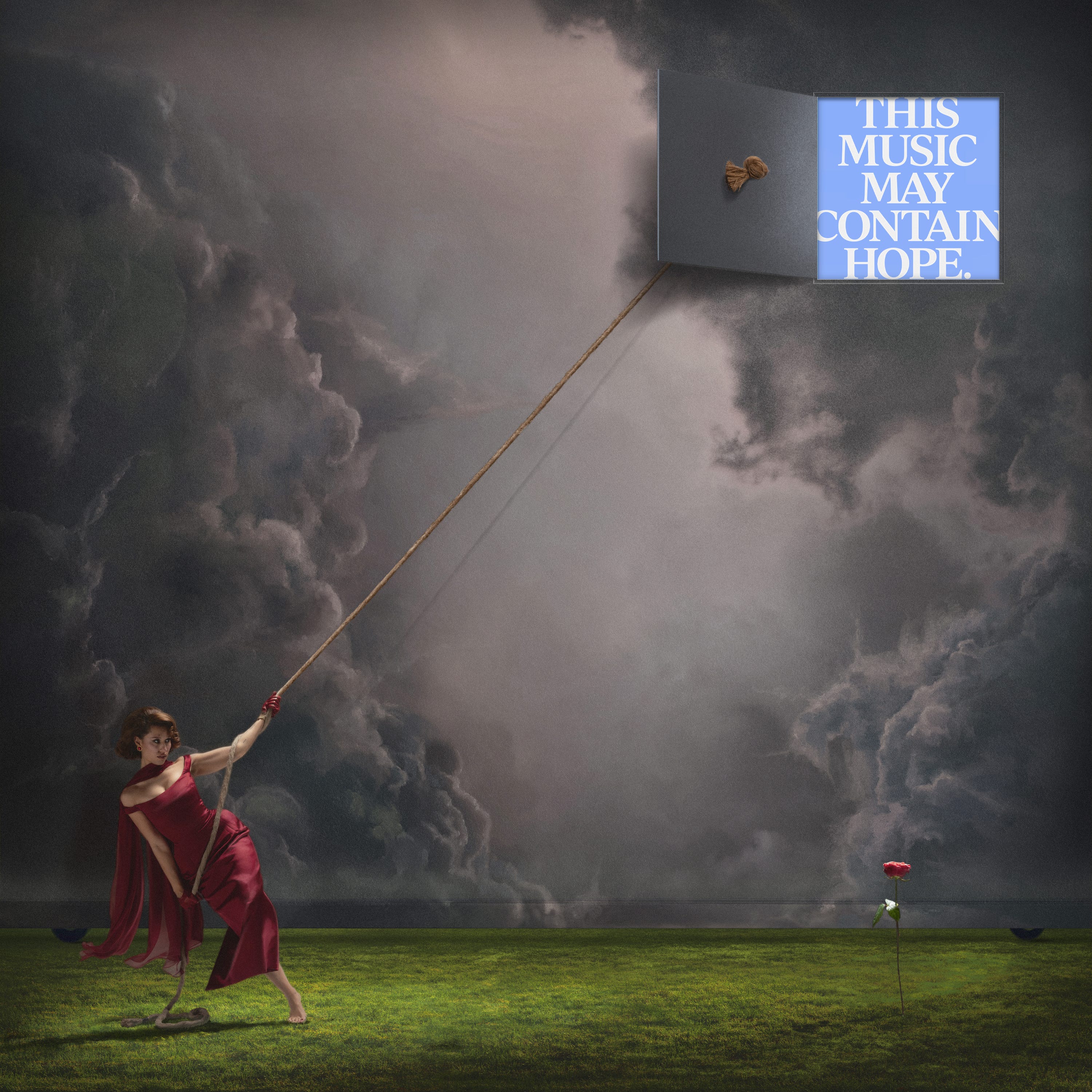
A South London singer-songwriter spent seven years as a ghost in someone else’s career. She co-wrote for Beyoncé, for Charli XCX, for John Legend, and when Polydor Records wanted to rent her pen to the next name on the call sheet, she obliged. She was sixteen when she signed, and nobody at sixteen knows how to say no to a machine that big. The label kept her debut hostage for years, told her “Call on Me” needed to chart before they’d greenlight a full-length, and steered her toward dance-pop she had no interest in making. Rachel Keen—RAYE—broke the contract in 2021, went independent through Human Re Sources, started owning her masters, and released My 21st Century Blues into a market that rewarded her with six BRIT Awards in a single ceremony, a number-one UK single, and the kind of commercial momentum most major-label artists spend entire careers begging for. Then her car got stolen with all her songwriting notebooks in the trunk, and she posted a picture of a cake iced with “sorry ur car got stolen” and told the internet not to expect a second album any time soon. The police found the car months later, everything untouched. She went back to writing.
THIS MUSIC MAY CONTAIN HOPE. comes from a woman who has been publicly humiliated by an industry, publicly vindicated by an audience, and now wants to talk about something other than either of those things. RAYE has no interest in victory laps here. She has interest in loneliness, the kind that follows you into a Parisian hotel room at 2:27 a.m. after seven Negronis and a red dress nobody noticed, the kind that has you unzipping your own dress alone at two in the morning while your hypothetical husband takes his time finding you. The album splits into four seasonal acts across seventeen songs and stays with one woman’s body moving through rooms where nobody else stands, and it does this with a specificity that keeps the sadness from ever going notional. A pillow that’s never touched and gathers dust. Lipstick kissed onto the back of her own hand so she can see what her love looks like. A petrol station stop in a stranger’s car to buy a large bottle of gin while crying. The stupid, undignified, weirdly precise things that happen to a person who actually has nobody to go home to.
RAYE draws the men on this album with the care of a woman who has dated enough of them to build a field guide. “Beware.. The South London Love Boy” doubles as a public safety announcement about a species. He’ll grab your arse before you’ve even sat down, pull up in an all-black car reading poems out the window, and tell you he’s too toxic for you, darling, with the exact charisma that makes you disbelieve him. “The WhatsApp Shakespeare” recasts the same city’s dating pool as a fairy-tale slasher, Eve deceived by her own traitor, a man whose “sweet poetry” and cursive kisses disguise the fact that he wouldn’t put his type on paper. She reveals she was one of seven leading ladies, starring in a romantic thriller she didn’t know had a cast. “Skin & Bones” strips the comedy down to pure exasperation. A man cancels plans forty-five minutes before he’s supposed to pick her up and suggests skipping dinner for dessert at his place, and RAYE reduces him to an anatomy lesson:
“Just skin and bones
And lungs and a heart
Two eyes and a liver
And a nose and no brain.”
The jokes stop at “Goodbye Henry.” Henry isn’t even his real name (she’s being respectful), and she tells you flat-out that this feels happy, but it is not happy at all. She sips her gin in silence at the Railway Tavern in her local and kisses the man goodbye. She imagines an alternate life where they’re together with three children. Al Green enters from Memphis, Tennessee, singing about heartaches that don’t get easy, and his voice alongside hers—a seventy-nine-year-old man and a twenty-eight-year-old woman agreeing across decades that love leaving wounds the same at any age—might be the most devastating duet on a pop record this year. “Nightingale Lane” covers similar ground from a greater distance. Her first love kissed her goodbye on a street in the South London suburbs, his lips thin and beer-stained and tear-stained, and now when she drives down that road she drives slow, daring herself at red lights to say “somebody loved me once, and someday, somebody will again.” She’s dabbled in love since, maybe every other summer. It never lasts. They never stick around. She says she believes someday someone will come along and knock those walls down, and the song lets her believe it without insisting you do too.
RAYE’s family keeps the album from drowning in its own grief. Her grandmother’s voice note opens the entire record. “Call me, please, we need to pray.” That presence recurs throughout, the older generation pulling the younger one back from the ledge by phone. On “Fields,” RAYE leaves her grandad Michael a voicemail apologizing for months of silence, asking if he gets lonely too, and his answer arrives with the plainness of someone who has been alive long enough to know that particular truth doesn’t need decoration (“You can feel lonely in a crowded room.” ). He tells her she’ll hear his songs when he dies, and RAYE tells him “so long it’s good, gives me life,” and neither of them oversells the moment. Her sisters Amma and Absolutely sing on “Joy,” a gospel-flavored declaration that rebukes sadness with clapping hands and the promise that joy comes in the morning, and the three of them together sound less like featured artists than women who grew up harmonizing in the same living room.
Hope on this album does not arrive as triumph. “I Will Overcome” exists because RAYE needed to write herself a reminder, and the gap between needing that reminder and actually believing it stays visible the whole way through. “Click Clack Symphony,” co-produced with Hans Zimmer, begins with RAYE calculating the odds of being born, one in four hundred trillion, and confessing she can’t conquer leaving the house. She eats, sleeps, scrolls, and toils, and the song becomes about calling your girls and choosing to go out anyway, the Zimmer orchestration swelling behind the sound of high heels on pavement—a film score for the genuinely mundane act of putting on a dress when you’d rather stay in bed. The jazzy-induced “I Hate the Way I Look Today” starts exactly where the title promises. RAYE looked in the mirror and cried, she detests her wicked mind, she bargains with herself that she’s okay to be lonely if she’s lonely and skinny. Then the saxophone bleeds in and she turns, barely, toward self-correction: “words of affirmation must repeat ‘till I believe it.”
Mike Sabath’s production across the album earns its range. “Beware.. The South London Love Boy” bounces on an epic pop-soul chassis, “Winter Woman” descends into a slow-motion glide, “WHERE IS MY HUSBAND!” swings with a Motown-adjacent brass stomp, and “Fields” strips to piano, guitar, and voice and the sound of a man who has been writing songs his whole life playing Clair de Lune for his granddaughter. “Happier Times Ahead” zooms outward, away from RAYE entirely. A girl in a window on a Saturday morning clutches her aching heart. A middle-aged man driving his van on Bond Street will make the last lonely pint at the bar the highlight of his day. Auntie Jean in the middle of England cries after sixty years of marriage because her Roger has left her alone in the land of the living. None of these people are RAYE, and none of them know each other, and the song tells all of them the same thing. It can’t rain forever. It doesn’t pretend to know how or when the rain stops. RAYE’s voice shifts with each room she enters, half-spoken and conspiratorial on the Love Boy track, theatrical and fully projected on “The WhatsApp Shakespeare,” reduced to a thrum on “Nightingale Lane.” She writes differently for each of these women she plays, even when all of them are her.
The funniest song on the album might also be the saddest. On “WHERE IS MY HUSBAND!” RAYE wants a diamond ring on her wedding finger, a big shiny diamond she can wave around and talk about, and she’s reviewing applications, and she’s 5’5” with brown eyes and a growing fear she’s going to die alone. Her grandma said it: “Your husband is coming.” The longing for marriage on this song is simultaneously ridiculous and completely sincere, and RAYE doesn’t ask you to pick one reading over the other. She just lets both sit there, the comedy and the ache in the same breath, and the brass section carries the whole thing with the energy of a woman who has decided that wanting what she wants requires no apology.
Great (★★★★☆)
Favorite Track(s): “I Hate the Way I Look Today,” “Goodbye Henry,” “Fields”