

Album Review: This Thing of Ours by Xzibit, B-Real & Demrick
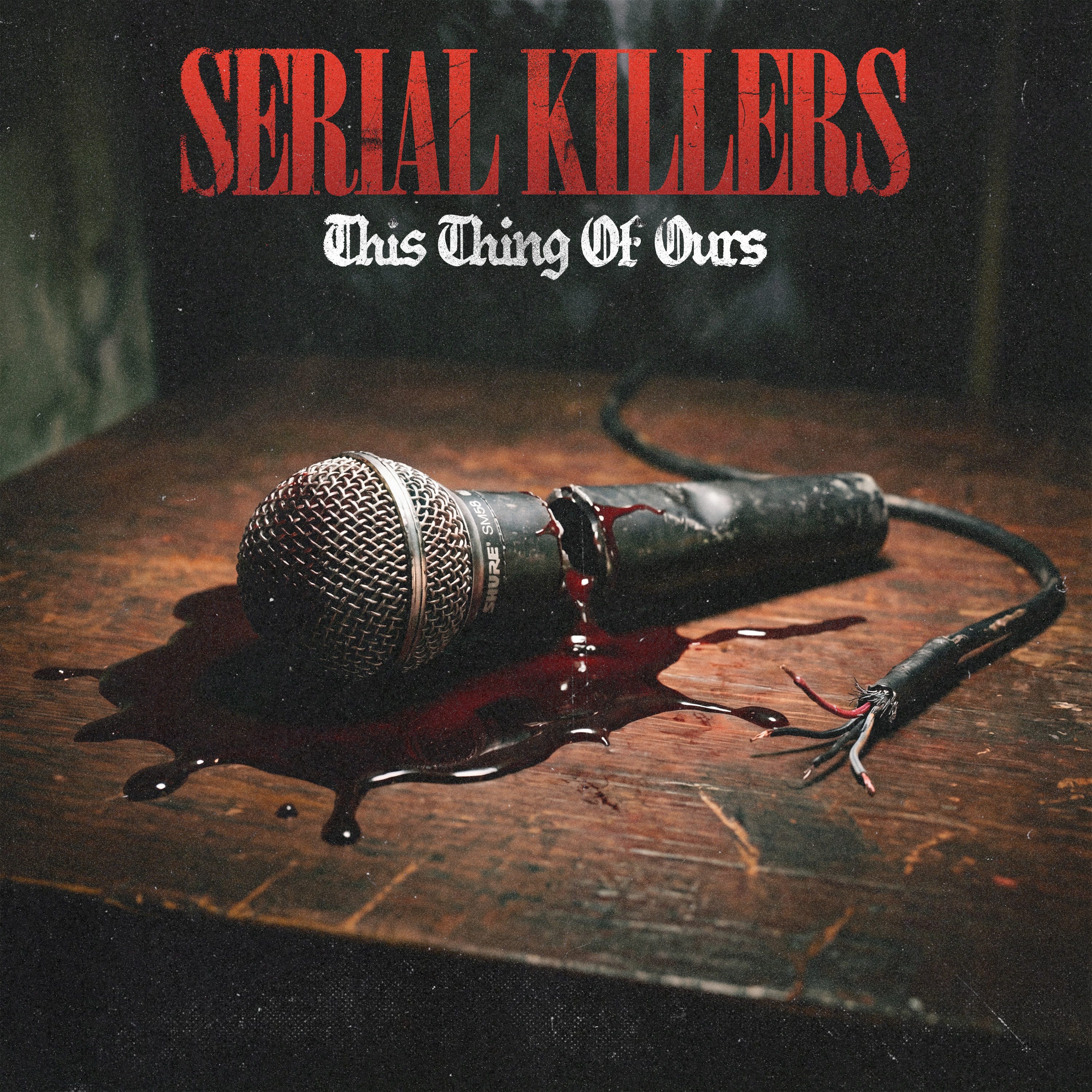
Xzibit, B-Real, and Demrick reconvene for their second proper album under Scoop DeVille’s sole production. The mob-code concept holds and is built on Cosa Nostra literalism.
A three-year-old Elijah Blue Molina appears in his father Kid Frost’s 1990 video for “La Raza,” a Chicano rap staple Kid Frost built his career on. As Scoop DeVille, Molina went on to produce “I Wanna Rock” for Snoop and JAŸ-Z, picked up a Grammy nomination for his work on Kendrick Lamar’s good kid, m.A.A.d city (“Poetic Justice” and “The Recipe” both carry his credit), and built a résumé as the most-booked beatmaker this side of the 10 freeway. What he hadn’t taken on before This Thing of Ours was the full production slate of a proper album. The second full-length from Xzibit, B-Real, and Demrick, a trio that convened on Halloween 2013 and calls itself Serial Killers, rides on his beats alone. He also raps one of the verses, on “By Any Means,” and it’s not bad, sitting easier than some of what the headliners bring.
The title translates La Cosa Nostra directly, and the premise carries through the lyrics themselves. Xzibit and B-Real put the whole code in the title-track hook:
“This thing of ours, powerful circle of trust
Serial Killer killin’ and fuckin’ ‘em up
And we never leave evidence, or anything relevant.”
Xzibit compresses omertà into a one-line command on “Hand Grenade,” “without a body, there’s no case, never confess,” then closes that song with a couplet any mob lawyer would recognize, “I’m not in it with you, y’all locked up with me.” “Slippin” stages an actual robbery in the middle of the track, a brief audio skit where someone out of town gets asked where he’s from, has his watch complimented, and loses it before the beat comes back in. B-Real’s AirTag warning arrives later in that song, and they’ve written Cosa Nostra into the structure, not the dressing.
Nothing shifts about the rotation inside the songs. Demrick opens almost every track, his voice drier and quicker than the veterans’, cutting clean between bars, “California sunshine, won’t spend my life dodging one time.” B-Real takes the middle slot with that nasally pitch Cypress Hill built a career around; he drapes “they call me flamethrower, the greatest seed sewer” over a horror-film vocal sample on “Fired Up.” Xzibit closes or writes the hook, his voice rougher since the Restless era, his writing as sharp as any solo he’s put out in years. He’ll joke about their own act on “SK Anthem” with “We deserve an Oscar from the way we act,” before calling what they do “Tony Soprano rap” on that verse.
Once, the album pushes past its own premise. On “Anarchy,” Chuck D barks the title word over a loop that sounds lifted from a lost Bomb Squad session, which gives Xzibit room to swing:
“Fell in love with my passion, never made it my hustle
My religion is flipping, sipping and seeing double
Fucked up for 30 years, fuck an intervention
Accountable for all my actions, never play the victim
Monetize, kill my masters, broke the system
Got a chain so heavy gotta wear it as a purse
What you make off dreams I am doing in merch
I’m a dream killer, truth teller, goodfella.”
That’s a career verse he’s been circling since Dre executive-produced Restless. “Monetize, kill my masters, broke the system” is Xzibit’s one real argument here, naming the cost of owning his catalog after a long tour through the majors. Nothing else on the album aims for this heft, and that verse stands on its own.
L.A. works the same way the conceit does. Xzibit draws a jurisdictional line on “Slippin,” “Never go south of the 10 if you from out of bounds,” and a few tracks earlier the streets turn niggas to ground beef. B-Real talks about people leaving Cali over “the taxes and the crime rate,” on a beat Scoop DeVille claims by name in the title-track hook, where Xzibit and B-Real announce him, “Scoop beat droppin’ here like hydraulics.” That self-insertion would sound tacky from a less invested producer. But DeVille has written himself into the group. A Serial Killers threat comes with a zip code, a freeway number, a patch of Melrose pavement.
Video-game talk on “Levels” (cheat codes, extra life, beast mode, hall of fame top score) binds every verse to its conceit, and the language stays stuck across 16 bars. “We Are the Killers” closes the album on material the earlier songs already worked over. Each rapper runs his usual lane. Demrick raps “Life’s a casino, not a crash pad” on “High Energy,” over a horn loop that belongs to a record they were never going to make.
Solid (★★★½☆)
Favorite Track(s): “Fired Up,” “Anarchy,” “Slippin”